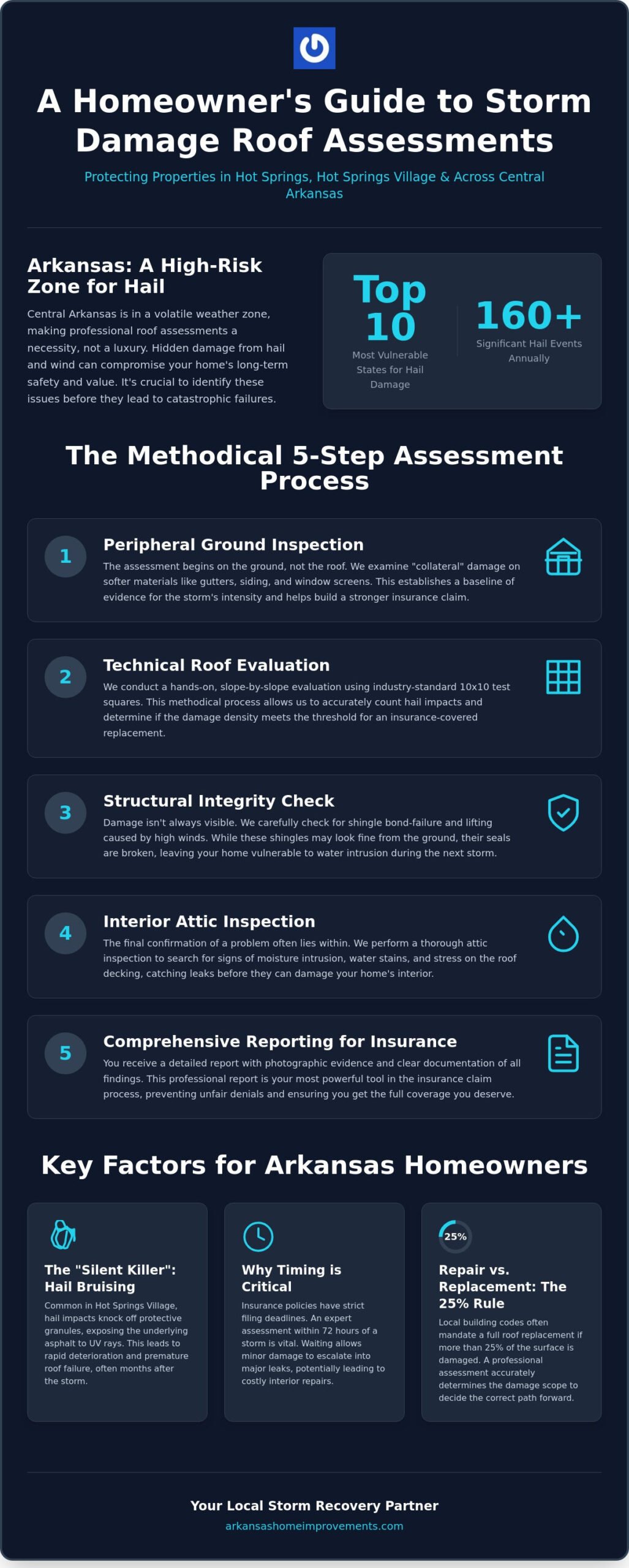
Did you know that Arkansas consistently ranks in the top 10 most vulnerable states for hail damage, with roughly 160 significant events recorded every year? For homeowners across Central Arkansas, scheduling a professional storm damage roof assessment Little Rock is no longer just a maintenance task; it’s a vital step in protecting your home’s equity. It’s completely natural to feel a sense of urgency and anxiety after a major storm, especially with the memory of the 2025 Diaz-Larking tornado pair still fresh and the rising concern over out-of-state “storm chasers” knocking on doors.
We understand the stress of navigating new insurance regulations like the 7-year ACV rule and the fear of a denied claim. This guide will help you identify hidden damage like hail bruising, understand the 2026 insurance landscape, and gain the confidence to choose a reliable local contractor. Whether you’re protecting a family home in Hot Springs or a property in Hot Springs Village, you’ll learn exactly how to secure a successful assessment and ensure your roof remains a dependable shield for your family.
Key Takeaways
- Discover why homeowners in Hot Springs and Hot Springs Village require a forensic evaluation to uncover structural damage often missed by a standard visual inspection.
- Learn the benefits of a professional storm damage roof assessment Little Rock, which uses a methodical 5-step process to identify hidden issues like hail bruising and gutter damage.
- Understand the “25% Rule” and how local building codes and your roof’s age determine whether a simple repair or a full replacement is the best path forward.
- Gain confidence in the insurance claim process by learning how a detailed assessment report and contractor presence during adjuster meetings can prevent unfair denials.
- See how 15+ years of local experience from Steve and the team provides a reliable, expert hand for storm recovery throughout Central Arkansas.
Understanding Storm Damage in Central Arkansas
Central Arkansas sits in a volatile weather zone often described as the eastern wing of Tornado Alley. For homeowners in Hot Springs and Hot Springs Village, the threat isn’t just theoretical; it’s a seasonal reality. A professional storm damage roof assessment Little Rock is far more than a quick glance from the driveway. It’s a forensic evaluation of your home’s structural integrity. We look beyond missing shingles to find the microscopic fractures that compromise your roof’s lifespan. Professional inspectors check for compromised seals, weakened decking, and the subtle “bruising” that occurs when hail strikes asphalt shingles.
While many people wait for a visible leak, modern roofing materials are designed to be resilient on the surface while hiding deep internal damage. A standard windstorm mitigation inspection helps identify how well your roof can withstand future events, but an assessment after a storm specifically looks for active failures. From the peak of the spring season in March through May to the sudden microbursts of late summer, your roof faces a constant battery of environmental stress. Ground-level inspections simply can’t catch the granular loss or the hairline cracks that lead to long-term failure.
To better understand the severity of wind-related issues, watch this helpful video showing real-world damage:
Common Storm Risks in Little Rock and Hot Springs
Weather doesn’t treat every neighborhood the same. In the subdivisions of Saline County, straight-line winds often reach speeds that can lift shingle tabs without breaking them. This creates hidden entry points for water. Meanwhile, the Hot Springs Village area frequently sees large-diameter hail that creates deep “bruising.” This is a silent killer for roofs. It knocks away the protective granules and exposes the underlying asphalt to harsh UV rays. This leads to rapid deterioration that you might not notice for months until the shingles begin to curl and fail prematurely. A comprehensive storm damage roof assessment Little Rock ensures these subtle signs are documented before they become expensive disasters.
Why Timing Matters After a Storm
Time is your greatest enemy after a severe weather event. Arkansas insurance policies often have strict windows for filing claims. Waiting can lead to a flat denial. Beyond the paperwork, minor compromises in your roofing system quickly escalate. What starts as a small damp spot in the attic can eventually necessitate extensive bathroom remodeling or new flooring services if water reaches the living spaces. Don’t confuse immediate emergency tarping with a full assessment. One stops the rain today; the other protects your home’s value for the next decade. If you suspect damage, getting an expert on the roof within 72 hours is the best way to ensure your claim is handled fairly and your home remains secure.
The 5-Step Professional Roof Assessment Process
A professional storm damage roof assessment Little Rock follows a rigorous, methodical sequence to ensure no detail is overlooked. When our team visits a property in Hot Springs or Hot Springs Village, we don’t start on the roof. We begin with a peripheral inspection of the entire home. We look for collateral signs of impact on gutters, siding, and window screens. These softer materials often act as the “canary in the coal mine,” showing clear evidence of hail or wind force that the shingles might initially hide. This ground-level data provides a baseline of evidence that supports the findings we’ll eventually document on the slopes.
Once we transition to the roof, the evaluation becomes highly technical. We conduct a hands-on, slope-by-slope evaluation using industry-standard test squares. These 10×10 areas allow us to count specific impacts and determine if the damage meets the threshold for an insurance claim. We also spend significant time documenting bond-failure and lifted shingles. These often look perfectly fine from the ground, but their structural integrity is compromised. Finally, we perform an interior attic inspection to check for moisture intrusion and decking stress, concluding with a comprehensive report for your adjuster. If you suspect your home has been hit, you can schedule a detailed walkthrough to get the documentation you need.
Identifying “Invisible” Hail Damage
Hail damage isn’t always a hole in the roof. Most often, it appears as “bruising.” This is where the impact of the hail stone fractures the underlying fiberglass mat. While it might look like a simple dark spot, it’s actually a structural failure that allows water to seep through over time. This granule loss accelerates roof aging significantly under the intense Arkansas sun. Bond-failure is the separation of the shingle seal strip due to wind uplift. Without this seal, your roof loses its primary defense against the next storm.
Wind Uplift and Edge Metal Failure
The perimeter of your roof is its most vulnerable point during a microburst or high-wind event in Central Arkansas. Wind catches the edges and creates a peeling effect that can displace ridge caps and crease shingles. High-quality gutter systems play a vital role here by preventing wind-driven rain from being forced under the roof’s edge. According to IBHS storm damage prevention research, maintaining these edge components is one of the most effective ways to reduce the risk of catastrophic failure. We look for ridge-cap displacement and tiny gaps in the flashing that could lead to major interior issues if left unaddressed.
Repair vs. Replacement: Making the Right Decision
Deciding whether to patch a few shingles or replace the entire system is one of the most significant choices you’ll face after a storm. In Central Arkansas, this decision isn’t just about personal preference; it’s often dictated by the Arkansas Fire Prevention Code. We frequently encounter the “25% Rule” during a storm damage roof assessment Little Rock. This regulation generally requires a full roof replacement if more than 25% of the roof system is damaged within a 12-month period. For homeowners in Hot Springs and Hot Springs Village, understanding these local mandates ensures you don’t settle for a repair that fails to meet legal safety standards.
The age of your roof also plays a vital role in this decision. As shingles age in the intense Arkansas humidity, they become brittle. Attempting to “unseal” a weathered shingle to slide a new one underneath often causes the surrounding materials to crack or tear. If your roof is more than 10 years old, a patch repair might actually compromise the system’s integrity more than it helps. For those seeking a more permanent shield against our state’s volatile weather, the long-term ROI of metal roofing in Arkansas is hard to beat. It provides superior wind resistance that often lasts twice as long as traditional asphalt.
Class 3 vs. Class 4 Shingles: What is Best for You?
When a replacement is necessary, you have an opportunity to upgrade your home’s defenses. Class 4 shingles are specifically engineered to withstand the impact of large hail without fracturing the internal mat. We’ve seen a massive shift in Hot Springs Village, where homeowners are choosing Class 4 protection to secure significant insurance discounts. In Arkansas, upgrading to these impact-resistant materials can lead to a 20-35% reduction in the wind and hail portion of your premiums. This upgrade often pays for itself within just a few years while providing much-needed peace of mind during tornado season. For those who appreciate the value of specialized engineering in protection, you can discover Auto Industries Factory LLC and their advanced approach to vehicle fabrication and security.
Matching Materials and Aesthetics
A partial repair can often leave your home looking like a patchwork quilt. Shingles fade at different rates depending on their exposure to the sun, making a perfect color match nearly impossible for older roofs. At Arkansas Home Improvement, we prioritize a seamless look that protects your home’s curb appeal. We ensure your new roofing materials complement your existing siding and exterior. Our team uses advanced material matching technology to find the closest possible fit, maintaining the visual harmony of your property in Little Rock or the surrounding Saline County neighborhoods.
Navigating the Insurance Claim Process with Confidence
Filing an insurance claim often feels like a battle of words. A professional storm damage roof assessment Little Rock changes that dynamic by providing a forensic record of the facts. When we document your roof, we create a detailed report that serves as your primary evidence. This isn’t just a list of repairs; it’s a professional verification of storm-induced failure. Insurance adjusters are often under pressure to move quickly. Having a contractor present during the adjuster meeting ensures that subtle damage, like fractured fiberglass mats or compromised flashing, isn’t overlooked or dismissed as simple maintenance issues.
You should also be aware of how Arkansas law affects your potential payout. Under Act 994 of 2021, insurance carriers can apply Actual Cash Value (ACV) depreciation to roofs that are seven years or older. This means if your roof is a decade old, you might only receive a fraction of the replacement cost unless you have a Replacement Cost Value (RCV) policy. Additionally, Act 471 of 2023 requires insurers to disclose your exact dollar deductible at every renewal. Since public adjusters are effectively prohibited from being licensed in Arkansas, your roofing contractor is your most important ally. We help ensure the scope of work is accurate, fair, and covers the true cost of restoration.
Special Considerations for Hot Springs Village
Hot Springs Village homeowners face an extra layer of complexity. The Property Owners Association (POA) maintains specific architectural standards that govern everything from shingle color to material type. If your insurance settlement doesn’t account for these required upgrades, you could be left paying the difference out of pocket. We understand these local nuances. We work to ensure your claim includes the specific materials required to keep your home in compliance with Village standards. Local expertise prevents project delays and ensures your home remains a source of pride within the community.
Avoiding “Storm Chaser” Scams
Avoid the “storm chasers” who flood the area after a hail event. Common red flags include out-of-state license plates, high-pressure door-to-door sales tactics, and promises to “cover your deductible.” These practices are often fraudulent and lead to substandard work that won’t last. Always choose a local roofing company in Central Arkansas with a verified physical office and a long-standing reputation. Before any work begins, verify their registration with the Arkansas Contractors Licensing Board. If you need help starting your claim with an expert eye, contact our team for a professional consultation today.
Arkansas Home Improvement: Your Local Storm Recovery Partner
When a severe storm sweeps through Central Arkansas, you need more than just a contractor; you need a neighbor who understands the local landscape. Steve and our dedicated team bring over 15 years of local experience to every project. We’ve seen how weather patterns uniquely affect different neighborhoods, from the historic districts of Little Rock to the wooded hills of Hot Springs. Our team conducts every storm damage roof assessment Little Rock with a forensic mindset, looking for the deep structural issues that others might miss. We take immense pride in our workmanship and value our reputation for consistency and honesty above all else.
Our “Community First” approach means we treat your home with the same care and attention we would give to our own family. We know that a residential project is a significant investment and a source of stress. That’s why we prioritize reliability and peace of mind at every stage. We don’t just provide a repair estimate; we offer a steady, experienced hand to guide you through the recovery process. By integrating our specialized roofing knowledge with our other exterior home improvement services, we provide a holistic solution that protects your home from the ground up.
Comprehensive Protection Beyond the Roof
Storms rarely limit their impact to your shingles. High winds and hail often cause simultaneous damage to windows, siding, and gutter systems. Our comprehensive assessments evaluate all these components to ensure your home’s envelope is completely secure. We also believe in proactive preparation. Ensuring your home is ready for the next event with home generator installation can prevent the secondary damage that occurs during extended power outages. Our “Right Solution” philosophy ensures we only recommend the specific services you actually need to restore your home’s safety and value.
Ready for Your Assessment?
Scheduling a priority assessment after a major storm is straightforward. We recommend having your insurance policy information and the approximate date of the storm ready for our first visit. This helps us align our documentation with your carrier’s requirements from the very start. While we place a heavy emphasis on serving our neighbors in Hot Springs and Hot Springs Village, our team is fully equipped to handle projects in Benton, Cabot, Jacksonville, and the surrounding areas. We’re here to provide the professional standards and accountability you deserve. If you’re ready to secure your home’s future, contact us today to get started with a local expert you can trust.
Secure Your Home and Restore Your Peace of Mind
Protecting your home after a severe weather event requires more than just a quick repair. It demands a thorough understanding of current Arkansas insurance laws and the technical expertise to identify hidden structural failures. By choosing a professional storm damage roof assessment Little Rock, you ensure that every detail, from hail bruising to wind uplift, is documented for a fair claim settlement. Acting quickly prevents minor leaks from escalating into costly interior damage that could require extensive remodeling later.
Arkansas Home Improvement brings over 15 years of Central Arkansas expertise to your doorstep. As a licensed and insured Arkansas contractor, we specialize in the unique architectural standards and POA requirements of Hot Springs Village. We understand the stress these projects bring and are committed to providing the reliability you need to restore your home’s integrity. Whether you’re in Hot Springs, Little Rock, or Saline County, we’re ready to help you navigate the path to a full recovery with confidence.
Schedule Your Professional Storm Damage Assessment Today
Your home is your most valuable asset. Let’s work together to keep it safe and secure for years to come.
Frequently Asked Questions
How much does a storm damage roof assessment cost in Little Rock?
Most reputable local contractors provide a storm damage roof assessment Little Rock as an initial service to help you document the condition of your home. This process allows us to create a professional record of any hail or wind impacts that might support an insurance claim. We focus on providing a clear, honest evaluation of your roof’s integrity so you can make an informed decision about your next steps.
Will filing a storm damage claim make my insurance rates go up?
In Arkansas, insurance carriers generally cannot raise your individual rates solely because you filed a claim for an “Act of God,” such as a tornado or hail storm. While premiums can rise across an entire region after a major catastrophe like the 2025 tornadoes, you aren’t singled out for protecting your property. It’s always a good idea to discuss the specific details of your policy with your insurance agent.
Can I still get a roof assessment if the storm happened several months ago?
Yes, you can still have your roof assessed months after a storm, provided you are within the filing deadline set by your insurance provider. Many homeowners in Hot Springs don’t notice damage until a leak develops during a later rain event. Our team can identify historical hail bruising and wind-lifted shingles long after the initial weather event has passed, ensuring your home remains protected.
What is “collateral damage” and why do adjusters look for it?
Collateral damage refers to signs of storm impact on softer materials around your home, such as gutters, siding, or window screens. Adjusters look for these signs because they provide circumstantial evidence of the storm’s intensity. If your downspouts are dented or your window screens are torn, it’s a strong indicator that the shingles on your Hot Springs Village home also sustained significant force during the same event. It is also vital to inspect outdoor HVAC units for hail impact; for those in the Redlands area, Air Services Mechanical offers professional residential services to ensure these systems are properly assessed and restored.
What happens if my insurance adjuster denies the claim but my roofer sees damage?
You have the right to request a re-inspection if you believe the initial assessment was inaccurate. Having your contractor present during the second adjuster meeting is essential. We can point out specific forensic evidence, such as fractured fiberglass mats, that might have been overlooked. If the disagreement continues, we can help you understand the appraisal process or other options available within your specific policy.
Is it safe to wait until the end of storm season to get an inspection?
It is not recommended to wait until the end of the season to inspect your roof. Minor impacts from an early spring storm can weaken your shingles, making them more likely to fail during a mid-summer microburst. Waiting increases the risk of water intrusion, which can lead to the need for interior remodeling or new flooring services. Early detection is the best way to prevent small issues from becoming major disasters.
Does Arkansas Home Improvement work with my specific insurance carrier?
We work with all major national and regional insurance carriers operating throughout Central Arkansas. Our team is familiar with the different documentation requirements and reporting standards that adjusters expect. Whether you are navigating a claim in Little Rock or dealing with the specific standards of Hot Springs Village, we provide the detailed reports and professional support needed to ensure your claim is handled fairly.
How long does the typical storm damage roof replacement take?
The physical installation of a new roof usually takes one to two days for most residential properties. However, the entire timeline depends on the speed of the insurance approval process and the availability of your chosen materials. We coordinate every step, from the initial storm damage roof assessment Little Rock to the final cleanup, to ensure the project is completed efficiently with minimal disruption to your daily life.