
Imagine the silence that follows the sudden snap of a frozen branch during a winter storm, followed by the realization that your home’s heat and lights have vanished. For many families, this isn’t just an inconvenience. It’s a stressful situation involving spoiled food and safety concerns for those who rely on medical devices or consistent HVAC. We agree that your home should be a sanctuary of stability, regardless of the weather outside. Investing in a professional home generator installation Arkansas service is the most effective way to ensure your family remains safe and comfortable.
You’ll learn exactly how to protect your home from unpredictable outages with this comprehensive guide to whole-house standby systems. We’ll show you how to achieve automatic, seamless backup power that also increases your home’s resale value. This overview covers the essential 2026 installation requirements and the logical steps to gaining total peace of mind before the next storm season arrives.
Key Takeaways
- Recognize the specific risks Arkansas weather poses to your power grid and why a permanent standby unit is a necessary home protection component.
- Learn how the Automatic Transfer Switch (ATS) manages your home’s energy transition without you ever having to lift a finger during a storm.
- Evaluate the differences between portable and standby units to see which system can handle your heavy electrical loads like HVAC and medical equipment.
- Master the professional process for home generator installation Arkansas homeowners need, including essential load calculations and site preparation.
- Identify the benefits of a turnkey installation service from a local expert who coordinates electrical, exterior, and roofing work for a seamless experience.
Why Home Generator Installation is Essential for Arkansas Homeowners
A standby generator is a permanently installed outdoor unit that monitors your home’s connection to the local utility grid. Unlike portable units that require manual setup and constant refueling, these systems activate automatically within seconds of a power failure. For many, a professional home generator installation Arkansas project is the difference between a minor blip and a major household crisis. These units provide a seamless transition to backup power, ensuring your lights, appliances, and security systems never miss a beat. You won’t have to venture outside in dangerous conditions to pull-start an engine or manage messy fuel cans.
Arkansas homeowners face a unique set of challenges that make reliable backup power a necessity. Our state’s infrastructure is frequently tested by extreme weather that can leave neighborhoods in the dark for extended periods. Having a system that requires zero human intervention means you can rest easy knowing your home’s critical systems are protected. This includes your HVAC system, well pumps, and security alarms, all of which are vital for maintaining a safe and livable environment during a crisis.
Arkansas Weather Patterns and Power Reliability
Central Arkansas often sits directly in the path of the “Ice Belt,” where freezing rain accumulates on overhead power lines and tree branches. This weight causes lines to snap and transformers to fail, often during the coldest nights of the year. Spring brings high-wind events and severe thunderstorms that can disrupt service across entire counties. Beyond just the lack of light, a whole house generator Little Rock AR is a primary defense against the rapid growth of mold. When your HVAC system fails during a humid Arkansas summer, indoor moisture levels spike quickly, creating a breeding ground for allergens and damaging your home’s interior.
The Cost of Inaction: Food Loss and Property Damage
The financial impact of a prolonged outage is often higher than homeowners realize. A single week without power can result in hundreds of dollars of wasted food as refrigerators and freezers warm up. During winter outages, the risk shifts to your plumbing. If your heating system fails, pipes can freeze and burst, leading to expensive water damage and restoration costs. For residents in more rural areas like Hot Springs Village or Malvern, the stakes are even higher. These communities often rely on well pumps for water and may experience longer wait times for utility repairs. A home generator installation Arkansas ensures that your family has access to running water, climate control, and a working security system regardless of how long the grid remains down.
How a Whole-House Standby Generator Protects Your Property
A whole-house standby generator is a sophisticated piece of machinery designed to act as your home’s personal power plant. At its core sits an internal combustion engine, similar to the one in a vehicle, which runs on either natural gas or liquid propane. Unlike cheap portable units that often produce “dirty power” with jagged electrical waves, these permanent systems provide “clean power.” This stable voltage is essential for protecting your sensitive electronics, such as smart refrigerators and home office equipment, from internal damage. To ensure the system is always ready, it performs a brief, automatic “exercise cycle” every week. This self-test lubricates the engine and checks the battery, so you never have to wonder if it will start when the grid fails. A professional home generator installation Arkansas project guarantees that these technical elements are balanced for your home’s specific energy needs.
Investing in a permanent system means you are prioritizing long-term stability over temporary fixes. These units are built to withstand the elements and provide power for days or even weeks if necessary. Because the system is integrated directly into your electrical panel, it provides a level of reliability that manual solutions simply cannot match. If you are ready to explore your options, you can consult with an expert to find the right model for your property’s layout.
The Role of the Automatic Transfer Switch (ATS)
The ATS is the brain of the system that disconnects your house from the utility grid and connects it to the generator. This component is a critical safety feature because it prevents “backfeeding,” a dangerous situation where electricity flows from your home back into the power lines, potentially harming utility workers. Following established generator safety tips is vital for any homeowner. You can choose between a whole-load switch, which powers every circuit in your home, or a managed-load switch that prioritizes your most important appliances during an outage. A proper home generator installation Arkansas requires an ATS that is sized correctly for your home’s total electrical demand.
Fuel Sources: Natural Gas vs. Liquid Propane
Choosing the right fuel source often depends on where you live in the Natural State. For residents in Little Rock or North Little Rock, tapping into an existing municipal natural gas line is often the most convenient choice. It provides a virtually endless fuel supply without the need for a storage tank. In contrast, homeowners in rural areas like Arkadelphia or Malvern often rely on large liquid propane tanks. These tanks provide independence from municipal lines but require you to monitor fuel levels after a long storm. Both fuel types require minimal maintenance, usually just an annual check of the oil and filters to ensure 2026-ready performance. Proper fuel line integration is a key step in a successful installation, ensuring your system has the pressure it needs to start instantly during a storm.
Standby Generators vs. Portable Units: Which is Right for You?
Many homeowners first consider a portable generator because of the lower initial price point. While these units are helpful for camping or very short outages, they function differently than a professional home generator installation Arkansas system. Portable units require you to be home and physically able to set them up during a storm. You have to drag the unit out of storage, run heavy extension cords through open windows or doors, and manually fill it with gasoline every few hours. In contrast, a standby generator is a “set it and forget it” solution. It stays outside, permanently connected to your home’s electrical system, and takes over the moment it detects a drop in utility power.
The power capacity difference is also vast. A small portable unit might keep your phone charged and a few lamps glowing, but it won’t handle the heavy lifting. If you want to run a 4-ton central air conditioning unit, a well pump, or a modern kitchen, a whole-house standby system is the only reliable option. Beyond convenience, safety is a major factor. Portable units carry significant risks of carbon monoxide poisoning if they are placed too close to the home or in a garage. Following established generator safety guidelines is much easier with a permanent unit that is professionally installed at a safe distance from your living spaces.
The Inconvenience Factor of Portable Power
Think about the last major Cabot thunderstorm. Dragging a heavy, metal machine through the mud and rain while lightning flashes nearby is a dangerous and exhausting task. If the outage lasts more than a few hours, you’ll face the “gas station scramble.” When local pumps lose power, finding a station that can actually dispense fuel becomes a stressful race against time. There is also the matter of noise. Traditional open-frame portable generators are incredibly loud, often reaching 80 decibels or more. Standby units are housed in acoustically dampened enclosures, making them quiet enough to maintain a normal conversation right next to the unit while it’s running.
Investment and Home Value in the Arkansas Market
A standby generator is more than just an appliance; it’s a structural upgrade that adds tangible value to your property. Arkansas appraisers often view these systems as permanent fixtures, similar to a new roof or a central HVAC system. Because they provide security in a state prone to ice storms and tornadoes, they make your home much more attractive to future buyers. It’s common to see generator installer near me Arkansas searches spike immediately after a major weather event, but smart homeowners plan ahead to avoid the rush. Additionally, some insurance providers offer discounts on homeowner premiums because a permanent generator prevents common claims like burst pipes or extensive food spoilage. This long-term ROI, combined with the immediate peace of mind, often makes the choice for a professional home generator installation Arkansas an easy one for families who value reliability.
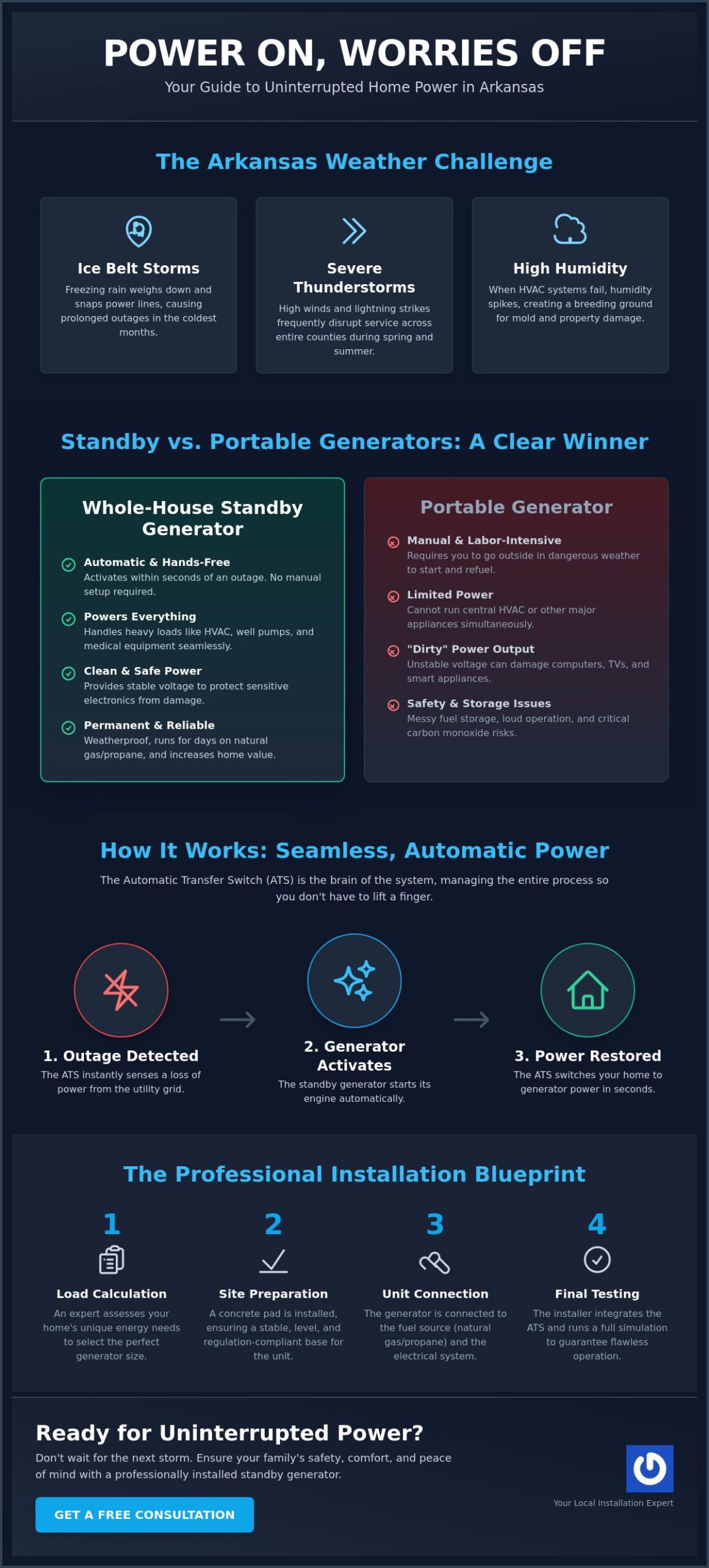
The Step-by-Step Process of Professional Generator Installation
Professional home generator installation Arkansas homeowners trust begins long before the unit arrives at your property. A methodical approach ensures that your system remains reliable during the most demanding weather events. The process follows five distinct stages designed to build a foundation of safety and performance. First, we perform a professional load calculation to determine the exact kilowatt (kW) sizing required for your home. Next, we handle site selection and pad preparation according to local Arkansas building codes. This is followed by fuel line integration and the wiring of the Automatic Transfer Switch. Finally, we manage all permitting and inspections required by cities like Benton or North Little Rock before conducting a final test and homeowner orientation.
Each step is handled with precision to ensure your system activates the moment utility power drops. This structured timeline reduces the inherent stress of a residential project and guarantees that your investment is protected by expert craftsmanship. If you are ready to begin this process, schedule your professional site assessment to get a clear plan for your property.
Sizing Your Generator for Arkansas Humidity
Undersizing a generator is a common mistake that leads to system failure at the worst possible time. During a humid July outage, your air conditioner works significantly harder to pull moisture from the air. When the compressor kicks on, it requires a massive surge of “Starting Watts” that can overwhelm a poorly sized unit. We analyze your well pumps and HVAC systems to ensure your generator has the capacity to handle these spikes. You can choose to cover essential circuits like refrigeration and medical equipment, or opt for whole-house coverage to maintain total comfort throughout the summer.
Navigating Local Permits and Codes
Arkansas law is very specific about electrical safety and system placement. All wiring and equipment must comply with the National Electrical Code (NEC), specifically NFPA 70. In Arkansas, a licensed electrician must perform the installation. Additionally, projects over $2,000 require a residential contractor’s license to ensure the work meets professional standards. For example, a standby generator installation Benton AR requires strict setbacks from windows and vents to prevent exhaust fumes from entering your home. A professional installer handles all communication with local utility companies and city inspectors, ensuring every permit is filed and every inspection is passed before the power source is connected.
Choosing the Right Arkansas Generator Installer for Long-Term Reliability
Our team follows what we call the “Steve” approach. This means our communication is grounded, honest, and entirely focused on your family’s safety and peace of mind. We provide a turnkey service where we manage every aspect of the project from start to finish. Instead of you having to coordinate between an electrician, a plumber, and a site prep crew, we handle the entire scope. This unified approach eliminates communication gaps and ensures that every component, from the concrete pad to the transfer switch, meets our high professional standards.
The Arkansas Home Improvement Difference
Our deep roots in the community mean we stand by our warranties for decades, not just until the next storm passes. Our expertise in roofing installation Central Arkansas homeowners rely on gives us a unique perspective on your property’s overall health. We ensure that your generator’s placement doesn’t interfere with home drainage or compromise your siding and foundation. Large national chains often treat towns like Jacksonville or Cabot as mere points on a map. As a local provider, we understand the specific utility layouts and local codes of these communities. This allows us to provide a level of personalized service that a distant corporation simply cannot replicate.
Next Steps: Getting Your Custom Power Assessment
The best time to secure your home’s power is before the next major weather event arrives. When you schedule a custom power assessment, our team visits your property to conduct a thorough evaluation of your electrical needs. We’ll discuss your essential power priorities, identify the ideal location for the unit, and provide a clear, honest estimate. This consultation is designed to answer your questions and build confidence in your backup power strategy. We’ll walk you through the entire home generator installation Arkansas process so you know exactly what to expect. Don’t wait for the next ice storm to realize your family is vulnerable. Contact Arkansas Home Improvement for your home generator assessment today and take the first step toward total peace of mind.
Secure Your Home’s Future Stability
Protecting your family from the next Arkansas ice storm or summer blackout requires more than a temporary fix. You now understand why a whole-house standby system outperforms portable units and how a professional load calculation ensures your HVAC stays running during peak humidity. Choosing a partner for your home generator installation Arkansas project is about finding a local expert who values your long-term safety over a quick sale.
Arkansas Home Improvement brings over 15 years of local experience to every project. We provide a comprehensive turnkey installation that covers everything from city permits to the final power-on test. Our “Steve-led” service is built on an A+ reputation for honesty and reliability. We take pride in our craftsmanship and stand by our work long after the project is complete. Schedule Your Professional Generator Consultation with Arkansas Home Improvement today. You deserve the peace of mind that comes with a home that is always ready for whatever the weather brings.
Frequently Asked Questions
How much does it cost to install a whole-house generator in Arkansas?
Total costs fluctuate based on the generator’s kilowatt capacity, the complexity of your home’s electrical panel, and the distance to your fuel source. Factors like the size of the unit and specific site preparation requirements also play a significant role. Because every property is unique, we recommend a professional site assessment to provide an accurate estimate tailored to your home’s layout and power demands.
Will a home generator increase my Arkansas property value?
Yes, a standby generator is a permanent home improvement that adds tangible resale value to your property. In the Arkansas market, where severe weather and ice storms are common, buyers view automatic backup power as a premium safety feature. It provides a level of security and modern convenience that makes your home stand out to appraisers and potential buyers alike.
Can a whole-house generator run my central air conditioning?
A properly sized standby generator can easily power your entire central air conditioning system. During a home generator installation Arkansas project, we perform a detailed load calculation to ensure the unit handles the high surge of power your AC requires to start. This keeps your family cool and prevents humidity damage to your home’s interior during the hottest months of the year.
How long can a standby generator run continuously during an outage?
Standby generators are designed for extended use and can run for several days or even a week if necessary. If your unit is connected to a municipal natural gas line, it will run as long as the utility provides fuel. For homes using liquid propane, the runtime depends on the capacity of your onsite storage tank and your home’s total electrical load during the outage.
Do I need a permit for generator installation in Little Rock or Benton?
Yes, an electrical permit is required for any home generator installation in Arkansas cities like Little Rock or Benton. Arkansas law also requires a final inspection after the installation is complete but before the power source is connected to the grid. A professional installer handles this paperwork and ensures your system complies with the National Electrical Code (NEC) and all local building regulations.
What maintenance is required for a standby generator?
Most standby units require an annual professional inspection to change the oil, replace filters, and check the spark plugs. The system also performs its own weekly “exercise cycle” to keep the engine lubricated and the battery charged. You should also keep the area around the enclosure clear of debris and landscaping to ensure the unit has proper airflow for cooling during operation.
Is it possible to install a home generator myself?
DIY installation is not recommended and often violates state licensing requirements. In Arkansas, a licensed electrician must install the system, and projects costing over $2,000 require a residential contractor’s license. Professional installation ensures your manufacturer warranty remains valid and protects your family from the risks of improper wiring, such as electrical fires or dangerous backfeeding into the utility grid.
How do I choose between a natural gas and propane generator?
Your choice usually depends on the fuel sources already available at your property. Natural gas is the most convenient option for homes in urban areas with existing utility lines because it provides a continuous fuel supply. If you live in a rural area without natural gas access, a large liquid propane tank is a reliable alternative that offers total independence from the municipal infrastructure.