With 79 documented hail events across the state in the last year alone, your roof is more than just a structural necessity. It’s a front-line defense against an average hail damage claim that now exceeds $12,000. Most homeowners in communities like Chenal Valley or Hot Springs Village are tired of the cycle of frequent insurance claims, sky-high cooling bills during 100-degree summers, and the unsightly algae streaks that thrive in our 90% humidity.
You deserve a home that feels like a sanctuary, not a source of constant maintenance stress. Finding the best roofing material for Arkansas weather is the key to securing long-term peace of mind. Our guide shows you how to choose materials that last 25 years or more while lowering your energy bills and improving your curb appeal. We also explain how the 2026 Strengthen Arkansas Homes program can provide grants up to $15,000 for specific upgrades.
This article previews the most durable options for our state’s unique climate, from Class 4 impact-resistant shingles to energy-efficient metal systems. You’ll learn how the right choice can trigger insurance premium discounts of up to 35% and qualify you for a $1,200 federal tax credit this year. It’s time to install a roof that works as hard as you do to protect your family.
Key Takeaways
- Learn how to protect your home from “thermal shock” and extreme humidity by selecting materials designed for Arkansas’s unique environmental stresses.
- Compare the pros and cons of asphalt, metal, and synthetic options to determine the best roofing material for Arkansas weather based on your specific neighborhood and budget.
- Discover why Class 4 impact resistance is the gold standard for reducing insurance deductibles and surviving the state’s frequent convective storm seasons.
- Understand how “Cool Roof” technology and proper attic ventilation work together to significantly lower your summer cooling costs.
- Find out what local building code requirements mean for your installation and why manufacturer certifications are vital for securing long-term warranty protection.
Understanding the Arkansas “Triple Threat” Climate
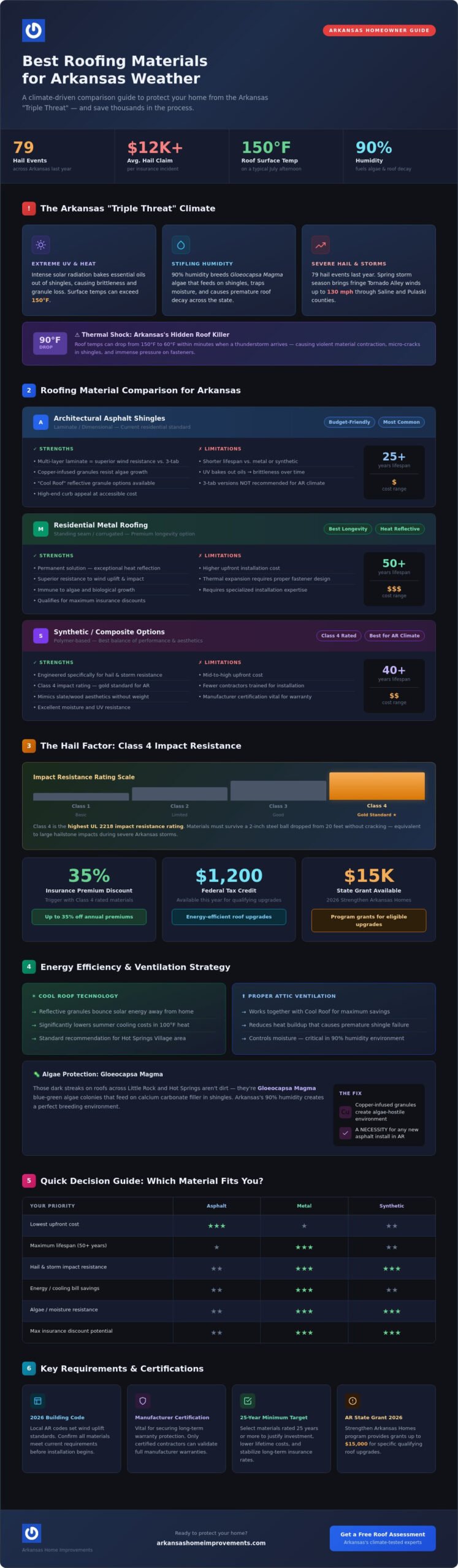
Arkansas homeowners face a climate that is uniquely taxing on residential structures. While northern states worry primarily about heavy snow loads, our roofs must endure a “triple threat” of extreme UV exposure, stifling humidity, and severe convective storms. These factors work in tandem to degrade materials faster than in many other regions of the country. Selecting the best roofing material for Arkansas weather requires an understanding of how these elements interact with your home’s exterior over time.
One of the most destructive forces in the Natural State is thermal shock. On a typical July afternoon, roof surface temperatures can easily exceed 150°F. When a sudden thunderstorm rolls through, dropping the temperature to 60°F in minutes, the roofing materials contract violently. This rapid cycling leads to micro-cracks in shingles and puts immense pressure on fasteners. In the Arkansas River Valley, this stress is compounded by straight-line winds that can peel back compromised materials during the spring storm season. Before deciding on a replacement, it helps to review a comprehensive list of roofing materials to see how different options handle these specific physical stresses.
Heat and UV Degradation in Central Arkansas
Solar radiation is a constant adversary for homeowners in sun-drenched areas like Hot Springs Village. Intense UV rays bake the essential oils out of standard asphalt shingles, leaving them brittle and prone to granule loss. This is why “Cool Roof” technology has become a standard recommendation for those looking to extend the life of their investment. These systems use reflective granules to bounce solar energy away from the home. Regarding metal systems, thermal expansion is the physical lengthening of metal panels as they absorb heat during the day.
The Algae Problem: Gloeocapsa Magma
If you’ve noticed dark, unsightly streaks on roofs around Little Rock or Hot Springs, you aren’t looking at dirt or soot. These are colonies of Gloeocapsa Magma, a hardy type of blue-green algae that feeds on the calcium carbonate filler in many shingles. Our high humidity creates a perfect breeding ground for these organisms, which can trap moisture against the roof surface and cause premature decay. Choosing the best roofing material for Arkansas weather means looking for products specifically engineered to resist these biological growths. Copper-infused granules are a necessity for any new asphalt installation in our region because they create an environment where algae cannot survive. For more tips on maintaining your home’s resilience, check our guide on exterior home improvement Arkansas to see how proper gutter health plays a role in moisture control.
Comparing the Best Roofing Materials for Arkansas
Selecting the right roof involves balancing immediate costs with long-term protection against the central Arkansas wind corridor. While many materials look great on paper, only a few can handle the fringe winds of “Tornado Alley” that frequently sweep through Saline and Pulaski counties. The best roofing material for Arkansas weather is the one that fits your neighborhood’s aesthetic while meeting the rigorous 2026 building standards for wind uplift. Each option requires different maintenance levels to combat our state’s high pollen counts and heavy moisture, making your choice a long-term commitment to your home’s health.
Architectural Asphalt Shingles
Traditional 3-tab shingles are no longer a viable recommendation for our climate. They simply lack the weight and sealant strength to withstand the 130 mph gusts common during spring storms. Instead, architectural or laminate shingles have become the standard for residential neighborhoods in Cabot and North Little Rock. These heavy-duty options are designed to protect your home in natural disasters by providing multiple layers of protection and superior wind resistance. They offer a cost-effective way to achieve high-end curb appeal without the premium price tag of stone or slate.
Residential Metal Roofing
For homeowners prioritizing longevity, metal roofing Arkansas offers a permanent solution that excels at heat reflection. During our brutal July heatwaves, metal panels bounce solar radiation away from the attic, significantly reducing your home’s cooling load. It’s vital to distinguish between screw-down panels and standing seam systems. Standing seam is the preferred choice for residential use because the fasteners are concealed. This design prevents the leaks often caused by thermal expansion in exposed-fastener roofs. If you’re looking for a lifetime solution, you might consult with a local roofing specialist to see which profile fits your home’s structure.
Synthetic and Composite Options
High-end developments in Hot Springs are increasingly turning to synthetic slate and shake. These polymer-based materials offer the timeless look of natural stone or wood without the massive weight or maintenance requirements. Synthetic options often carry the highest Class 4 hail ratings, making them incredibly resilient against the “triple threat” climate discussed earlier. Because they don’t absorb moisture, they remain immune to the rot and fungal growth that can plague traditional wood shakes in our humid environment. These materials provide a sophisticated finish that matches the architectural styles found in Benton and Little Rock while offering the best roofing material for Arkansas weather in terms of impact resistance.
The Hail Factor: Class 4 Impact Resistance
Hail is a frequent reality for Arkansans. With the state recording nearly 80 hail events annually, the potential for residential property damage is a constant concern. Finding the best roofing material for Arkansas weather often comes down to how well a product handles these sudden impact events. Most roofing materials are rated using the UL 2218 impact test. During this professional evaluation, technicians drop steel balls from various heights to simulate the force of falling hail. A Class 4 rating is the highest possible achievement, indicating that the material didn’t crack or rupture under extreme stress.
Choosing a Class 4 material is a smart financial strategy rather than just a durability upgrade. In our region, the average hail damage claim exceeds $12,000. Homeowners with standard roofs often find themselves paying high deductibles every few years as storms roll through. By contrast, many Arkansas insurance providers now offer premium discounts between 20% and 35% for homes with certified Class 4 installations. This aligns with the 2026 “Strengthen Arkansas Homes” program, which provides financial incentives for homeowners to upgrade to these higher safety standards.
Is a Class 4 Roof Worth the Investment?
A Class 4 roof typically requires an upfront investment that is 10% to 20% higher than a standard installation. However, the long-term math is compelling for those who view their home as a long-term asset. If you plan to stay in your residence for 15 years or more, the insurance savings and avoided deductible payments often cover the initial price difference. It’s a “one-and-done” philosophy that prioritizes reliability over the lowest possible bid. You can see how these high-performance shingles stack up against other durable options in our metal roof vs shingle roof Arkansas comparison.
SBS Modified Shingles: The “Rubberized” Advantage
One of the most effective technologies for hail resistance is SBS (Styrene-Butadiene-Styrene) modified asphalt. Unlike traditional shingles that can be brittle, SBS shingles are “rubberized” to give them remarkable flexibility. When hail strikes, the shingle flexes and recovers instead of cracking or losing its protective granules. This technology has become a preferred choice for roofing installation Central Arkansas homeowners trust for lasting protection. These rubberized granules also stay attached much better during the straight-line winds common in our river valleys, ensuring your roof maintains its protective layer for decades.
Energy Efficiency and Ventilation Strategies
Your roof does more than just block rain. It acts as a thermal barrier that determines how hard your air conditioner must work throughout the summer. In Little Rock and surrounding areas, a traditional dark asphalt roof can reach surface temperatures of 160°F on a clear July afternoon. This intense heat doesn’t stay on the surface; it radiates into your attic, creating a massive heat load that can degrade your home’s insulation and drive up utility costs. Choosing the best roofing material for Arkansas weather means looking for products with a high Solar Reflectance Index (SRI). This value measures how well a material reflects solar energy and releases the heat it does absorb, keeping your home significantly cooler.
Efficiency isn’t just about the material surface. It requires a balanced ventilation system to move stagnant, humid air out of the attic space. In the high-moisture environment of the Arkansas River Valley, ridge vents are often the preferred choice because they allow for continuous, passive airflow along the entire peak of the roof. While power fans can move large volumes of air quickly, they often require more maintenance and can sometimes pull conditioned air from your living space if the attic isn’t properly sealed. A well-designed system prevents moisture buildup, which is critical for stopping the mold and algae growth discussed earlier.
Reducing the “Oven Effect” in Your Attic
When heat is trapped in an unventilated attic, it creates an “oven effect” that bakes shingles from the underside. This internal heat is often more damaging than the sun itself because it causes the asphalt to lose its flexibility and bond strength prematurely. A cooler attic environment provides a more stable temperature for your home’s infrastructure. This protection is especially important for sensitive equipment, such as the systems involved in home generator installation Arkansas, which perform best when not subjected to extreme ambient heat. If you’re ready to improve your home’s thermal performance, you can request a professional energy audit and roofing estimate to see where you’re losing the most efficiency.
Color Selection for the South
Aesthetics and physics meet when you choose your roof color. There is a growing trend across Central Arkansas toward lighter grays and “driftwood” tones. These colors are naturally more reflective than deep blacks or charcoals. Modern granule technology now allows even mid-toned shingles to reflect a higher percentage of infrared light, offering the best roofing material for Arkansas weather without sacrificing style. Practically speaking, these lighter “driftwood” blends are also excellent at hiding the yellow oak pollen and road dust that settle on homes during the spring and fall, keeping your curb appeal high with less cleaning.
Choosing Your Arkansas Roofing Partner
Selecting the best roofing material for Arkansas weather is only half the battle. The quality of the installation determines whether those high-performance materials actually protect your home during a 100 mph wind event. Local building codes in Benton and Little Rock have specific requirements for wind uplift and fire ratings that out-of-state contractors often overlook. A partner who understands these regional nuances ensures your home remains compliant, safe, and fully covered by your insurance policy. Manufacturer certifications are equally vital because they allow for extended warranties that provide peace of mind for decades, rather than just a few seasons.
Evaluating a contractor’s history with storm damage is a critical step for any homeowner. You need a team that understands the “Triple Threat” climate we discussed earlier. At Arkansas Home Improvement, we approach every project with a “weather-first” design mentality. This means we don’t just nail down shingles; we analyze your home’s specific orientation to sun exposure, existing attic ventilation, and the integrity of your flashing. This holistic approach ensures that your investment stands up to the thermal shock and high humidity that define our region.
The Value of Local Expertise
Every year, “storm chasers” follow the hail into Central Arkansas, offering quick fixes and low bids. These companies often fail to install systems that account for long-term Arkansas humidity, leading to the algae and mold issues that plague many neighborhoods. The peace of mind that comes with a local warranty from a 15-year-old business is invaluable. Steve’s commitment to quality is a recurring theme in our local customer testimonials, reflecting a “job well done” mentality that out-of-state crews rarely match. We live in the communities we serve, which means we’re here to stand behind our work long after the storm clouds have cleared.
Next Steps for Your Roof
Don’t wait for a visible leak to realize your roof has failed. A professional inspection before the spring storm season can identify minor granule loss or compromised seals before they turn into major insurance claims. When you request a comprehensive estimate, ensure it includes a detailed plan for ventilation and flashing upgrades. These components are just as important as the shingles themselves for maintaining a cool, dry home. Taking proactive steps now is the most effective way to secure the best roofing material for Arkansas weather and protect your family’s comfort. Schedule your professional Arkansas roofing consultation today.
Secure Your Home Against the Next Arkansas Storm Season
Your home is your most significant investment. Protecting it requires more than just a standard roof; it requires a system engineered for the unique challenges of the Natural State. By prioritizing Class 4 impact resistance and optimized attic ventilation, you can significantly reduce your insurance premiums and energy costs while extending the life of your home. Choosing the best roofing material for Arkansas weather is the first step toward long-term home protection and professional peace of mind.
With 15+ years of local experience in Central Arkansas, our team understands exactly how to navigate the latest building codes and insurance requirements. We are specialists in Class 4 Impact Resistant systems and have built an A+ reputation for storm damage restoration. We take immense pride in our workmanship and our commitment to your long-term satisfaction. Our goal is to ensure you feel confident and supported through every stage of your project.
Ready to upgrade your home’s defense? Request a Free Roofing Estimate from Arkansas Home Improvement to get started. We look forward to helping you build a roof that stands strong for decades to come.
Frequently Asked Questions
What is the most durable roofing material for Arkansas hail?
Metal roofing and Class 4 impact-resistant shingles are the most durable options for our region. Metal is naturally resilient against heavy impacts, while Class 4 shingles are “rubberized” with SBS technology to prevent cracking or rupturing. Both materials are specifically engineered to withstand the 2-inch hail common in the central U.S. hail belt, providing superior protection for your home.
How much does a new roof cost in Central Arkansas?
The total investment for a new roof depends on your home’s square footage, the complexity of the roofline, and the materials you select. While asphalt shingles offer a lower upfront cost, premium materials like metal or synthetic slate provide better long-term value through durability and energy savings. We recommend a professional inspection to receive a detailed estimate tailored to your home’s specific requirements.
Will a metal roof make my house hotter in the summer?
No, a properly installed metal roof actually keeps your home cooler by reflecting solar radiation away from the attic. Unlike asphalt shingles that absorb and hold heat, light-colored metal panels bounce UV rays back into the atmosphere. When combined with modern attic ventilation, this significantly reduces the load on your air conditioner during our 100-degree summer days.
Can I get an insurance discount for a Class 4 shingle roof in Arkansas?
Yes, many Arkansas insurance providers offer premium discounts ranging from 20% to 35% for homes with certified Class 4 installations. This is a key benefit of choosing the best roofing material for Arkansas weather, as it helps offset the initial cost of the upgrade. These discounts are part of a broader state effort to improve residential storm resilience through the 2026 Strengthen Arkansas Homes program.
How often should I have my roof inspected in Little Rock?
You should schedule a professional roof inspection at least once a year, ideally before the spring storm season begins. Regular maintenance allows us to identify minor issues like granule loss or wind-lifted shingles before they turn into expensive leaks. It’s also important to request an inspection after any major hail event to ensure your roof’s integrity remains intact.
What is the best roof color for energy efficiency in the South?
Lighter colors like “driftwood,” light gray, and tan are the most energy-efficient choices for our climate. These shades have a higher Solar Reflectance Index, meaning they absorb less heat than dark charcoals or blacks. Choosing a lighter tone helps keep your attic temperatures lower and protects the roofing materials from the premature aging caused by extreme thermal expansion.
How long does a typical roof installation take in Benton, AR?
A standard residential roof installation is usually completed within one to three days. The exact timeline can vary based on the size of your home and current weather conditions. Our team prioritizes efficiency and site cleanliness, ensuring your new roof is installed correctly with minimal disruption to your daily routine while meeting all local building codes.
Does Arkansas Home Improvement handle insurance claims for storm damage?
Yes, we have extensive experience assisting homeowners with the documentation and assessments required for storm damage claims. We provide the detailed inspections and professional reports that insurance adjusters need to process your claim accurately. Our goal is to be a steady, experienced hand that helps you navigate the recovery process with confidence and peace of mind.