
What if the small puddle forming near your foundation is actually a thousand-dollar warning sign in disguise? Most homeowners in Little Rock and across the state do not think about their drainage until a heavy spring downpour turns their yard into a lake. You likely want to protect your home’s value, but it is easy to feel overwhelmed by the potential for wood rot and foundation erosion. We understand that maintaining a home in our climate requires constant vigilance, especially when our annual rainfall regularly tops 50 inches.
Knowing exactly when to replace gutters Arkansas families can rely on is the best way to prevent permanent damage before the next storm season. This article provides a clear, professional checklist to help you diagnose failing systems before they lead to costly structural issues. You will learn how our intense heat and high humidity accelerate wear on materials like vinyl and aluminum. We also explain the local licensing requirements you should look for to ensure your project meets the 2018 International Residential Code standards. By the end, you will have the confidence to decide if your home needs a simple fix or a full professional installation from a dependable local expert.
Key Takeaways
- Spot the visual red flags, such as rust flecks and widening cracks, that signal it’s time for a new drainage system.
- Learn how the unique Central Arkansas climate and heavy flash floods dictate exactly when to replace gutters Arkansas homeowners depend on for protection.
- Discover why delaying a replacement can lead to expensive foundation damage; it’s often caused by our region’s expansive clay soil.
- Distinguish between minor corner leaks that need simple sealant and widespread sagging that requires a full system upgrade.
- Understand why seamless aluminum is the preferred choice for lasting durability against the high humidity found in towns like Jacksonville and Cabot.
The Essential Gutter Replacement Checklist for Arkansas Homeowners
Protecting your home starts with a reliable rain gutter system that can withstand our state’s unpredictable weather. While many homeowners assume their drainage is fine until a major leak appears, the reality is that structural failure often begins with subtle shifts. Determining when to replace gutters Arkansas properties require for long-term safety involves a proactive walk-around after a typical Little Rock storm.
Look for these critical indicators during your inspection:
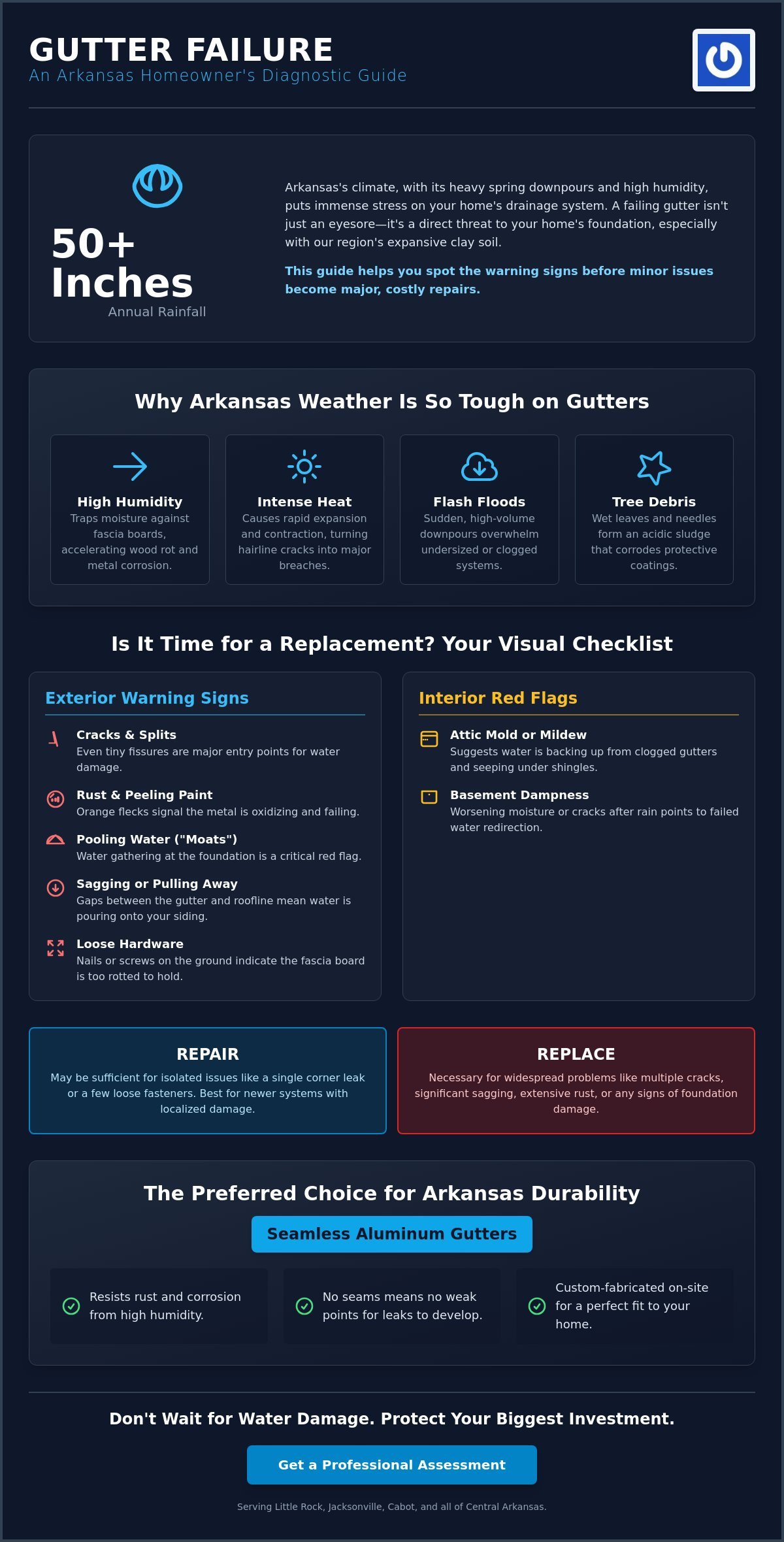
- Small cracks or splits: Even tiny fissures are problematic. The intense Arkansas summer heat causes materials to expand and contract, which quickly turns a hairline fracture into a major breach.
- Rust flecks and peeling paint: If you see orange stains on your siding or paint chips on the grass, the metal is likely oxidizing. This is a clear sign that the protective coating has failed.
- Foundation “moats”: Water pooling near your home suggests the system is failing to redirect runoff. This can lead to foundation erosion, a common and expensive issue in Central Arkansas.
- Hardware on the ground: Finding nails or screws beneath the eaves means the fasteners have pulled out of the wood. This often indicates the fascia boards are too soft or rotted to hold the weight.
Visual Cues from the Ground
You don’t always need a ladder to spot trouble. Inspect the exterior of your gutters for “tiger stripes,” which are dark vertical streaks. These marks indicate that water is consistently overflowing the front edge rather than flowing through the channel. Check the fascia boards behind the gutter for dark water stains or soft, crumbling wood. If you notice a visible gap between the gutter and your roofline, the system is likely pulling away due to the weight of debris or trapped water. This gap allows water to pour directly onto your home’s siding, leading to premature rot.
Signs of Interior Trouble
Sometimes the most telling evidence appears inside your home. Visit your attic and look for mold or mildew growth near the roofline. This often suggests that water is backing up under the shingles because the gutters are clogged or incorrectly pitched. In the lower levels of your home, keep an eye out for unexplained wall cracks or dampness in the basement. If these issues only seem to worsen during heavy Central Arkansas rain events, your gutters are likely the culprit. Understanding when to replace gutters Arkansas homeowners should consider is vital to maintaining a dry, stable home environment.
Why the Arkansas Climate Accelerates Gutter Wear
Arkansas is famous for its natural beauty, but the same environment that creates our lush landscapes can be brutal on your home’s exterior. While national industry guides often claim gutters last two decades, our local climate tells a different story. Deciding when to replace gutters Arkansas weather has battered requires an understanding of how humidity, ice, and heavy debris interact with your drainage system. Our state’s unique mix of intense heat and heavy precipitation means standard maintenance isn’t always enough to prevent structural failure.
The Impact of High Humidity
In regions like Jacksonville and Cabot, persistent humidity creates a breeding ground for wood rot. When moisture is trapped behind a gutter against the fascia board, the wood softens long before you notice a problem from the street. This environment also accelerates oxidation in older metal systems, leading to those orange rust flecks mentioned earlier. The intense temperature swings we experience, where a freezing morning leads to a scorching afternoon, cause metal to expand and contract rapidly. This thermal movement stresses seams and pulls fasteners loose. Because of these factors, seamless aluminum has become the preferred standard for durability in Central Arkansas.
Our state’s dense tree canopy adds another layer of stress. The abundance of pine needles and oak leaves creates a thick, acidic sludge when wet. This debris doesn’t just clog the path; it eats away at the protective coatings of your gutters from the inside out. If you’re noticing hardware on the ground or sagging sections, it’s a sign that the weight of wet debris has compromised the system’s integrity and the health of your fascia.
Storm Season Stress Tests
Central Arkansas receives an average of over 50 inches of rainfall annually. During a typical spring thunderstorm, the sheer volume of water can easily overwhelm standard 5-inch gutter systems. We often see flash floods dump several inches of rain in a single hour, causing water to cascade over the sides and soak the foundation. This is particularly dangerous because of our region’s clay-heavy soil. Clay expands when wet and shrinks when dry, making precise water diversion essential to prevent foundation cracks. In towns like Malvern and Benton, the “hail season” that accompanies these storms can also dent and weaken the metal, further reducing its lifespan.
Winter brings its own set of problems. Ice storms in Little Rock and Hot Springs add immense weight to your eaves. A single foot of ice in a gutter can weigh over 30 pounds, which often warps brackets and pulls the entire system out of alignment. Before hiring someone to address these storm-related issues, it’s wise to verify a contractor’s license to ensure they follow the 2018 International Residential Code. If your current system is showing signs of struggle after a rough winter or a heavy spring, exploring professional gutter installation services can provide the long-term protection your home needs. Understanding when to replace gutters Arkansas homes require means staying ahead of these seasonal cycles.
The Hidden Costs of Delaying Gutter Replacement
Delaying a gutter upgrade might seem like a way to save money in the short term, but it often leads to much higher expenses down the road. In Central Arkansas, our unique soil and heavy rainfall turn minor drainage issues into structural nightmares. When you ignore the warning signs, you aren’t just risking a leaky pipe; you’re risking the integrity of your entire property. Professional contractors understand that a functional drainage system is the most cost-effective insurance policy a homeowner can have against the elements.
Protecting Your Foundation in Central Arkansas
Central Arkansas is known for its heavy clay soil, which is highly reactive to moisture levels. This material expands significantly when saturated and shrinks as it dries. When gutters fail to channel water away, the soil surrounding your home becomes oversaturated. This creates immense hydrostatic pressure against your basement or crawlspace walls. Over time, this pressure leads to wall bowing and foundation settling. Fixing these structural issues in Little Rock can easily cost ten times more than a standard gutter project.
Following a consistent home maintenance checklist is the best way to catch these problems early. Your gutter health is also directly tied to the longevity of your roofing installation Central Arkansas. When water backs up due to poor drainage, it rots the roof deck and shingles at the eaves. This moisture penetration can shave years off the life of your roof, leading to leaks that damage your interior ceilings and insulation.
Preserving Your Exterior Siding
Overflowing water doesn’t just fall straight down; it splashes. As water hits the ground near your foundation, it kicks up dirt and consistent moisture onto the lower panels of your home. This constant saturation leads to mold growth on vinyl and rapid rot on wood materials. If you wait too long to address the drainage, you might eventually require a full home siding replacement Benton AR families could have otherwise avoided. Proper gutters act as a protective shield, preventing the dark green algae streaks and wood decay common in our humid climate.
Landscape Erosion and Pest Risks
Beyond the house itself, failing gutters destroy your curb appeal and backyard comfort. High-velocity runoff from a sagging corner can carve deep trenches into your flower beds and wash away expensive Arkansas sod. This erosion is difficult and costly to repair once the topsoil is gone. Additionally, standing water left in sagging or clogged gutters becomes a prime breeding ground for mosquitoes. These pests thrive in our warm, humid evenings, making your outdoor spaces unusable. Determining when to replace gutters Arkansas homeowners need for total protection is about safeguarding your comfort and your wallet. Don’t wait for a foundation crack to tell you it’s time for an upgrade.
Repair vs. Replacement: Making the Right Call
One of the most common questions we hear is whether a homeowner can get away with a simple patch or if it’s time for a total overhaul. Determining when to replace gutters Arkansas homeowners can trust often comes down to the frequency and location of the damage. While a single leaky corner might seem minor, a system riddled with “pinhole” leaks or widespread sagging has likely reached the end of its functional life. Constant small repairs often cost more in labor and frustration than a single, professional installation.
When a Repair is Sufficient
Minor issues don’t always require a full crew and a dumpster. If your drainage system is generally in good shape, a few targeted repairs can extend its lifespan. We often find that simple mechanical failures can be resolved without a full replacement. Consider a repair if you are dealing with:
- Loose components: Re-securing a loose downspout or a single bracket that has wiggled free is a straightforward fix.
- Isolated damage: If a fallen branch from a recent storm caused a single puncture, a professional patch is usually enough.
- Corner leaks: Cleaning and re-sealing a single leaking joint with high-grade, UV-resistant sealant can stop a localized drip.
When Replacement is Mandatory
Sometimes, continuing to pay for small repairs is like pouring money into a failing car. We recommend a full replacement if you notice more than three or four leaks throughout the entire system. Multiple leaks suggest the material itself has thinned or oxidized beyond the point of reliable repair. If you see significant rust or corrosion on more than 20% of the metal, the structural integrity is compromised. Additionally, gutters that have pulled away from the house multiple times indicate that the fasteners can no longer grip the wood securely. This repeated failure is a clear sign that the system can no longer handle the weight of Arkansas rainfall.
The Fascia and Roofing Connection
You can’t ignore the wood behind the metal. If the fascia board is rotting, the entire gutter system must be removed to replace the damaged wood. Re-hanging heavy gutters on soft, rotted fascia is a temporary fix that will inevitably fail during the next heavy rain. It is also highly efficient to coordinate your drainage project with other exterior upgrades. For instance, many homeowners choose to install new gutters when they are already investing in metal roofing Arkansas. This ensures that the drip edge and the gutter system work together perfectly to shed water away from your home’s structure.
If you’re tired of temporary patches and want a permanent solution for your home, our team provides expert gutter installation services tailored to the Central Arkansas climate. Knowing when to replace gutters Arkansas properties need is about recognizing when the cost of repair no longer outweighs the peace of mind of a new, seamless system.
Choosing a Professional Gutter Installer in Central Arkansas
Selecting the right partner for your project is just as important as knowing when to replace gutters Arkansas homeowners have relied on for years. While national franchises may offer flashy technology, they often lack the deep-rooted understanding of our local environment. You need a team that recognizes how the rolling hills of Hot Springs or the specific drainage needs in Cabot affect your home’s exterior. A local expert doesn’t just install a product; they provide a solution that accounts for our state’s 50-plus inches of annual rainfall.
Look for contractors who specialize in seamless aluminum options. This material is the gold standard for durability because it eliminates the joints where leaks typically begin. A professional installer should also provide a comprehensive evaluation of your entire exterior. Gutters don’t exist in a vacuum. Their performance is tied to your roof’s drip edge and the condition of your siding. Prioritize businesses with a long-standing reputation for customer service in Little Rock and Benton. These companies are accountable to the community and take pride in their craftsmanship.
The Arkansas Home Improvement Advantage
Our team at Arkansas Home Improvement takes a holistic approach to every project. We specialize in gutter replacement Benton AR residents can trust to protect their foundations. Our “job well done” mentality means we never suggest a full replacement if a simple repair will suffice. We have extensive expertise in coordinating your drainage system with other exterior home improvement Arkansas projects, ensuring your home remains stable and beautiful for decades. We believe in building long-term relationships through honest work and professional energy.
What to Expect During Your Consultation
A professional consultation should feel like an educational experience, not a high-pressure sales pitch. When we visit your property, we conduct a thorough inspection of your roofline, fascia boards, and foundation drainage. We look for the subtle signs of failure discussed earlier, like rotted wood or soil erosion. You’ll receive a clear, honest assessment of when to replace gutters Arkansas weather has damaged beyond repair. Finally, we provide a detailed plan to ensure your new system can handle Central Arkansas’s heaviest flash floods, giving you peace of mind before the next storm season arrives.
Secure Your Home Before the Next Arkansas Storm
Your gutters are the first line of defense against the heavy rainfall and high humidity that define our state. By identifying red flags like rust flecks, sagging sections, or foundation puddles, you can prevent minor issues from turning into structural failures. We have explored the critical differences between a simple sealant patch and the need for a full system upgrade. Understanding when to replace gutters Arkansas homes require is a vital step in maintaining your property’s value and safety.
For over 15 years, our team has served Central Arkansas with A+ rated local craftsmanship. We are comprehensive exterior protection experts who understand that a “job well done” means prioritizing your home’s long-term stability. We take pride in our reputation for consistency and honest assessments, ensuring you never pay for a replacement you don’t actually need.
Protect your home from Arkansas storms—schedule your free gutter inspection today!
Don’t wait for the next flash flood to test your drainage. Taking a proactive step today ensures your home remains a safe, dry sanctuary for your family for years to come.
Frequently Asked Questions
How long do gutters typically last in Arkansas?
Gutters in our region typically last between 15 and 20 years, though local environmental factors often dictate the actual lifespan. The intense humidity and frequent ice storms in Central Arkansas can cause materials to degrade faster than in drier climates. Regular maintenance helps, but determining when to replace gutters Arkansas homes need often depends on the level of oxidation and structural warping observed over time.
What is the best time of year to replace gutters in Central Arkansas?
The best time for replacement is during the late summer or early autumn months. This window provides dry conditions for installation before the heavy autumn rainfall and winter ice storms arrive. Scheduling during these months ensures your home is fully protected before the next major weather cycle puts your drainage system to the test.
Can I install new gutters myself, or should I hire a pro?
While DIY kits exist, professional installation is strongly recommended for seamless aluminum systems. Arkansas state law requires a contractor’s license for residential projects exceeding $2,000 in total value. Professionals ensure the correct pitch and secure attachment to the fascia, which prevents the sagging issues common with amateur installations.
Do leaf guards actually work in Arkansas’s pine-heavy areas?
High-quality micro-mesh leaf guards are highly effective, even in areas dense with pine needles and oak leaves. Standard screens often allow small needles to slip through, leading to internal clogs. A properly installed guard system reduces maintenance frequency and prevents the acidic debris buildup that can corrode your gutters from the inside out.
How much does gutter replacement usually cost in Little Rock?
Total costs vary based on the linear footage of your home, the number of stories, and your choice of material. While vinyl is an affordable entry point, aluminum offers significantly better longevity for our climate. We recommend a professional evaluation to get an accurate estimate tailored to your home’s specific dimensions and the complexity of your roofline.
Will new gutters help prevent my basement from flooding during storms?
New gutters are a primary defense against basement dampness and foundation settling. By channeling water away from your home, they prevent the expansive clay soil in our region from becoming oversaturated. This redirection significantly reduces the hydrostatic pressure that causes basement walls to bow or leak during heavy Central Arkansas storms.
Does a new roof installation include new gutters?
A roofing installation is generally a separate service from gutter replacement, though they are frequently performed at the same time. Coordinating these projects allows for a seamless integration of the drip edge and the gutter brackets. This ensures that water flows directly into the channel without slipping behind the fascia board, providing superior protection for your eaves.
What are the signs that my fascia boards are rotting behind the gutters?
Look for dark water stains, crumbling wood, or localized mold growth along your roofline. If you can easily poke a screwdriver into the wood or if the gutters are pulling away from the house, the fascia is likely compromised. Addressing rot immediately is essential, as the fascia provides the structural support needed to hold the weight of your entire drainage system.