
If you have spent another summer watching your expensive lawn turn into a patchy brown wasteland in the Hot Springs heat, you aren’t alone. Most homeowners in Hot Springs Village and across Central Arkansas deal with the same red clay frustration year after year. It often feels like you are trying to grow a garden on a literal brick. Between the standing water that pools on hard-packed ground and the intense humidity that suffocates root systems, finding the best sod for Arkansas clay soil can feel like an expensive game of trial and error.
We understand that you want a durable, golf course quality lawn where your kids and pets can play without tracking mud into the house. You deserve a landscape that increases your property value rather than draining your bank account. This guide reveals the specific sod varieties, such as heat-tolerant Bermuda and Zoysia, that are proven to thrive in our local 2026 climate. We will also share the professional secrets to soil-to-root contact that ensure your new grass takes hold for a lifetime. From the rolling hills of Hot Springs to the growing neighborhoods in Little Rock, North Little Rock, Benton, and Malvern, a lush and resilient lawn is finally within your reach.
Key Takeaways
- Identify why the dense composition of Central Arkansas red clay leads to standing water and suffocated root systems.
- Explore why Bermuda and Zoysia varieties are the best sod for Arkansas clay soil because of their ability to thrive in the intense Hot Springs heat.
- Learn the “secret sauce” of soil preparation, which involves breaking up the hardpan layer to ensure your new sod takes root for a lifetime.
- Understand why timing your installation during the Spring or Early Fall windows is critical for lawn health in Hot Springs Village and the surrounding region.
- Discover how professional sod services can be coordinated with other exterior upgrades like metal roofing or siding for an immediate boost in curb appeal.
Understanding Arkansas Red Clay: Why Your Current Lawn is Struggling
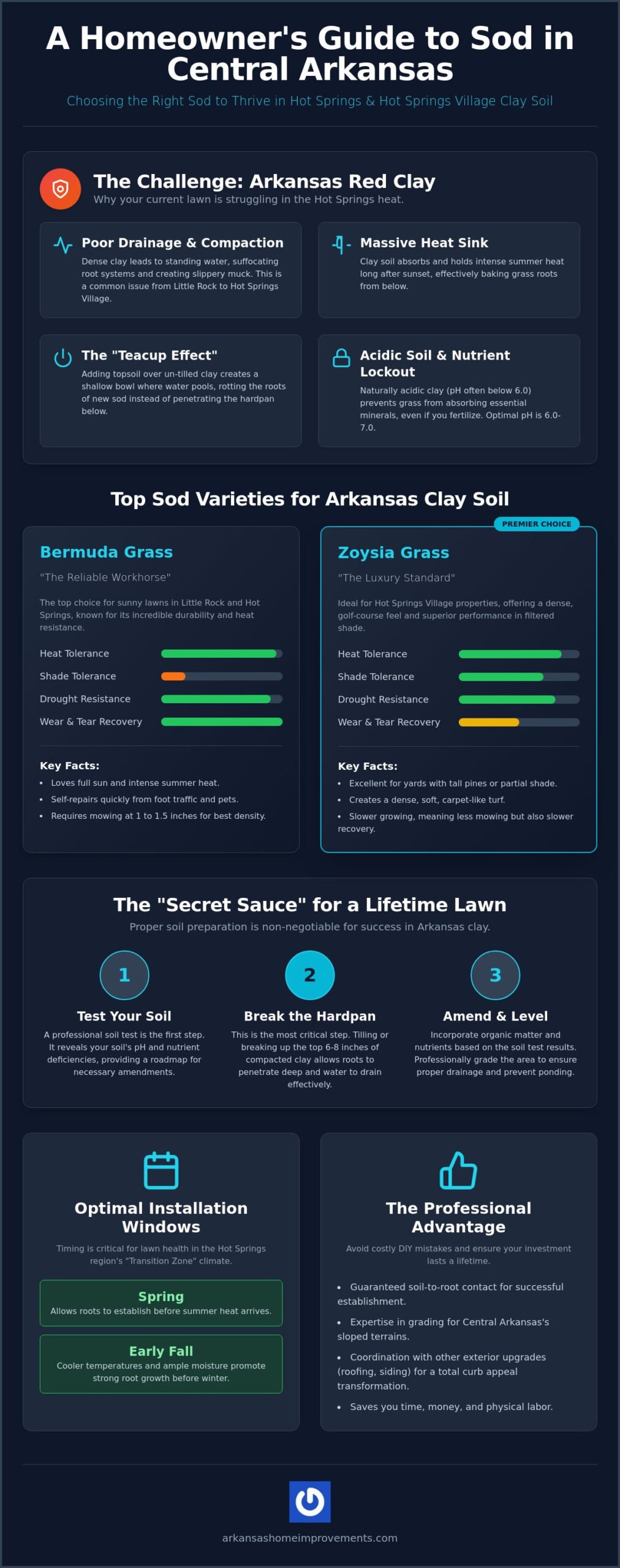
Arkansas red clay is more than just a nuisance for your car’s tires; it’s a structural barrier for your landscaping. If you live in Hot Springs or Little Rock, you’ve likely seen how this dense material turns into slippery muck when wet and a cracked brick when dry. This happens because our local soil is primarily composed of Ultisols, which are highly weathered soils with a significant accumulation of clay. Understanding Arkansas Red Clay means recognizing its high iron oxide content, which gives the dirt its signature rusty color but also contributes to extreme compaction. This density effectively suffocates grass roots by trapping water on the surface and excluding the oxygen that roots need to breathe.
Choosing the best sod for Arkansas clay soil starts with respecting the ground you’re planting in. During a typical July in Hot Springs, the clay acts as a massive heat sink. It absorbs the sun’s energy and holds onto it long after the sun goes down, effectively baking your grass roots from the bottom up. Even if you water frequently, the heat trapped in the dense clay can cause traditional grass varieties to go dormant or die. The most common mistake we see homeowners make is “throwing dirt over clay.” Adding a thin layer of topsoil over compacted clay creates a “teacup effect” where water sits in the loose soil and cannot penetrate the hardpan below, eventually rotting the roots of your new sod.
The Drainage Dilemma in Central Arkansas
Properties in Hot Springs Village often face unique drainage challenges due to their beautiful, sloped terrain. On these lots, water tends to rush over the surface of compacted clay rather than soaking in. This leads to “ponding” in low spots and massive runoff that carries away essential nutrients. When the clay stays saturated in flat areas, it pushes out oxygen, leading to root rot. This cycle is especially brutal during our heavy spring rains, leaving the lawn too weak to survive the inevitable summer drought that follows.
Soil pH and Nutrient Lockout
Arkansas clay is naturally acidic, which often leads to a “nutrient lockout” where the grass cannot absorb the minerals it needs to stay green. Before you invest in the best sod for Arkansas clay soil, we always recommend a professional soil test to determine exactly what your lawn is missing. The optimal pH range for most Arkansas sod types is between 6.0 and 7.0. Without addressing this balance, even the most expensive sod will struggle to thrive in our local red dirt.
The 3 Best Sod Varieties for Arkansas Clay Soil
Selecting the right grass is about more than just color; it’s about survival in the “Transition Zone.” Because Arkansas sits between the cold north and the humid south, our lawns face extreme temperature swings. When searching for the best sod for Arkansas clay soil, you must choose a variety that can handle the dense compaction of red clay while resisting our 100-degree summers. Matching your grass variety to your specific maintenance commitment level is the first step toward a successful landscape.
Bermuda Grass: Durability and Heat Resistance
Bermuda grass is the reliable workhorse for many Little Rock and Hot Springs lawns. It loves the sun and thrives in the intense heat that often wilts other species. Hybrid Bermuda varieties are particularly popular because they offer a finer texture and a deep green color that provides instant curb appeal. This grass is known for its rhizomes, which are underground runners that allow the lawn to self-repair after heavy foot traffic or pet activity. On clay soil, Bermuda requires high nitrogen levels and should be kept at a lower mowing height, usually 1 to 1.5 inches, to encourage a thick, carpet-like density.
Zoysia: The Luxury Standard for Hot Springs
For homeowners in Hot Springs Village, Zoysia is often the premier choice. It offers a dense, soft feel underfoot that many compare to a high-end golf course. One of its greatest advantages in our region is its ability to handle filtered shade. If your property is tucked under the tall pines common in the Village, Zoysia will far outperform Bermuda. According to this University of Arkansas Extension guide, Zoysia is highly recommended for its cold tolerance and disease resistance in the humid Central Arkansas climate. While it grows slower and takes longer to recover from damage, the reduced mowing frequency makes it a favorite for those seeking a lower-maintenance luxury lawn.
Tall Fescue: The Shady Solution
While warm-season grasses dominate, Tall Fescue remains a popular option for shaded Little Rock lots and cooler North Arkansas regions. It’s a bunch-type grass that stays green year-round, providing a vibrant look even in January. However, Fescue is not a “set it and forget it” option for clay. Because it struggles in the July heat, it requires deep, consistent watering to keep its roots from drying out in the hard-packed red dirt. If you aren’t sure which variety matches your home’s sun exposure, our team can help you select and install the professional sod services your property needs to thrive.
Preparing Clay Soil for Sod: The “Secret Sauce” for Success
Even the best sod for Arkansas clay soil will fail if it’s laid directly onto a compacted “hardpan.” In many new construction areas around Hot Springs and Hot Springs Village, heavy machinery packs the red clay into a surface as hard as a driveway. To give your new lawn a chance, you must break up the top six inches of this compacted layer. This creates the necessary pore space for oxygen and water to reach the roots. Following a structured process for Preparing Clay Soil for Sod ensures your investment doesn’t wash away during the next heavy rainfall.
The preparation process starts with clearing debris and rough grading to move water away from your home’s foundation. After breaking up the clay, we incorporate organic matter like compost or high-quality topsoil blends. This isn’t just about nutrition; it’s about changing the soil structure so it doesn’t revert to a brick-like state. Finally, we perform a finish grade and use a water-filled roller to ensure a smooth, level surface. This step eliminates the “scalping” issues that occur when mowers hit high spots in an uneven yard.
Amending Clay: What to Add and What to Avoid
One of the most dangerous myths in Arkansas landscaping is that adding sand will “loosen up” clay. In reality, mixing sand with our local red clay creates a substance similar to concrete. Instead, focus on organic amendments. Compost and leaf mold are excellent for creating air pockets. Since our clay is naturally acidic, we also use lime to raise the pH level based on your specific soil test results. This ensures the best sod for Arkansas clay soil can actually access the nutrients in the ground rather than having them “locked out” by high acidity.
Professional Grading for Hot Springs Topography
Managing water is the biggest challenge on the hilly terrain of Hot Springs and Malvern. Without professional grading, heavy rains will either pool in low spots or carve out “rivers” through your new sod. We often utilize swales or French drains to direct runoff safely into the street or wooded areas. A 1% to 2% slope is critical for clay-based lawn drainage to prevent standing water from suffocating the root system. Proper grading protects your lawn and ensures that water doesn’t seep back toward your home’s foundation or siding. For those looking to integrate structural solutions into their landscape, the hardscaping and outdoor construction work from Cascade Outdoor Services offers great examples of how to combine functional drainage with high-end curb appeal.
Professional Sod Installation vs. DIY: Avoiding Costly Mistakes
Many homeowners in Hot Springs see a pallet of grass and think it is a simple weekend project. It’s not. Wrestling a 2,000-pound pallet of wet clay sod across your backyard in the humidity of a Central Arkansas afternoon is a recipe for exhaustion. Beyond the physical toll, the technical requirements for a successful “take” are incredibly high. Even if you buy the best sod for Arkansas clay soil, an improper installation will lead to brown patches and wasted money within weeks.
Timing is everything in our climate. We typically recommend a “window of opportunity” in either the Spring or Early Fall. Attempting to lay sod in the middle of a July heatwave is a death sentence for new grass, as the roots cannot establish themselves before the clay bakes. Once the grass is down, the root-to-soil connection is the most critical factor. Air pockets between the sod and the clay act as a barrier, preventing moisture from reaching the roots and causing the grass to dry out from the bottom up. Professional installation ensures every square inch is rolled and pressed into the earth to eliminate these silent killers.
Why DIY Sod Projects Often Fail on Clay
The physical challenge is often the first hurdle. Moving heavy pallets across soft, prepared soil without creating deep ruts requires specialized equipment and experience. A standard garden rake simply isn’t enough to achieve the precise grading needed for proper drainage in Hot Springs Village. Most DIY attempts fail because the homeowner underestimates the immediate aftercare. You must follow a strict 14-day watering schedule to keep the clay moist but not flooded. If the project fails, “starting over” often costs twice as much as doing it right the first time because you have to pay for the removal of the dead turf and the preparation of the soil again.
The Arkansas Home Improvement Advantage
Our team brings deep local expertise to every project, specifically handling the stubborn red clay found in Benton, Little Rock, and the surrounding areas. We don’t just lay grass; we integrate your lawn with other exterior home improvement Arkansas projects like new siding or gutter systems to ensure your entire property is protected from water damage. Steve’s personal commitment to every job means we never cut corners on the “rolling” process. We ensure every roll is seated perfectly for long-term growth. If you are ready to transform your yard without the backbreaking labor, schedule our professional sod services today to ensure your lawn thrives for a lifetime.
Instant Curb Appeal: Professional Sod Services in Hot Springs and Central Arkansas
A beautiful, healthy lawn is the final piece of the puzzle for any home exterior. While a new roof or fresh siding provides protection and structure, a professional sod installation provides the emotional “wow” factor that truly transforms property value overnight. For many homeowners, selecting the best sod for Arkansas clay soil is just the beginning of a larger journey toward a total exterior makeover. When you coordinate a lush new lawn with other high-end upgrades, such as metal roofing Arkansas installations, the result is a home that stands out as a beacon of quality in your neighborhood.
In Hot Springs Village, where many homes sit directly on golf courses, the standard for curb appeal is exceptionally high. Owners of these golf-front properties often require custom sod solutions that match the density and color of the surrounding fairways. To preserve these stunning views from your porch or deck, you may also want to explore Glass Railings as a way to finish your exterior renovation with a modern touch. We specialize in providing that seamless transition, ensuring your yard looks like an extension of the course itself. Once the installation is complete, we provide long-term maintenance plans to help you navigate the unique challenges of clay-based lawns, ensuring your grass stays vibrant and green through every changing season.
Serving Our Central Arkansas Community
Our team is deeply rooted in the local community, with a dedicated focus on Hot Springs, Hot Springs Village, and the surrounding areas. We recognize that a lawn in Arkadelphia faces different drainage challenges than one in the specific soil mixes of Cabot or Jacksonville. This local knowledge is vital for your lawn’s survival in our humid climate. We take immense pride in our workmanship and hold ourselves to the highest professional standards across North Little Rock, Benton, and Malvern. You can check out our guide on choosing a contractor in Arkansas to see exactly how we prioritize reliability and customer satisfaction in every project we undertake.
Ready for a Transformation?
We make the process of upgrading your landscape as simple and stress-free as possible. From the initial soil testing to the final roll of the water-filled drum, we handle every detail so you don’t have to. Our goal is to provide you with a durable, beautiful lawn that serves as a safe place for your family to play and a stunning backdrop for your home. We handle everything from site preparation to the final roll, ensuring you get the best sod for Arkansas clay soil that matches your property’s specific shade and traffic profile. If you are ready to stop fighting with patchy red dirt and start enjoying a “golf course” look, we are here to help. Schedule your professional sod consultation with Arkansas Home Improvement today!
Take the First Step Toward a Lifetime of Lush Greenery
Achieving a golf course look in Central Arkansas isn’t impossible, but it does require moving beyond the “dirt over clay” approach. By selecting the best sod for Arkansas clay soil and committing to deep soil preparation, you can finally end the cycle of brown patches and standing water. Whether you choose the heat resistance of Bermuda or the luxury feel of Zoysia, success depends on breaking through that stubborn hardpan to let your lawn breathe.
Arkansas Home Improvement brings over 15 years of experience to every project in Hot Springs and Hot Springs Village. We use specialized equipment designed specifically for heavy clay soil preparation, ensuring your new sod takes root quickly and stays healthy for years. Our team understands the local climate and the unique needs of landscapes in Benton, Little Rock, and Malvern. Don’t waste another summer on a failing lawn.
Get a Professional Sod Installation Quote for Your Arkansas Home and enjoy the curb appeal your property deserves. We look forward to helping you create a durable, beautiful outdoor space for your family to enjoy.
Frequently Asked Questions
How often should I water new sod on clay soil in Arkansas?
You should water new sod at least twice daily during the first 10 to 14 days to keep the root zone consistently moist. In the intense Hot Springs heat, it is vital to check that the water is actually penetrating the clay beneath the sod. Once the roots begin to take hold, you can transition to deeper, less frequent watering that encourages the roots to grow further into the dense red dirt.
Can I lay sod directly over my existing clay and weeds?
No, you shouldn’t lay sod directly over existing weeds or hard-packed clay. This prevents the root system from reaching the nutrients it needs and allows weeds to eventually poke through your new lawn. Proper preparation involves removing all existing growth and tilling the top several inches of clay to ensure the best sod for Arkansas clay soil can actually establish itself for the long term.
What is the best month to install sod in Central Arkansas?
The ideal window for sod installation in Central Arkansas is during the spring (April through June) or early fall (September and October). These months offer moderate temperatures that allow the grass to root without the stress of the 100-degree “summer bake.” Avoiding the peak of summer is especially important in Hot Springs Village to ensure your investment doesn’t wither before it takes hold.
Do I need to add topsoil before laying sod on clay?
While you don’t necessarily need inches of new dirt, amending the clay with organic matter or a topsoil blend is a professional best practice. This process creates the necessary pore space for oxygen to reach the roots. Without these amendments, the heavy iron-rich clay in areas like Little Rock and Benton can become too compacted, making it difficult for even the heartiest grass to thrive.
How long does it take for sod to root in clay soil?
It generally takes about two to three weeks for sod to firmly root into clay soil under ideal conditions. You can check this by gently lifting a corner of a sod piece; if you feel significant resistance, the roots have begun to knit with the ground. In the dense clay of Hot Springs, this process might be slightly slower than in sandy soils, which makes consistent moisture during the first 21 days critical.
Is Zoysia or Bermuda better for the Hot Springs climate?
Zoysia is the premium choice for the filtered shade found in Hot Springs Village, while Bermuda is the powerhouse for full-sun areas. Bermuda handles high foot traffic and pet activity exceptionally well. Zoysia offers a soft, carpet-like feel but grows more slowly. Both are excellent options for the best sod for Arkansas clay soil depending on your specific lot’s sun exposure and your maintenance preferences.
What happens if it rains immediately after my sod is installed?
Light rain is helpful, but heavy Central Arkansas storms can be a concern if your yard isn’t professionally graded. A downpour immediately after installation can cause water to pool under the sod, potentially leading to root rot or shifting the rolls. This is why professional grading and rolling are so important for properties in hilly areas like Hot Springs and Malvern to ensure proper drainage.
How much does professional sod installation cost in Arkansas?
The cost of professional sod installation depends on the square footage of your yard and the amount of soil preparation required to break up the hardpan clay. Factors like the specific grass variety and the accessibility of your property also play a role in the final price. We recommend a professional consultation to get an accurate estimate tailored to your specific landscaping goals and the current condition of your soil.