Did you know that the average Arkansas homeowner is now paying 14.16¢ per kilowatt-hour, with even higher costs expected following Entergy’s 2026 rate filings? It’s a frustrating reality for families in Hot Springs and Hot Springs Village, where the heavy humidity often makes your air conditioner work overtime just to keep pace. You likely feel the sting of those rising utility rates every time you open your mail. This guide explains how new windows reduce energy bills Arkansas homeowners are facing in this new economic landscape. We’ll show you how to maximize your savings even though the previous federal tax credits have expired. You will learn about the latest ENERGY STAR 7.0 standards and why professional installation is the most reliable way to ensure your home stays cool, quiet, and energy-efficient for years to come.
Key Takeaways
- Identify why the unique climate in Hot Springs and Hot Springs Village makes outdated windows a major financial drain.
- Discover how new windows reduce energy bills Arkansas homeowners are facing after the 2026 utility rate increases.
- Learn the importance of ENERGY STAR 7.0 certification and Low-E coatings for year-round thermal protection.
- Find out why professional installation is necessary to prevent humidity leaks and ensure long-term durability.
- Compare the long-term value of window replacement against the limited results of temporary repairs like film or caulk.
The Arkansas Thermal Challenge: Why Old Windows Cost You Money
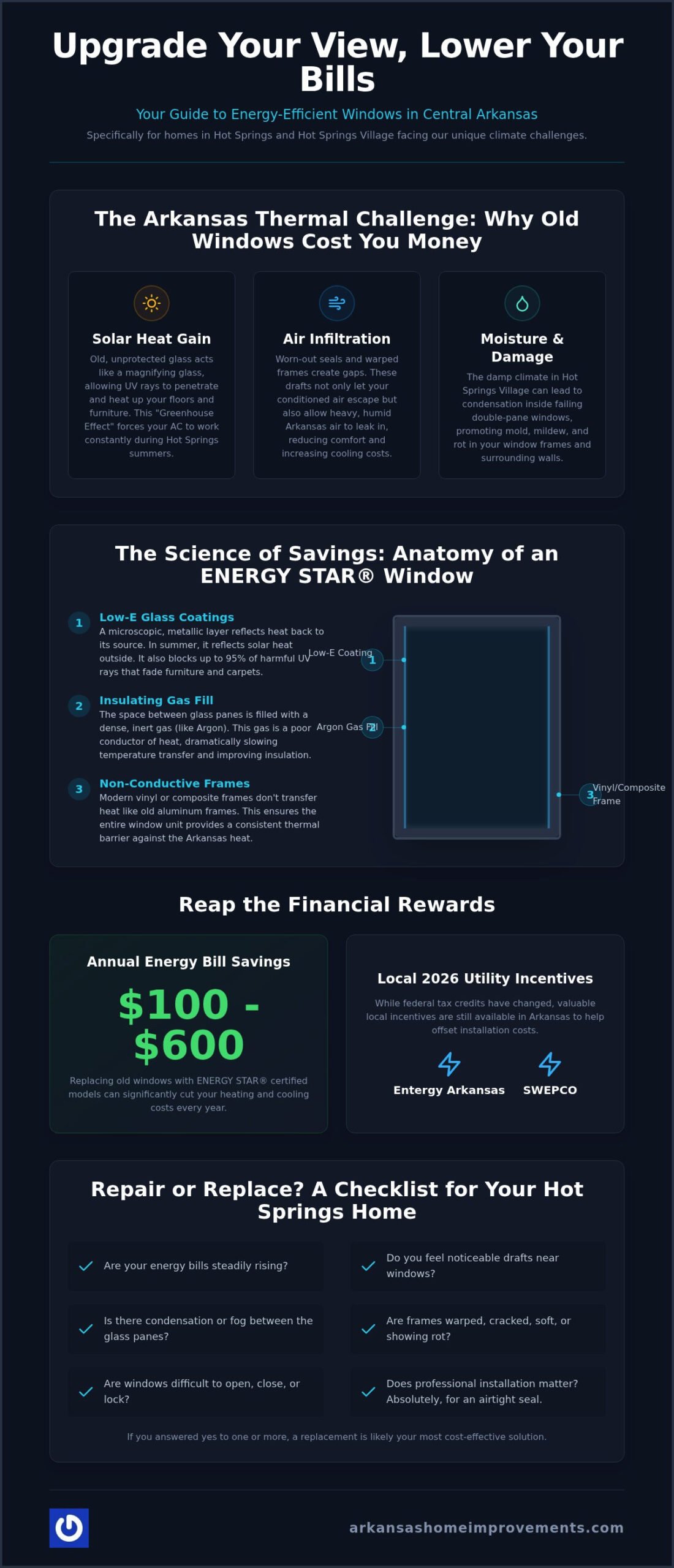
Arkansas summers are famously brutal. When temperatures climb past 90°F and the humidity lingers, your home should be a sanctuary. Unfortunately, many homes in Hot Springs and Hot Springs Village struggle to stay cool because of outdated window technology. Old single-pane glass or failing double-pane units act more like heaters than barriers. They create a “greenhouse effect” where heat enters your home but can’t escape, forcing your air conditioner to run almost constantly. This is a primary reason why new windows reduce energy bills Arkansas homeowners pay each month.
Modern replacements are designed to be a high-performance thermal barrier. By understanding how multi-pane windows insulate, you can see how they block the transfer of heat. Instead of just providing a view, these units protect your interior climate from the harsh Central Arkansas environment. This protection is essential for maintaining comfort without overworking your mechanical systems.
To better understand how this technology impacts your home, watch this helpful video:
Solar Heat Gain: The Silent Bill Inflator
The sun’s UV rays do more than just fade your furniture; they carry intense thermal energy. Standard glass allows these rays to penetrate deep into your living spaces, heating up floors, carpets, and walls. This process, known as solar heat gain, turns your rooms into ovens even when the air conditioner is running. In our region, standard glass simply isn’t enough to combat the direct exposure of the southern sun. To further mitigate this heat and protect your decor, check out Axent Shutters Blinds & Shades LLC for custom interior window treatments. When your interior surfaces heat up, your AC unit must cycle more frequently to compensate. This constant starting and stopping doesn’t just raise your bill. It puts unnecessary wear on your equipment and shortens the lifespan of your expensive HVAC system.
Air Infiltration and Humidity Control
In residential areas like Hot Springs Village, many homes feature large windows to capture the beautiful scenery. However, if those frames are older, they often develop gaps that allow heavy, humid Arkansas air to seep inside. Dealing with moisture is often more expensive than dealing with heat alone. Your system has to work twice as hard to dehumidify the air before it can effectively lower the temperature. High humidity also leads to secondary issues like condensation on the glass, which can eventually cause wood rot or mold growth around your window sills.
To understand the technical side, the Air Infiltration Rate is the specific measurement of how many cubic feet of air pass through a square foot of window area under specific pressure conditions. Lower rates indicate a superior seal. By choosing professional window replacement, you ensure that these seals are airtight and installed with precision. This keeps the Arkansas “steam” outside where it belongs and protects the structural integrity of your home.
The Science of Savings: How 2026 Window Technology Works
Understanding how new windows reduce energy bills Arkansas homeowners pay requires looking past the glass. A modern window is a precision-engineered machine designed to fight the specific thermal challenges of Central Arkansas. It isn’t just about having two panes of glass; it’s about the invisible technologies sandwiched between them. High-performance units now utilize non-conductive frame materials like premium vinyl or composite blends. Unlike old aluminum frames that act as a bridge for heat to enter your Hot Springs home, these materials stay room-temperature to the touch even during a July heatwave.
Inside the unit, manufacturers now use noble gases like Argon or Krypton as invisible insulators. These gases are denser than air. They slow down the movement of heat through the window, creating a buffer zone that keeps your conditioned air inside. When combined with the latest ENERGY STAR 7.0 standards, which require a Solar Heat Gain Coefficient (SHGC) of 0.23 or lower for our region, the result is a home that stays comfortable without constant AC adjustments. If you are curious about which glass package fits your specific layout, you can view the local options at Arkansas Home Improvement window services.
Understanding Low-E Coatings for the South
Low Emissivity (Low-E) coatings are microscopic metallic layers applied to the glass surface. They act like a thermos, reflecting heat back to its source. In Hot Springs Village, where many homes face direct afternoon sun, choosing a “Low-Solar Gain” coating is vital. This specific type of coating is engineered to block external heat while still letting in natural light. High-quality Low-E glass filters out up to 95% of harmful UV rays, protecting your skin and preventing your expensive hardwood floors or carpets from fading. As federal incentives change, it is wise to monitor the Energy Efficient Home Improvement Credit page to see how current regulations might affect your 2026 project.
The Power of Multi-Pane Insulation
While double-pane windows are the standard, triple-pane options are gaining traction for those seeking maximum peace of mind. The extra layer of glass and a second chamber of gas provide a significant jump in thermal resistance. While this guide focuses on windows, a complete thermal envelope includes high-quality attic and wall protection; you can visit Cape Coral Insulation to explore how professional insulation contractors optimize energy efficiency in similar humid environments. However, the glass is only as good as the spacer system holding it together. Modern “warm edge” spacers use flexible, non-metallic materials to separate the panes. This technology is a massive upgrade over old metal spacers. It prevents the edges of the glass from getting cold, which eliminates the annoying condensation and fogging often seen in older Hot Springs properties. By keeping the glass edges warm, these spacers ensure the airtight seal remains intact for decades, even as the Arkansas weather shifts from freezing winters to sweltering summers.
Calculating Your ROI: Energy Bills, Tax Credits, and Value
Investing in your home is a calculated financial decision. In Central Arkansas, where residential electricity rates hit 14.16¢ per kilowatt-hour in April 2026, the cost of inaction is higher than ever. With Entergy Arkansas filing for rate changes and Ozarks Electric already implementing increases, your monthly utility expenses are under constant pressure. According to ENERGY STAR estimates, homeowners can save up to 30% on heating and cooling costs by upgrading to high-efficiency windows. This is the most direct way new windows reduce energy bills Arkansas residents face during our humid summers. Beyond the obvious monthly savings, there is a significant “invisible ROI.” When windows provide a superior thermal seal, your HVAC system doesn’t have to struggle. This reduced load prevents premature equipment failure and saves you from the stress of emergency repairs during a Hot Springs heatwave.
Federal and Local Financial Incentives
The landscape for financial incentives shifted at the start of this year. Keep in mind that the federal Energy Efficient Home Improvement Credit (Section 25C) for windows expired on December 31, 2025. As of July 2026, there are no federal tax credits available for window replacements. This shift means homeowners in Hot Springs Village and Little Rock must look closer to home for savings. Utility providers like Entergy Arkansas offer various incentives through their Home Energy Solutions programs. While the state is still designing the official IRA-funded rebate programs, staying informed about local utility shifts is your best strategy. You can find a detailed breakdown of current local opportunities in this Exterior Home Improvement Arkansas roundup. Checking the ENERGY STAR Rebate Finder is also a professional recommendation to ensure you don’t miss any limited-time local offers.
Impact on Arkansas Property Value
In competitive markets like Benton and Hot Springs, energy efficiency has become a primary driver of property value. Modern buyers are increasingly focused on a home’s “Energy Score” and long-term operating costs. When you install high-performance windows, you aren’t just lowering your own bills; you are building equity. New windows drastically improve curb appeal, which is often the deciding factor in a quick sale. For properties in Hot Springs Village, where many homes feature large glass elevations, the transformation is particularly striking. High-quality installations often include transferable warranties. This provides a future buyer with the same peace of mind you enjoy today, making your home a much more attractive investment than a neighboring property with original, inefficient windows. It is a clear example of how new windows reduce energy bills Arkansas families are seeing on their 2026 statements while simultaneously boosting their net worth.
Repair vs. Replace: Making the Right Choice for Your Home
Decisions about home maintenance often come down to immediate costs versus long-term value. In historic areas of Hot Springs or established neighborhoods in Little Rock, original windows are often a source of pride but also a major source of energy waste. While some local sources suggest that a bit of caulk can solve your problems, that is often a temporary fix. It doesn’t address the underlying thermal issues that cause high utility costs. Understanding how new windows reduce energy bills Arkansas homeowners pay starts with knowing when your current units have reached the end of their functional life.
The 5 Signs You Need New Windows
Identifying a failing window is easier than you might think. If you notice any of these signs, it’s time to consider a professional replacement:
- Visible condensation: Fogging or moisture trapped between the glass panes indicates a blown seal. Once the gas fill escapes, the window loses its insulating power.
- Difficulty operating: If you struggle to open or lock your windows, the frames have likely warped or shifted. This is common in the shifting soils and high humidity of Hot Springs Village.
- Noticeable drafts: If you can feel air moving even when the window is locked, your home’s envelope is compromised.
- Increased noise: Modern windows provide a sound barrier. If outside traffic or neighborhood noise seems louder than usual, your glass and seals are failing.
- Soft or rotting frames: Wood rot is a safety hazard. If a screwdriver can easily penetrate the frame, the structure can no longer support the glass safely.
When Repair is Just a Band-Aid
Many homeowners consider adding storm windows or heavy films to save money. However, these additions often cost more over time than a full replacement. Storm windows are cumbersome and don’t provide the same airtight seal as a modern, integrated unit. Single-pane windows, even when perfectly sealed, still allow heat to transfer through the glass itself. This is why new windows reduce energy bills Arkansas residents see on their monthly statements far more effectively than any “quick fix.”
Evaluating your windows is often part of a larger check of your home’s exterior. Just as failing seals allow air to escape, a compromised roof can lead to massive thermal loss. You can learn more about the signs your roof needs replacement to ensure your entire home is protected. If your frames are rotting or your bills remain high despite repairs, it’s time for a permanent solution. You can get a professional assessment of your current window performance through Arkansas Home Improvement window replacement services.
Professional Window Installation in Central Arkansas
A premium window is only as good as the technician who installs it. You could buy the most expensive, gas-filled units on the market, but if the frame isn’t perfectly square or the insulation is sparse, you won’t see the results you expect. This is why professional installation is the final, critical step to ensure new windows reduce energy bills Arkansas homeowners are trying to lower. At Arkansas Home Improvement, we see many DIY attempts or cut-rate jobs that leave gaps large enough to let humid air right back in. Our team focuses on a precision-first mentality to protect your investment and ensure your home’s envelope is truly sealed.
Why Local Expertise Matters in Hot Springs Village
The homes in Hot Springs Village often feature unique architectural designs with expansive glass walls and specific siding types. These require a specialized touch to ensure the structural integrity of the opening remains sound during a replacement. We understand the specific materials and trim styles common in our area, allowing us to provide a seamless finish that looks like it was part of the original build. Beyond just the windows, we bring this same level of care to all our home transformation projects. You can explore our expert residential remodeling services in Benton to see how we handle comprehensive renovations across Central Arkansas.
The Arkansas Home Improvement Commitment
Steve’s approach is built on over 15 years of local service history and a reputation for reliability. Our process starts with a meticulous measurement of every opening. We don’t believe in “one size fits most” solutions; each unit is custom-fitted to your home. During the installation, we use high-grade sealants and specialized insulation techniques designed to withstand the shifting Arkansas climate. Once the windows are in place, we perform a final energy-efficiency check to confirm the airtight seal. We want you to have total peace of mind that the job was done right the first time, providing long-term durability and immediate comfort. If you’re ready to see how new windows reduce energy bills Arkansas families often struggle with, it’s time for a professional look at your home. You can schedule your window energy assessment today and take the first step toward a more comfortable, efficient living space.
Secure Your Home’s Comfort and Energy Future
The 2026 utility market in Arkansas presents new challenges for every homeowner. Protecting your living space from rising rates and the intense southern sun is a strategic financial move. By choosing high-performance glass packages and professional installation, you ensure your home remains a sanctuary even during the most humid months. We have covered how new windows reduce energy bills Arkansas families encounter, from the science of Low-E coatings to the necessity of precision-fitted seals in Hot Springs Village.
Arkansas Home Improvement has served Central Arkansas for over 15 years. We take immense pride in our A+ rated local craftsmanship and our deep specialization in energy-efficient Southern window solutions. Our team understands the unique architectural needs of Hot Springs and the surrounding areas, ensuring a job done right the first time. It is time to stop letting your hard-earned money leak out through old, inefficient frames. You can take the first step toward a more comfortable and valuable home today.
Get a Free Window Energy Savings Quote from Arkansas Home Improvement
We look forward to helping you achieve the lasting peace of mind that comes with a high-quality home upgrade.
Frequently Asked Questions
How much can I really save on my Arkansas energy bills with new windows?
Homeowners can typically expect to save up to 30% on their heating and cooling costs according to ENERGY STAR estimates. In Hot Springs, this is especially noticeable during the summer when high humidity and 90°F+ temperatures normally keep air conditioners running all day. These savings help offset the rising electricity rates recently implemented by local utility providers.
What is the best type of window for the Hot Springs, AR climate?
The most effective windows for our local climate are those with ENERGY STAR 7.0 certification and Low-Solar Gain Low-E coatings. These specific coatings reflect the intense Arkansas sun before it can heat up your interior surfaces. Non-conductive frame materials like premium vinyl or composite are also essential for preventing heat transfer into your home during a heatwave.
Are there any 2026 tax credits available for window replacement in Arkansas?
There are currently no federal tax credits available for window replacements in 2026 because the previous Energy Efficient Home Improvement Credit expired on December 31, 2025. Homeowners should instead look for utility-based incentives from providers like Entergy Arkansas. The state is also in the process of designing new rebate programs funded by the Inflation Reduction Act for future rollout.
How long does it take to install new windows in a standard home?
A professional crew can typically complete a whole-home window installation in one to two days for a standard residence. Our team at Arkansas Home Improvement prioritizes a structured approach to minimize disruption to your daily routine. We ensure each opening is measured and prepared beforehand so the actual replacement process is efficient, clean, and airtight.
Can I replace just the glass or do I need to replace the whole window frame?
You can replace just the glass units if your existing frames are structurally sound and free of rot. However, if your goal is to ensure new windows reduce energy bills Arkansas homes often struggle with, a full-frame replacement is usually the better investment. This allows us to seal hidden gaps around the frame that glass replacement alone cannot address.
What is the difference between double-pane and triple-pane windows for Southern heat?
Triple-pane windows offer an additional layer of glass and a second insulating gas chamber compared to double-pane units. While double-pane windows with high-quality Low-E coatings are excellent for the South-Central climate, triple-pane provides superior sound dampening and even higher thermal resistance. This is an excellent choice for homes in Hot Springs Village facing direct, unshaded afternoon sun.
Do new windows help with the high humidity we have in Central Arkansas?
New windows are highly effective at controlling indoor humidity by eliminating air infiltration through gaps and cracks in old frames. When moist Arkansas air is kept outside, your HVAC system doesn’t have to work nearly as hard to dehumidify your living spaces. Modern spacers also prevent condensation from forming on the glass during our famously humid mornings.
Will new windows help reduce the noise from traffic or neighbors?
Yes, upgrading to multi-pane windows significantly reduces the amount of outside noise that enters your home. The combination of multiple glass thicknesses and insulating gas fills like Argon creates a dense barrier that absorbs sound waves. This is particularly beneficial for properties near busy roads in Little Rock or growing neighborhoods in Benton.