When the next severe thunderstorm or ice storm sweeps through Clark County, the difference between a cold, dark house and a warm, functional home often comes down to a single piece of equipment. While we frequently help homeowners in Hot Springs and Hot Springs Village prepare for unpredictable Arkansas weather, we know that understanding the home generator cost Arkadelphia residents face is a top priority for those looking to protect their property. You shouldn’t have to guess whether your budget covers a unit that can handle your entire home or just the essentials while the grid is down.
It’s completely normal to feel a bit overwhelmed by the technical side of backup power, especially when you’re trying to figure out which kilowatt rating fits your lifestyle. This guide provides a clear roadmap for your project, from understanding Arkadelphia’s specific electrical permit application process to navigating state regulations for natural gas or propane lines. We’ll help you calculate the total investment needed for a reliable standby system that kicks in automatically. You’ll learn how to budget for the unit, the professional labor required by Arkansas law, and even the city permit fees that vary based on whether your service is 100, 200, or 400 Amps.
Key Takeaways
- Understand the total investment required for a standby generator in the region, including how local needs in Hot Springs and Hot Springs Village influence budgeting.
- Learn why the generator unit and Automatic Transfer Switch usually account for over half of your project budget, with the rest dedicated to professional labor.
- Compare the installation and operational costs of natural gas versus liquid propane to find the most efficient fuel source for your home’s location.
- Identify the specific local variables, such as meter distance and municipal permit fees, that shape your final home generator cost Arkadelphia estimate.
- Discover how a professional installation ensures your system meets all Arkansas safety codes, providing reliable protection during severe weather.
Home Generator Cost in Arkadelphia: What to Expect in 2026
Investing in a standby generator is more than just a purchase; it’s a permanent upgrade to your property’s infrastructure. In Arkadelphia and Hot Springs, these systems serve as a dedicated defense against utility failures. Understanding how standby generators work clarifies why they’re superior to the portable units found at local hardware stores. These stationary units integrate directly with your electrical system and fuel supply to provide automatic, seamless power during an outage.
As we progress through 2026, technology has moved toward smart-grid integration. New units communicate with local utilities to optimize energy use and provide real-time status updates to your smartphone. While these features impact the overall home generator cost Arkadelphia homeowners encounter, they offer a level of reliability and efficiency that was impossible just a few years ago. This technology ensures your system is always ready to perform when the grid fails.
To better understand the financial breakdown of these projects, watch this helpful video:
Why Central Arkansas Homeowners are Investing in Standby Power
Living in Clark and Garland Counties means facing unpredictable weather, from heavy ice storms to intense summer thunderstorms. While a portable generator might keep a few lights on, it requires manual setup in dangerous conditions and frequent refueling. A standby system removes that stress by activating the moment it detects a drop in utility power. This is vital for residents in Hot Springs Village who work from home or rely on medical equipment that cannot lose power for even a few minutes. It’s about maintaining your quality of life regardless of what the Arkansas sky decides to do.
Initial Cost Ranges for Local Installations
When you start looking at the home generator cost Arkadelphia contractors offer, you’ll find that the total investment depends on your specific power needs. An entry-level system might cover essential circuits like your refrigerator, well pump, and lighting. A more comprehensive setup for a large estate in Hot Springs Village will require a higher kilowatt rating to power multiple air conditioning units and luxury appliances. Beyond the immediate benefit of safety, these installations often increase property appraisal values in the Arkansas market. Buyers view a professionally installed standby generator as a premium feature that signifies a well-maintained and secure home.
Decoding the Price Tag: Unit vs. Professional Installation Costs
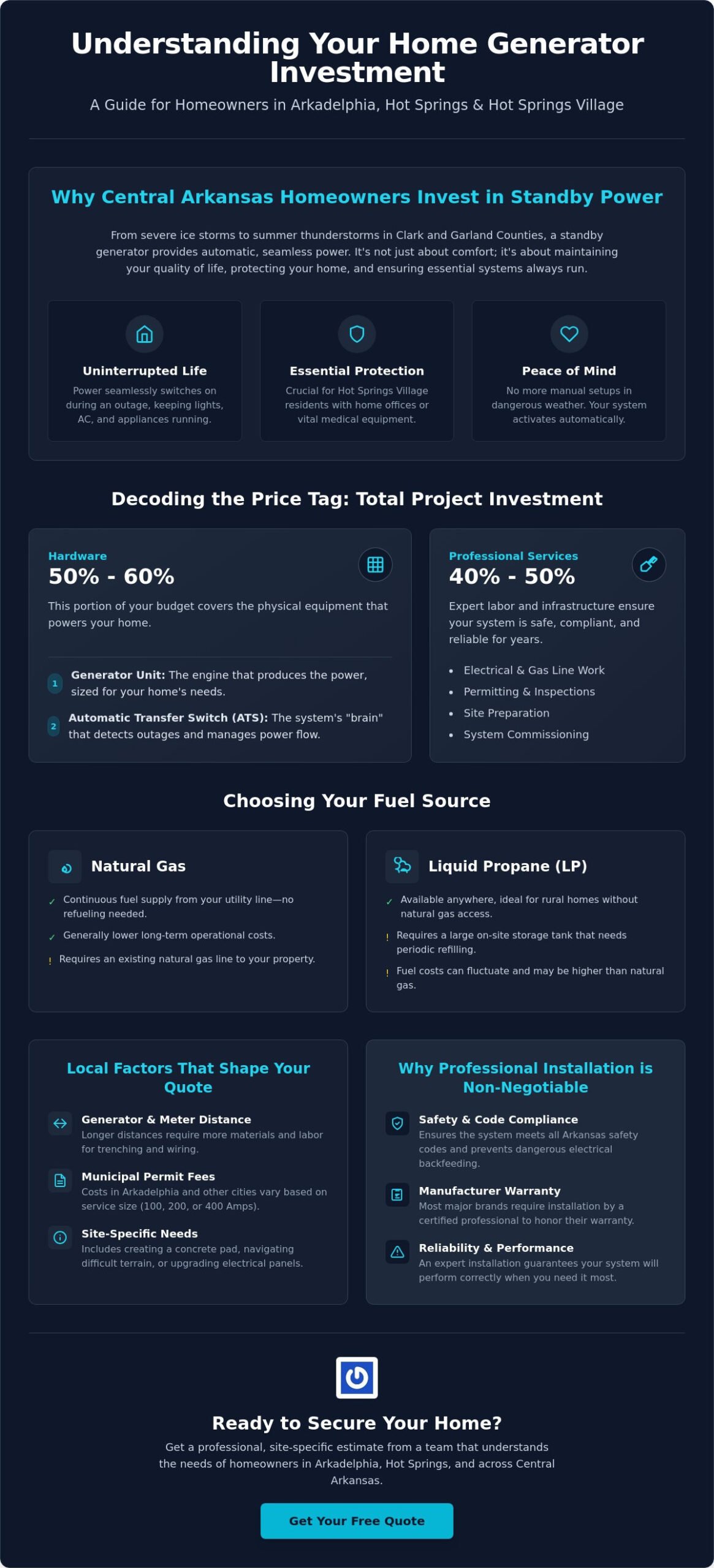
Understanding the breakdown of your investment helps remove the mystery from your project quote. While the physical machine is the most visible part of the purchase, the hardware typically represents only 50 to 60 percent of the total project. The rest is dedicated to the infrastructure and professional expertise required to integrate the system into your home. The two primary components you’ll pay for are the generator unit and the Automatic Transfer Switch (ATS). This switch acts as the command center, ensuring that power flows safely from the generator to your home without manual intervention.
Professional installation is a non-negotiable requirement for several reasons. Most major manufacturers will only honor their warranty if the unit is commissioned by a certified professional. Beyond the financial protection, an expert contractor ensures that the electrical integration meets local codes in Clark and Garland Counties. This prevents dangerous electrical backfeeding into the grid, which protects both your family and utility workers during a storm. If you’re calculating the home generator cost for your property, you must account for this specialized labor to ensure the system remains reliable for years. The home generator cost Arkadelphia homeowners see often reflects these critical safety and compliance steps.
The Hardware: Selecting Your Power Capacity
The size of your home determines the capacity you need. A 10kW unit might be perfect for a smaller residence, while sprawling estates in Hot Springs Village often require 18kW or 26kW models to maintain full functionality. Modern load shedding technology is a game-changer here; it allows a smaller, more affordable unit to manage heavy loads by prioritizing essential appliances like your HVAC and well pump. You may also find price premiums for ultra-quiet models, which are popular in the quiet neighborhoods of Hot Springs and Hot Springs Village.
The Labor: Electrical and Plumbing Requirements
The installation process involves more than just setting the unit on the ground. Licensed electricians must install the transfer switch and often a new sub-panel to manage your backup circuits. Simultaneously, plumbing work is required to connect the unit to a fuel source. Whether you’re using natural gas in downtown Arkadelphia or a propane tank in the rural areas around Hot Springs, these connections must be pressure-tested and code-compliant. Finally, the unit must sit on a level, reinforced concrete mounting pad or a heavy-duty pre-fabricated base to prevent shifting over time. For a clear picture of how these factors apply to your property, you can request a professional assessment to get started on your installation plan.
Fuel Sources and Ongoing Operational Expenses in Arkansas
Choosing a fuel source is a critical decision that influences both the initial setup and the long-term home generator cost Arkadelphia homeowners should expect. While the machine itself is vital, its performance depends entirely on a steady, reliable energy supply. In our region, the choice usually comes down to natural gas or liquid propane (LP). Each has distinct advantages depending on whether you’re located in a densely populated neighborhood or a more secluded part of the county. Having a plan for your fuel supply ensures that when a multi-day outage hits, your home remains a safe haven for your family.
Natural Gas vs. Propane: Local Availability and Costs
In downtown Hot Springs or established parts of Arkadelphia, natural gas is often the preferred choice because it provides a continuous fuel supply without the need for deliveries. However, your current gas meter might be undersized for the high demand of a standby unit. A standard 22kW standby generator typically requires approximately 281,000 BTUs per hour at full load when running on natural gas. If your existing infrastructure can’t meet this demand, you’ll need to factor in the cost of running new, larger gas lines or upgrading your service from the utility provider.
For many residents in Hot Springs Village or rural Clark County, natural gas isn’t always an option. In these cases, liquid propane is the reliable alternative. You’ll need to consider the cost of installing a large on-site tank, which can be either purchased or leased from a local fuel provider. While propane requires you to monitor your tank levels, it doesn’t degrade over time. This makes it an excellent choice for long-term storm recovery when the utility grid might be down for a week or more. The home generator cost Arkadelphia residents face often fluctuates based on these local infrastructure realities.
Maintenance and Long-Term Reliability Costs
To ensure your investment stays protected, regular maintenance is essential. Much like a vehicle, a generator requires annual service visits that include oil changes, spark plug replacements, and battery health checks. These visits are the best way to ensure the unit starts immediately when a storm hits Garland or Clark County. Most modern units also perform a weekly exercise cycle, where the engine runs for a few minutes to lubricate internal parts and clear out moisture. While this uses a small amount of fuel, it’s a vital process that extends the life of the machine. Consistent maintenance also keeps the manufacturer’s warranty in good standing, protecting you from unexpected repair bills. Neglecting these simple steps can lead to mechanical failure when you need power the most, so budgeting for an annual service plan is a smart move for any Arkansas homeowner.
Local Variables Impacting Your Arkadelphia Generator Quote
Every property in Central Arkansas presents its own set of logistical challenges that influence your final estimate. The distance between your gas meter and your electrical panel is one of the most significant factors in your project’s labor total. If your electrical service is on one side of the house and your gas supply is on the other, the cost of materials for trenching and conduit will naturally rise. This is why a one-size-fits-all home generator cost Arkadelphia estimate is rarely accurate without a professional site visit to assess your home’s specific layout.
In Hot Springs and Hot Springs Village, geography and local regulations play a major role in the installation process. The rocky terrain found in some parts of Garland County might require specialized equipment for gas line burial, which can impact your budget. Additionally, if you live in Hot Springs Village, you must navigate the Architectural Control Committee (ACC) guidelines. These rules often dictate where a generator can be placed on the lot and what type of visual screening is required to maintain the neighborhood’s aesthetic standards. Noise ordinances in these communities also mean you may need to invest in a unit with a higher-quality acoustic enclosure.
Permitting and Code Compliance in Central Arkansas
Obtaining the correct permits is a vital step that influences the total home generator cost Arkadelphia homeowners pay. The city building department requires an electrical permit with fees tied to your service size. For a typical residence, you’ll pay $10.00 for up to 100 Amps, $15.00 for up to 200 Amps, or $25.00 for up to 400 Amps, plus a $10.00 application fee. Following these codes, along with state regulations for propane lines, isn’t just about avoiding fines; it’s essential for your home insurance coverage. If an unpermitted installation leads to a claim, your provider may deny coverage. Proper documentation also ensures a smooth process during future property appraisals or home inspections when you decide to sell.
Site Preparation and Exterior Integration
Strategic placement is also about protecting your home’s exterior and maintaining its longevity. You must ensure the generator is positioned so that exhaust doesn’t enter the home and that it doesn’t interfere with the performance of your roofing or gutters. Poor placement can lead to moisture issues or debris buildup that compromises your siding. Proper drainage is equally important to prevent water from pooling at the base during heavy Arkansas rains, which can shift the mounting pad over time. Many homeowners choose to hide their unit with decorative fencing or specific landscaping. If you do this, remember to maintain at least three feet of clearance on all sides to allow for proper airflow and service access for your annual maintenance visits.
To ensure your project meets every local requirement and provides the reliability you need, schedule a local site evaluation with our experienced team today.
Securing Your Home with Arkansas Home Improvement
Securing your home requires more than just high-quality hardware. It demands a partner who understands the local environment and takes full responsibility for the project’s success. At Arkansas Home Improvement, we position ourselves as that steady, experienced hand. While we’ve discussed the various factors that influence the home generator cost Arkadelphia residents encounter, the most important variable is the quality of the installation itself. Our team brings the same level of craftsmanship to standby power that we apply to our roofing and siding services. We don’t just drop a unit on a pad; we build a system designed to protect your family for decades.
Our reputation is built on a “job well done” mentality that prioritizes your long-term interests over a quick sale. This commitment to quality extends across all our offerings, from durable metal roofing to precision siding services. We’ve found that homeowners who invest in a standby generator often seek a holistic approach to home protection. By choosing a local expert who understands how a generator installation interacts with your home’s exterior, you avoid common pitfalls like improper drainage or compromised siding. We focus on creating a seamless integration that enhances your property’s value and provides lasting reliability.
Our Professional Installation Process
We believe in a turnkey approach that removes the stress of coordinating multiple contractors. Every project begins with a comprehensive site assessment and a precise load calculation. This ensures your generator is perfectly sized for your home’s needs, preventing you from overspending on capacity you’ll never use. This same level of precision is required for larger-scale energy projects; for example, Texas Engineered Solar LLC applies these rigorous standards to commercial-grade solar and backup systems to ensure maximum reliability. Understanding the total home generator cost Arkadelphia homeowners face is easier when you have a partner who manages the entire project from start to finish. We handle every detail, including the electrical wiring, gas line plumbing, and the specific permitting requirements for your municipality. Our crews also prioritize clean, organized job sites. We treat your property with respect, ensuring the installation process is as quiet and non-disruptive as possible.
Why Local Expertise Matters for Your Backup Power
With over 15 years of history serving Central Arkansas, we’ve seen firsthand how our local weather patterns can impact residential infrastructure. We have deep roots in Hot Springs and Hot Springs Village, where we’ve helped hundreds of families prepare for the unexpected. This local history means we understand the unique soil conditions, drainage challenges, and community-specific regulations that outsiders might overlook. Whether you’re in a historic downtown home or a modern estate in the Village, we provide a level of accountability that only a local craftsman can offer. We take immense pride in our reputation for consistency and your long-term satisfaction. We’re here to ensure you feel informed and supported at every stage of the project.
If you’re ready to move forward with a reliable backup power solution, we’re here to help. Schedule your professional home generator consultation today and take the first step toward total peace of mind for your home.
Take the Next Step Toward Total Home Reliability
Protecting your property from the next major Arkansas power outage requires a clear understanding of the home generator cost Arkadelphia residents can expect. You’ve learned that the right investment involves balancing unit capacity with professional infrastructure upgrades and local code compliance. Whether you’re navigating the specific HOA rules in Hot Springs Village or managing a large-scale project in Hot Springs, having an experienced partner makes all the difference in achieving long-term safety.
Arkansas Home Improvement brings over 15 years of local service to every project. We provide expert turnkey installations that cover everything from initial load calculations to city permits. Our A+ rated professional craftsmanship ensures your system is ready to activate the moment the grid fails. You deserve the peace of mind that comes from a job well done by a team that truly understands our state’s unique climate and infrastructure needs.
Don’t wait until the next storm clouds gather over Clark County. Get a Professional Quote for Your Arkadelphia Generator Installation and secure your home’s future today.
Frequently Asked Questions
Is a whole-house generator worth the cost in Arkadelphia?
Yes, a standby generator is a valuable investment for residents who want to avoid the disruption of multi-day power outages. Beyond keeping the lights on, it protects your home’s HVAC system, prevents food spoilage, and ensures that sump pumps or medical equipment continue to operate during severe Arkansas ice storms. The long-term protection of your property and family safety often outweighs the initial project expenses.
How long does it take to install a home generator in Hot Springs Village?
Most installations in Hot Springs Village are completed within one to three days once the site is prepared and permits are approved. However, the total timeline can vary based on the specific requirements of the Architectural Control Committee and the lead times for local utility inspections in Garland County. We work to ensure the process is as efficient as possible while meeting every community standard.
Can I install a standby generator myself to save on costs?
You should not attempt to install a standby generator yourself because Arkansas law requires these installations to be performed by a licensed professional. Expert installation is also vital for maintaining your manufacturer’s warranty and ensuring that the unit doesn’t backfeed electricity into the grid. This creates a life-threatening hazard for utility workers and can lead to significant legal and insurance complications for the homeowner.
What size generator do I need for a 2,500-square-foot Arkansas home?
For a 2,500-square-foot home in Central Arkansas, a 20kW to 22kW unit is generally the standard recommendation to power the entire residence. This capacity allows you to run your air conditioning, kitchen appliances, and well pump simultaneously. Your specific home generator cost Arkadelphia estimate will depend on the number of high-draw appliances you choose to prioritize through load-shedding technology.
Does a home generator increase my property value in Central Arkansas?
A professionally installed generator is a significant selling point that can increase the resale value and marketability of your property. Buyers in areas like Hot Springs and Hot Springs Village often view backup power as a premium safety feature. This makes your home stand out in a competitive real estate market, as it signifies a well-maintained property that’s prepared for any weather event.
What happens if my generator fails during a storm?
If a generator fails during a storm, it’s usually due to a lack of regular maintenance or an exhausted battery. This is why we emphasize annual service visits and weekly exercise cycles to identify potential issues before an emergency occurs. Many modern units also feature remote monitoring capabilities that alert you to any faults or maintenance needs immediately through your smartphone.
How much does the average permit cost for a generator in Arkadelphia?
In Arkadelphia, the average permit cost includes a $10.00 application fee plus a service fee based on your electrical panel size. You’ll pay $10.00 for up to 100 Amps, $15.00 for up to 200 Amps, or $25.00 for up to 400 Amps. These fees are a small but necessary part of the total home generator cost Arkadelphia project budget to ensure full code compliance.
Are there any tax credits or rebates for home generators in 2026?
While there are currently no standard federal tax credits for standby generators in 2026, some local utility providers in the Hot Springs area may offer occasional rebates or incentives. It’s always a good idea to check with your specific energy provider or a qualified tax professional to see if any new state-level programs have been introduced to help offset the cost of home improvements.