
In the unique transition zone of Central Arkansas, the difference between a thriving emerald carpet and a costly patch of brown dirt often comes down to a single week on the calendar. We know the frustration of watching an expensive investment wither under the intense humidity or fail to take root before the first frost hits. It’s a common stress for homeowners from the historic downtown district to the quiet reaches of Hot Springs Village who want a beautiful yard without the risk of total failure. Finding the best time to lay sod in Hot Springs isn’t just about picking a sunny day; it requires matching your specific grass variety to our local soil temperatures and seasonal shifts.
This 2026 guide provides the precise windows you need to ensure your new lawn survives its first year and adds lasting value to your property. We’ve gathered the local climate secrets that dictate success in our region, from the lakefronts to the mountain ridges. You’ll learn the ideal timeline for warm-season varieties like Zoysia and Bermuda, how to manage our intense summer humidity, and how to set a clear schedule for a successful professional installation that lasts for years to come.
Key Takeaways
- Learn why the “Transition Zone” climate in Hot Springs and Hot Springs Village requires a specific strategy for successful root establishment.
- Pinpoint the best time to lay sod in Hot Springs based on the 2026 climate forecast for warm-season and cool-season grasses.
- Compare the benefits of heat-loving Bermuda grass against the shade-tolerant Zoysia varieties commonly found in wooded Village lots.
- Discover the essential soil preparation steps and pH testing required to prevent costly sod failure in Garland County.
- Understand how professional installation provides the finishing touch and long-term durability for your exterior home improvement projects.
The Hot Springs Climate: Why Timing is Everything for New Sod
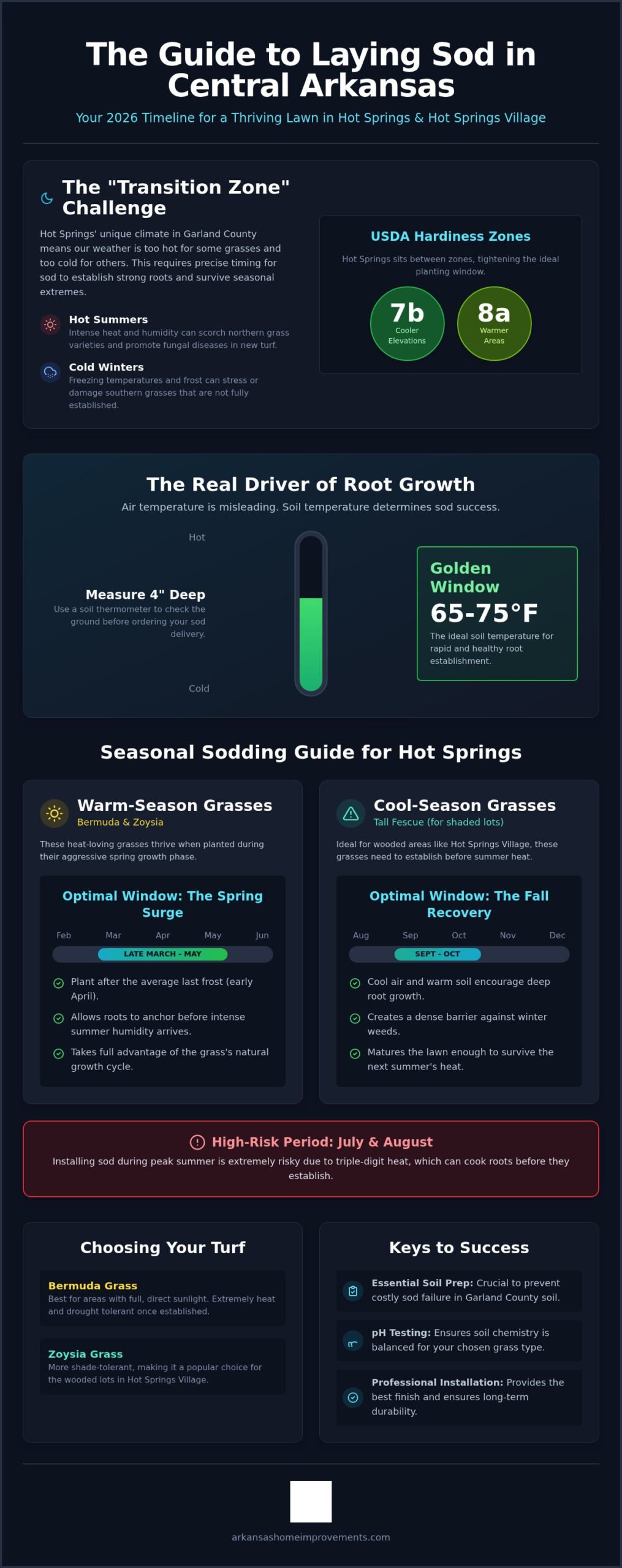
Hot Springs isn’t just a destination for relaxation; it’s a uniquely challenging environment for growing a healthy lawn. Our local climate in Garland County is defined by its position in the “Transition Zone.” This means we experience winters cold enough to stress southern grasses and summers hot enough to scorched northern varieties. Before you start your project, it is helpful to understand the basics of What is Sod? and how it interacts with our specific soil. Success requires a steady hand; it’s about precision rather than luck. Finding the best time to lay sod in Hot Springs means navigating these seasonal extremes to ensure your investment actually takes root.
Understanding the Arkansas Transition Zone
The transition zone in Central Arkansas is a narrow band where the climate shifts. For homeowners in Hot Springs and Hot Springs Village, this creates a dilemma. Do you plant heat-loving Bermuda or shade-tolerant Fescue? If you time it incorrectly, both can struggle. The Ouachita Mountains surrounding our area create distinct microclimates that can vary significantly from the lakefront to the higher elevations in the Village. These mountains often trap humidity, which increases the risk of fungal diseases in fresh turf. Because Hot Springs sits in USDA Hardiness Zones 8a and 7b, your window for planting is much tighter than it would be in the northern or southern parts of the state.
Soil Temperature vs. Air Temperature
Many people wait for a beautiful 75-degree day to start their lawn project. However, the air temperature is often a secondary concern. The soil temperature is the real driver of root establishment. For most varieties used in our region, the “Golden Window” occurs when soil temperatures stay consistently between 65°F and 75°F. If the ground is too cold, the roots stay dormant; if it’s too hot, the sod can literally cook before it anchors. We recommend that homeowners use a simple soil thermometer to check the heat four inches below the surface before ordering a delivery.
Timing your installation for the early morning is another critical local secret. In the Arkansas spring, the afternoon sun can quickly deplete the moisture from a fresh roll of turf. By starting at dawn, you give the grass several hours to settle before the peak heat hits. This methodical approach is exactly how we’ve handled projects for over 15 years in the local community. It ensures your new lawn has every advantage during those first critical 48 hours in the ground.
Seasonal Breakdown: When to Lay Sod in Hot Springs and Hot Springs Village
Timing your lawn project correctly is the difference between a successful investment and a total loss. While you can technically install turf year-round in Central Arkansas, the best time to lay sod in Hot Springs depends heavily on whether you choose warm-season or cool-season varieties. For the majority of Garland County homeowners, two specific seasonal windows offer the highest success rate and the least amount of stress on the new grass.
The Spring Surge: March through May
Late March through May is the primary window for warm-season grasses like Bermuda and Zoysia. In Hot Springs, the average last frost typically occurs in early April. Planting just after this date allows the grass to enter its most aggressive growth phase as the soil warms up. You’ll need to stay ahead of the frequent spring rains that characterize our region to prevent site washout before the roots anchor. According to this detailed guide from the University of Arkansas, proper moisture management during this time is essential for successful establishment. This window ensures your lawn is fully rooted before the intense humidity of July arrives.
The Fall Recovery: September through October
If you live in the more shaded, wooded areas of Hot Springs Village, you likely prefer a cool-season variety like Tall Fescue. For these lawns, September and October are your secret weapons. The air begins to cool, but the soil remains warm enough to encourage deep root growth before winter dormancy sets in. This fall window is often more effective than spring overseeding because it provides an instant, dense barrier against winter weeds. It allows the grass to mature enough to survive the following summer’s heat, which is the biggest hurdle for Fescue in Arkansas.
Installing sod during the peak of July or August is a high-risk endeavor. The Arkansas heat frequently reaches triple digits, and new turf requires constant, expert-level irrigation to prevent it from “cooking” on the pallet or in the ground. Similarly, winter installation involves laying dormant sod. While possible, it’s difficult to verify the health of the grass until spring arrives. For the most reliable results, many local residents prefer having a professional sod service handle the timing and installation to ensure the lawn survives these seasonal extremes. This methodical approach takes the guesswork out of the process and protects your property value.
Choosing the Right Turf: Warm-Season vs. Cool-Season Grasses
Selecting the correct grass variety is just as critical as identifying the best time to lay sod in Hot Springs. Because Central Arkansas sits in a transition zone, homeowners must decide between grasses that thrive in the heat and those that stay green during the winter. Your property’s specific sun exposure and drainage will dictate which variety offers the best long-term results. A sunny, open lot near the lake requires a different approach than a heavily wooded property in Hot Springs Village.
Warm-Season Favorites for Arkansas
Bermuda grass is often considered the king of lawns in Hot Springs. It’s exceptionally drought-resistant and handles the intense July heat with ease. This variety is particularly effective in the rocky shale and clay soils common throughout Garland County. If you have a wide-open lot with full sun, Bermuda is a reliable choice that recovers quickly from foot traffic. It’s a hardworking grass that rewards a steady maintenance routine.
Zoysia grass is the premium alternative, frequently chosen for the upscale landscapes in Hot Springs Village. It offers a dense, carpet-like feel underfoot and requires less frequent mowing than Bermuda. While Zoysia is more shade-tolerant, it still needs at least six hours of sunlight to stay healthy. For both of these warm-season varieties, the “green-up” phase begins in late April. Following the University of Arkansas Cooperative Extension Service guide to laying sod ensures these grasses establish deep roots before the summer humidity peaks.
Cool-Season Options for Year-Round Green
Tall Fescue is the primary choice for homeowners who want a green lawn through the winter months. It’s especially popular in the heavily shaded lots of Hot Springs Village where Bermuda simply won’t grow. Fescue stays vibrant when other grasses go dormant, but it requires a strict “Summer Survival” plan. In our Zone 8a climate, Fescue needs significant irrigation and protection from fungal diseases during the humid Arkansas August. It’s a higher-maintenance choice, but the reward is a lush, emerald yard when your neighbors’ lawns have turned brown.
Fescue is also an excellent tool for erosion control. If your property has steep slopes or areas prone to runoff, the deep root system of Fescue sod provides immediate stability. Whether you choose the heat-tolerance of Bermuda or the year-round color of Fescue, matching the variety to your land’s unique topography is the secret to a successful installation. Taking a methodical approach to this selection ensures your new exterior looks polished and professional for years to come.
Preparing Your Soil for Success: The Professional Approach
Even identifying the best time to lay sod in Hot Springs won’t save a lawn planted on poorly prepared ground. In Garland County, our terrain is often a mix of stubborn red clay and Ouachita shale. Preparing this surface is a methodical process that ensures your investment actually takes root. A professional approach involves five critical steps before the first roll of grass ever touches your yard.
- Clearing: We start by removing all existing Arkansas brush, weeds, and old turf to create a clean slate.
- Soil Testing: We analyze the pH levels, as Garland County soil is frequently acidic and requires lime to balance it for healthy growth.
- Grading: Proper leveling is vital for drainage. Our heavy seasonal rains will quickly wash away or rot new sod if water pools against the foundation.
- Amendments: Adding organic matter and quality topsoil helps break up the local red clay, allowing roots to penetrate deeper into the earth.
- The Freshness Factor: Sod is a living product. It must be installed within 24 hours of delivery to prevent “pallet burn” and root death.
Dealing with Hot Springs Village Terrain
Hot Springs Village presents unique challenges because of its rocky slopes and mountain elevations. Root penetration is nearly impossible in shale-heavy areas without at least four to six inches of fresh topsoil. On these steeper lots, we often recommend using new turf as a companion to professional gutter installation. This strategic combination manages water runoff effectively and prevents the soil from eroding beneath your new grass. It’s a comprehensive way to protect your home’s exterior and its long-term value.
Post-Installation: The First 14 Days
The first two weeks are a critical period of transition for your new lawn. In the Hot Springs climate, you need frequent, light watering sessions several times a day to keep the soil moist. After the first seven days, you can shift to deeper, less frequent watering to encourage roots to reach down into the soil. Watch for signs of heat stress, such as wilting or a bluish tint, especially during the first 48 hours. Don’t mow your new Arkansas lawn until the roots are firmly anchored. This usually takes about three weeks, and you can test it by gently tugging on a corner of the sod. If you want a yard that thrives from day one, consider a professional sod service to handle the heavy lifting and precise timing required for success.
Professional Sod Installation in Hot Springs: Instant Curb Appeal
Professional installation is the final piece of the puzzle for a polished home exterior. While DIY projects can be tempting, the Arkansas summer heat turns back-breaking labor into a high-risk gamble. One mistake in timing or hydration can lead to a total loss of your investment. By choosing a professional team, you ensure the best time to lay sod in Hot Springs is matched with expert execution. Steve brings over 15 years of local history and personal oversight to every project. This ensures that every roll is laid with precision and accountability.
A lush, green lawn is often the perfect finishing touch after major projects like a new metal roof or siding update. When these elements work together, they create a cohesive and high-quality look that stands out in any neighborhood. Integrating your exterior home improvements allows for a streamlined schedule. It prevents heavy equipment from damaging your new turf after it has been installed.
Maximizing Your Property Value
In the competitive real estate markets of Hot Springs and Hot Springs Village, curb appeal is a primary driver of property value. A professionally installed lawn provides an immediate return on investment by transforming a dusty lot into an inviting space. When you combine high-quality landscaping with a window replacement, the total home transformation is undeniable. While we specialize in the unique terrain of Garland County, we bring this same level of craftsmanship to homeowners in Little Rock, Benton, and North Little Rock. Our standards remain consistent whether we’re working in Arkadelphia, Cabot, Jacksonville, or Malvern, ensuring every customer receives a job well done.
Get a Reliable Estimate Today
Our process is designed to reduce stress and build confidence. During a professional sod consultation, we assess your specific soil type, drainage needs, and sun exposure. We then coordinate with your schedule to ensure the installation happens during the optimal weather window. This methodical approach is why homeowners across Central Arkansas trust us with their most important asset. Whether you’re in the heart of Hot Springs or moving into a new build in Benton, we provide the same steady, experienced hand. Contact Steve for a professional sod estimate in Hot Springs to start your transformation today.
Transform Your Hot Springs Landscape Today
A beautiful lawn is the foundation of your home’s curb appeal, but it requires more than just picking a weekend to start digging. Success in our transition zone depends on matching your grass variety to the specific seasonal windows we’ve discussed. Whether you’re choosing the drought-resistance of Bermuda for a sunny lot or the shade-tolerance of Zoysia for a wooded property in Hot Springs Village, timing is your most valuable tool. Knowing the best time to lay sod in Hot Springs ensures that your investment takes root before the intense humidity or winter dormancy arrives.
Arkansas Home Improvement is locally owned and operated by Steve, bringing over 15 years of experience to every project in Central Arkansas. We understand the unique challenges of our local red clay and rocky shale. Our team provides comprehensive exterior remodeling expertise to ensure your new lawn is installed with the precision it deserves. Don’t risk the high cost of sod failure by doing it alone in the Arkansas heat. You can Request a Professional Sod Estimate from Arkansas Home Improvement to get started on your total home transformation. We’re ready to help you create a lush, green space you can be proud of.
Common Questions About Hot Springs Sod Installation
Can I lay sod in Hot Springs during the winter?
Yes, you can lay sod during the winter months, but the grass will be in a dormant state. It stays brown until the soil warms up in the spring. While this prevents the grass from drying out as quickly as it would in July, it makes it difficult to verify the health of the turf upon delivery. It’s best to avoid installation if the ground is frozen or if a hard freeze is expected immediately after.
How much does professional sod installation cost in Hot Springs Village?
The cost of installation depends on several factors, including the type of grass you choose and the amount of site preparation required. In Hot Springs Village, the rocky terrain and steep slopes often require additional topsoil and grading before the turf can be laid. We recommend a professional consultation to assess your specific lot’s needs and provide an accurate estimate based on current material availability.
How often should I water new sod in the Arkansas summer?
You should water new sod at least once or twice daily during the intense Arkansas summer. The goal is to keep the soil beneath the turf consistently moist for the first 10 to 14 days. Early morning is the best time to water to reduce evaporation and fungal risks. Once the roots begin to anchor, you can slowly transition to deeper, less frequent watering sessions.
What is the best grass for shaded yards in Hot Springs?
Zoysia is the most popular choice for partially shaded yards, especially in the wooded areas of Hot Springs Village. While it still needs about six hours of sunlight, it handles shade much better than Bermuda. If your yard is heavily shaded by mature oaks or pines, Tall Fescue is another option that stays green throughout the winter while tolerating lower light levels.
Do I need to till my yard before laying new sod?
Tilling is a vital step because it loosens the compacted red clay and shale common in Garland County. We typically till the top four to six inches of soil to ensure the new roots can penetrate deep enough to survive a drought. Proper tilling also allows you to mix in necessary soil amendments and lime to balance the pH levels for optimal growth.
How long does it take for sod to root in Central Arkansas soil?
Most sod varieties will begin to root within 10 to 14 days if they receive proper moisture. You can check the progress by gently lifting a corner of a sod piece; if you feel resistance, the roots are taking hold. Finding the best time to lay sod in Hot Springs helps speed up this process, usually resulting in a fully established lawn within four weeks.
Can I lay sod over existing grass?
You should never lay new sod directly over existing grass or weeds. The new roots must have direct contact with prepared soil to establish themselves. Leaving old grass underneath creates a barrier that traps air and prevents moisture from reaching the roots, which eventually leads to the new turf dying. A clean, graded soil surface is essential for a successful project.
Is Bermuda or Zoysia better for Hot Springs’ climate?
Both grasses thrive here, but the right choice depends on your yard’s specific conditions. Bermuda is an excellent choice for full sun and handles heavy foot traffic from kids or pets. Zoysia is a premium, slower-growing option that offers a softer feel and better shade tolerance. Both are excellent choices when you target the best time to lay sod in Hot Springs during the late spring.