
Most homeowners believe a perfect yard starts with the grass they buy, but the truth is your success is decided before the first roll of turf ever touches the dirt. It’s incredibly frustrating to watch a fresh yard turn brown under the intense sun after you’ve invested significant time and effort. You might feel the sting of embarrassment from a patchy lawn or the anxiety of watching your investment wither during an Arkansas summer heatwave. We understand that you want a reliable, beautiful outdoor space without the constant fear of failure.
This guide simplifies sod installation Arkansas homeowners can rely on to build a lawn that lasts through 2026 and beyond. You’ll discover how to navigate our state’s unique transition zone by selecting the right grass variety for your specific region, from the heat-tolerant Bermudagrass of the south to the shade-friendly Fescue of the north. We’ll walk you through the essential steps of soil preparation and watering schedules that ensure your new lawn takes root deeply. By the end of this article, you’ll have a clear plan to transform your property into the lush, green sanctuary your home deserves.
Key Takeaways
- Understand why transplanting mature turfgrass offers a much higher success rate than seeding in Arkansas’s humid environment.
- Identify the specific grass varieties that thrive in our local “Transition Zone” to ensure your lawn survives both summer heat and winter freezes.
- Learn why professional soil testing and site preparation are the most critical steps for a successful sod installation Arkansas project.
- Pinpoint the ideal seasonal windows in late spring and early fall to maximize root establishment and long-term turf health.
- Discover how professional grading and specialized equipment provide the peace of mind that comes with a perfectly level and durable yard.
The Dirt to Lawn Transformation: Why Sod Installation in Arkansas is the Superior Choice
Achieving a beautiful yard shouldn’t feel like a gamble. For many homeowners, the journey begins with understanding what sod is and how it functions as a living, breathing foundation for your landscape. Unlike scattering seeds and hoping for the best, sod installation Arkansas involves transplanting mature turfgrass that has already developed a robust, healthy root system. This method provides an immediate solution for those tired of looking at bare dirt or fighting a losing battle against patchy weeds. It’s a transformation that happens in hours, not years, turning a construction site or a neglected yard into a vibrant green space that feels like home.
In areas like Cabot and Little Rock, where the terrain can be hilly or uneven, the benefits of sod extend beyond just aesthetics. Bare soil on a slope is a recipe for erosion during our heavy spring rains. Sod acts as an immediate anchor, holding the topsoil in place and preventing runoff that can damage your property’s foundation or landscape beds. This instant protection is a primary reason why professional installation is considered a critical step in responsible site management. You aren’t just buying grass; you’re securing your land against the elements.
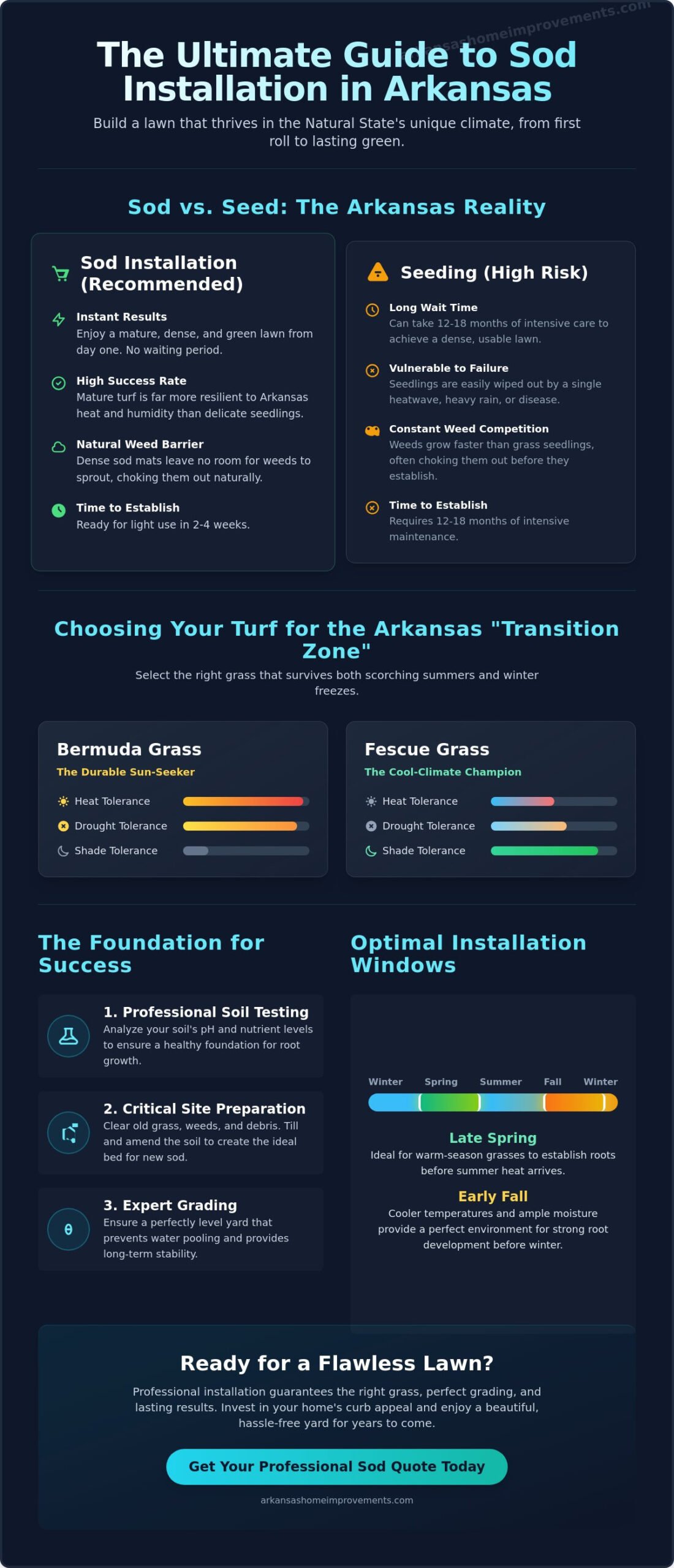
Sod vs. Seed: The Arkansas Reality
Trying to grow a lawn from seed in the Natural State is often a lesson in frustration. Our high humidity and intense summer heat create a harsh environment for young, delicate seedlings. It’s common for a newly seeded yard to be wiped out by a single heatwave before the roots can take hold. While seeding might seem cheaper upfront, the true cost adds up when you consider it often takes 12 to 18 months of intensive care to see results. Sod eliminates this waiting period and the constant battle against weed competition that often chokes out new grass. You get a dense, uniform lawn from day one without the anxiety of failed germination.
Boosting Property Value in Central Arkansas
Your lawn is the first thing a visitor or potential buyer sees. A lush, well-maintained yard suggests that the entire home has been cared for with the same attention to detail. This level of curb appeal is a key component of exterior home improvement Arkansas homeowners use to increase their property’s marketability and appraisal value. When you choose professional sod installation Arkansas, you’re investing in your home’s long-term infrastructure. It complements other upgrades like new siding or roofing, creating a cohesive and polished look that stands out in any neighborhood. A professional job ensures the grading is correct and the grass is healthy, providing lasting stability and pride of ownership.
Choosing Your Turf: The Best Grass Varieties for the Arkansas Transition Zone
Arkansas sits in what experts call the “Transition Zone.” This means our climate is uniquely challenging; it gets hot enough to scorch northern grasses and cold enough to damage some southern varieties. Selecting the right species is the most critical decision in your sod installation Arkansas project. You need a variety that can withstand these swings while meeting your family’s lifestyle needs. For detailed research on the Best Grass Varieties for the Arkansas climate, the University of Arkansas Division of Agriculture provides extensive data that helps homeowners make an informed choice based on their specific location.
While warm-season grasses are the most common choice for the state, your property’s specific layout matters. Factors like how much daily sun your yard receives or how much foot traffic it endures from pets and children will dictate the best fit. Choosing the right turf requires a deep understanding of your property’s unique microclimate. If you’re unsure which variety fits your land, consulting with a professional sod service provider can save you from a costly mistake.
Bermuda: The Durable Sun-Seeker
Bermuda grass is the workhorse of the Natural State. It’s highly favored because of its incredible heat and drought tolerance, which is essential during our peak July and August temperatures. Varieties like TifTuf and U-3 have become favorites for homeowners in Benton and surrounding areas. TifTuf is specifically known for its superior water-use efficiency, while U-3 is a time-tested standard for durability. If you have an active family, Bermuda is the high-traffic champion. It heals itself quickly through underground runners, though it does require full sun to stay healthy. Regular mowing and a consistent fertilization schedule are necessary to maintain its vibrant green color.
Zoysia: The ‘Emerald Carpet’ of the South
Zeon and Meyer Zoysia are the gold standards for homeowners seeking a premium, luxury feel. These varieties offer better shade tolerance than Bermuda, making them ideal for yards with mature trees or structures that block direct sunlight. Zoysia feels incredibly soft underfoot, which is a major draw for families who enjoy spending time outdoors barefoot. It grows slower than many other varieties, which means you won’t be mowing nearly as often. Zoysia’s growth habit creates a dense, weed-resistant mat that naturally chokes out unwanted plants. This density also makes it highly resistant to pests and diseases common in the humid Arkansas air.
For those in the cooler, more shaded regions of North Central Arkansas, Tall Fescue remains a viable option. It’s the most shade-tolerant grass recommended for our state and stays green year-round. However, Fescue is a cool-season grass, meaning it requires significant irrigation and care to survive the intense humidity of a central Arkansas summer. Most sod installation Arkansas professionals recommend Fescue primarily for northern counties where the summer heat is slightly less punishing.
The Secret to Success: Soil Preparation for Arkansas Clay
Laying sod directly onto hard-packed Arkansas clay is the quickest way to guarantee your new lawn fails. Clay is dense and compacts easily; this prevents water, oxygen, and nutrients from reaching the roots. Without proper preparation, your expensive new turf will struggle to establish itself and likely wither during the first heatwave. Successful sod installation Arkansas starts several inches below the surface where the biological work happens. You aren’t just laying down a carpet; you’re planting a living system that needs a breathable home.
Before you move any dirt, you need to know exactly what your soil lacks. The University of Arkansas System’s Division of Agriculture offers free soil testing to help you identify pH levels and nutrient deficiencies. Most Arkansas soils tend toward acidity, and knowing whether you need lime to balance that pH saves you from wasting money on fertilizers that the grass can’t even absorb. Once you have your results, mechanical aeration or tilling becomes the next non-negotiable step. Tilling breaks up the “hardpan” clay, allowing roots to penetrate deep into the earth where they can find moisture during dry spells. This deep root growth is what makes a lawn truly drought-tolerant.
Proper grading is equally vital for the longevity of your landscape. In cities like Little Rock, heavy rainfall can lead to standing water if your yard isn’t leveled correctly. We ensure the ground slopes away from your home’s foundation to protect your structure while preventing the soggy patches where lawn fungus thrives. A well-graded yard is your best defense against the “root rot” that often plagues poorly planned installations. It’s about creating a landscape that manages water effectively rather than just letting it sit.
Clearing the Canvas
You can’t build a masterpiece on a cluttered desk. The same applies to your yard. We remove all existing vegetation, rocks, and debris to ensure maximum root-to-soil contact. If old grass or weeds are left underneath, they create air pockets that dry out the new sod’s roots. This “clean slate” approach also allows us to address the existing weed bank. By treating or removing aggressive weeds before the new sod arrives, you ensure that your investment doesn’t have to compete for resources from day one. A clean surface is the only way to guarantee the tight seal needed for root establishment.
Amending and Grading Arkansas Soil
Heavy clay needs help to become a hospitable home for grass. We often incorporate topsoil or organic compost to improve soil structure and drainage. This is especially important for maintaining a healthy sod service Benton AR project over the long term. For more technical details on the process, you can review this guide on Soil Preparation for Arkansas Clay. By amending the soil and perfecting the grade, you eliminate the risk of standing water and create a resilient environment where your lawn can flourish despite the high local humidity. This methodical approach ensures your lawn stays level and lush for years to come.
The Installation Timeline: When and How to Lay Sod in Arkansas
Timing your project is just as important as the soil preparation we discussed earlier. In Arkansas, the peak windows for successful growth are Late Spring, specifically May through June, and Early Fall in September. May and June are ideal for warm-season grasses like Bermuda and Zoysia because the rising temperatures encourage rapid root development. September is often the sweet spot for those installing Fescue in northern regions. While you can technically install sod in the peak of summer, it requires a rigorous irrigation schedule to combat the intense humidity and heat. If you’re ready to schedule your transformation during these peak windows, contact us for a professional sod service consultation today.
Freshness is a non-negotiable rule in professional sod installation Arkansas. Sod is a living product that begins to lose moisture the moment it’s cut at the farm. It must be laid within 24 to 48 hours to prevent the roots from drying out or the rolls from overheating on the pallet. During the layout, we use a staggered brick pattern. This technique ensures there are no long, continuous seams where water can channel and wash away soil. This method leads to a much more uniform and seamless appearance as the lawn matures.
The First 14 Days: Critical Post-Install Care
The first two weeks are the most vulnerable time for your new lawn. You’ll need to establish a watering schedule that includes multiple light soakings throughout the day. The goal is to keep the root zone constantly moist without creating puddles. You should strictly avoid walking on or mowing the grass during this period to prevent shifting the rolls or compacting the fresh soil. If you notice edges turning brown or the grass looking wilted, it’s a sign of transplant shock. Increasing your watering frequency immediately is the most effective way to remedy this and help the grass stabilize.
Long-Term Maintenance and Mowing
You’ll know it’s time for the first mow once the grass passes the “tug test.” Gently pull on a corner of a sod piece; if it resists, the roots have successfully anchored. When you start mowing, adjust your height based on the variety. Bermuda thrives when kept shorter, while Zoysia prefers a slightly higher cut to maintain its luxury look. Deep watering once a week after establishment encourages deep root growth and builds the drought tolerance your lawn needs to thrive in our climate.
Professional Sod Services: Why Arkansas Home Improvement is the Local Expert
Choosing the right partner for your home’s exterior means looking for a team that understands the big picture. At Arkansas Home Improvement, we don’t just see a lawn; we see a vital component of your property’s value and structural integrity. As a full-service exterior partner, our expertise ranges from professional landscaping to roofing and siding. This comprehensive perspective allows us to approach sod installation Arkansas with a level of precision that smaller, specialized crews often miss. We ensure that your new turf doesn’t just look good on day one but thrives as part of a well-managed property.
Peace of mind comes from knowing the job is done right the first time. We utilize specialized equipment and professional grading techniques to ensure your yard is perfectly level and drains efficiently. This technical precision prevents the common pitfalls of DIY projects, such as standing water near your foundation or uneven patches that make mowing a chore. Our team takes immense pride in our workmanship, operating with a “job well done” mentality that prioritizes your long-term satisfaction. We believe your home should be a total package of beauty and durability, which is why we also offer expert guidance on high-impact upgrades like metal roofing Arkansas homeowners trust for longevity.
Our Local Commitment to Central Arkansas
Our crews live and work in the communities we serve, including Benton, Little Rock, Cabot, and Jacksonville. This local presence means we have a deep understanding of the unique challenges posed by Arkansas weather and the varied terrain of the region. Whether we’re navigating the rocky soil of the foothills or the heavy clay of the valleys, we bring the right tools and knowledge to the site. There is a distinct benefit to working with a contractor who understands the relationship between your home’s infrastructure and its environment. We can help you weigh the benefits of a metal roof vs shingle roof Arkansas while simultaneously planning a lawn that complements your home’s protection and style. Pairing a beautiful new lawn with the best roofing material for Arkansas weather ensures your entire home exterior is built to withstand our state’s demanding climate for decades to come.
Ready for a Lush Lawn? Get Started Today
Transforming your yard begins with a professional site evaluation. During our consultation process, we’ll assess your soil health, sunlight exposure, and drainage needs to recommend the perfect turf variety for your lifestyle. We provide a clear, methodical plan so you know exactly what to expect from the first day of prep to the final roll of sod. Our goal is to reduce the stress of your residential project by providing a reliable, transparent service. You can move forward with confidence, knowing that your sod installation Arkansas project is backed by a team that values consistency and professional standards. Contact us today to schedule your evaluation and take the first step toward the lush, permanent lawn you’ve always wanted.
Invest in a Yard That Lasts for Years to Come
Achieving a lush, resilient lawn in the Natural State requires more than just buying grass. It’s about selecting a variety that thrives in our transition zone and ensuring the underlying soil is prepared to support deep root growth. By following the right installation timeline and maintenance schedule, you can avoid the common pitfalls of failed seeding and summer heat damage. Your home deserves a foundation that is as durable as it is beautiful.
With over 15 years of local service, Arkansas Home Improvement understands the specific needs of our regional soil and climate. We include expert grading and thorough soil preparation in every sod installation Arkansas project we undertake. Our A+ reputation for exterior home transformations ensures that your property is in steady, experienced hands. We take pride in delivering results that stand up to the unique challenges of our local environment.
Ready to transform your curb appeal? Request Your Professional Sod Installation Quote from Arkansas Home Improvement today. We’re here to help you build a durable, beautiful outdoor space that your family can enjoy for seasons to come.
Frequently Asked Questions
When is the best time of year for sod installation in Arkansas?
The ideal time for sod installation in Arkansas is during late spring or early fall. May and June provide the warm temperatures needed for warm-season grasses like Bermuda or Zoysia to root quickly. Alternatively, September offers cooler air but warm soil, which is perfect for Fescue in northern counties. While winter installation is possible, the grass remains dormant and carries a higher risk of failure if a hard freeze occurs.
How much water does new sod need in the Little Rock area?
New sod requires consistent moisture, meaning you should water it two to three times per day during the first 14 days. In the Little Rock area, heat and humidity can dry out the root zone quickly, so keep the soil damp but not soggy. Once the roots are established, you can transition to deeper, less frequent watering. Aim for about one inch of water per week, including rainfall, to maintain health.
Can I install sod myself or should I hire a professional in Central Arkansas?
While DIY installation is an option, hiring a professional for sod installation Arkansas ensures your yard is graded correctly to prevent drainage issues. Professionals have specialized equipment to till hard clay and handle the heavy lifting of hundreds of sod rolls. This expertise reduces the physical strain on you and the risk of the sod failing due to poor soil contact or improper leveling. Professional crews also ensure the turf is laid immediately upon delivery.
How long does it take for new sod to take root in Arkansas clay?
It typically takes about 10 to 14 days for new sod to begin rooting in Arkansas clay. You can check the progress by performing a “tug test” on a corner of the turf. If you feel resistance, the roots are starting to anchor into the soil. Full establishment, where the seams disappear and the lawn can handle heavy traffic, usually takes about four to six weeks of consistent care and proper irrigation.
What is the most shade-tolerant grass for Arkansas yards?
Tall Fescue is the most shade-tolerant grass available for Arkansas yards, particularly in the northern part of the state. If you live in Central or Southern Arkansas, Zoysia is a better choice because it handles the summer heat more effectively than Fescue while still tolerating partial shade. It’s important to remember that all grass varieties need at least four hours of filtered sunlight to remain healthy and avoid thinning over time.
Why is my new sod turning brown after installation?
Brown spots on new sod are most often caused by the roots drying out or transplant shock. If the sod wasn’t laid immediately after delivery or if there are air pockets underneath, the grass will struggle to stay hydrated. Check your watering schedule and ensure the edges of the rolls are tightly butted together. Increasing the frequency of light watering can often revive these areas if the issue is addressed quickly.
How soon can my kids or pets play on the new grass?
You should keep children and pets off the new lawn for at least two to three weeks. Walking on fresh sod can shift the rolls and create ruts in the soft, wet soil underneath. This waiting period allows the roots to anchor firmly into the ground. Heavy activity, like running or playing fetch, should be avoided until after the first few mowings when the turf is fully stabilized and the seams have knitted together.
Do I need to fertilize my new sod immediately after it’s laid?
You don’t need to fertilize your new sod immediately because the farm usually applies nutrients right before harvesting. Applying high-nitrogen fertilizer too soon can actually burn the delicate new roots as they try to establish. It’s best to wait until you’ve mowed the lawn at least twice, which is typically about four to six weeks after sod installation Arkansas. A soil test can then guide your long-term fertilization plan based on your lawn’s specific needs.