
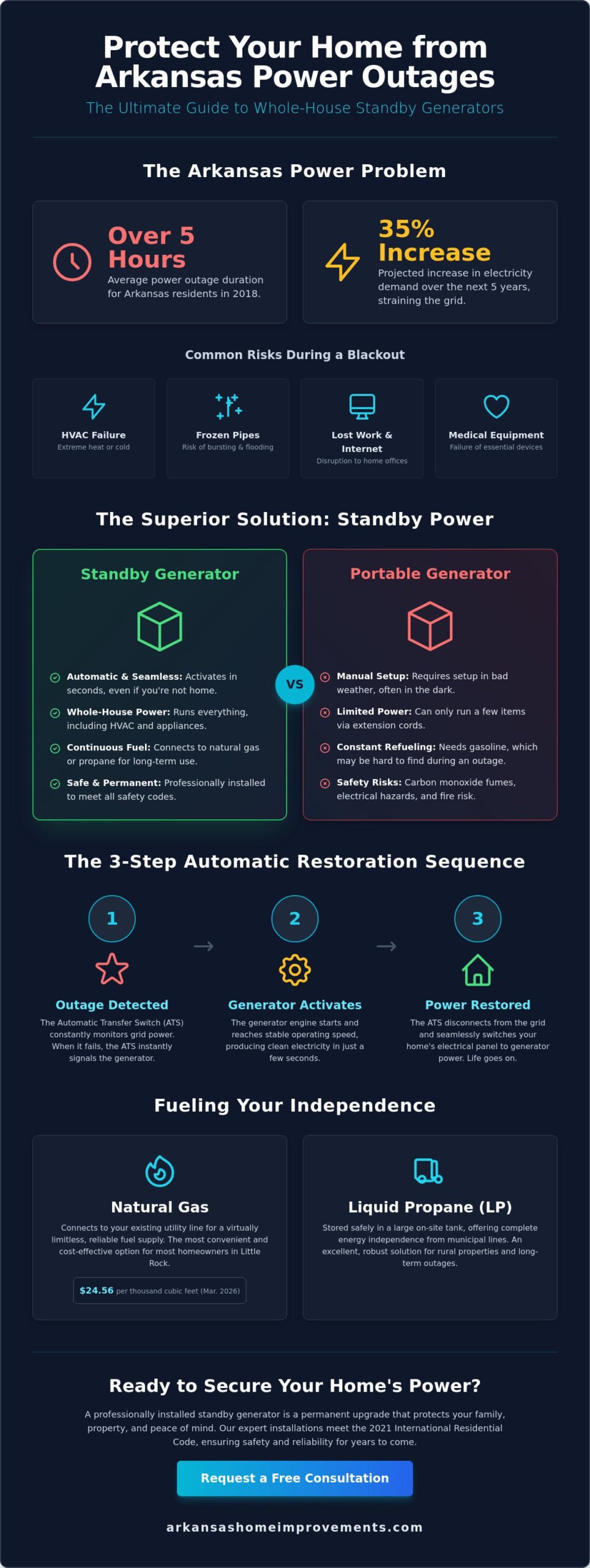
In 2018, the average Arkansas resident faced power interruptions lasting over five hours, and as of June 2026, thousands of our neighbors still find themselves in the dark every single day. When those severe storm warnings flash across your phone, the anxiety is real. You worry about the HVAC cutting out during a humid summer heatwave or your pipes freezing in a sudden winter ice storm. Choosing a whole house generator Little Rock AR ensures your home remains a sanctuary of comfort and safety, regardless of what the weather does outside.
We understand the stress of losing internet during a work day or worrying about essential medical equipment during a blackout. This guide will show you how a professionally installed standby system provides automatic, seamless power that works even if you aren’t home. We’ll explore the practical benefits of uninterrupted protection and how we ensure every installation meets the 2021 International Residential Code for your long term peace of mind. You’ll discover how to move beyond simple utility into essential property protection that keeps your family safe and your home running smoothly.
Key Takeaways
- Understand how a standby system acts as a permanent shield against the prolonged outages caused by Arkansas ice storms and severe summer weather.
- Learn to distinguish between essential loads and whole-house coverage to ensure your HVAC and medical devices never lose power.
- Discover the specific site requirements and electrical integration needed for a professional whole house generator Little Rock AR installation.
- Find out how an automatic transfer switch provides a seamless transition to backup power the moment the grid fails.
- Gain peace of mind by learning how a high-quality installation protects your property from long-term damage like mold or frozen pipes.
Why Little Rock Homeowners Prioritize Whole House Generators
Arkansas residents know that our local power grid faces immense pressure during the sweltering July humidity and the biting January freezes. Utility providers like Entergy are currently projecting a 35% increase in electricity demand over the next five years. This growth places a significant strain on existing infrastructure. For many families, a whole house generator Little Rock AR is no longer a luxury; it has become a necessary structural upgrade. Unlike portable units that require manual setup and constant refueling, a permanent standby system offers a seamless transition. Understanding how standby generators work reveals why they are superior for long term protection. These units monitor your utility connection 24/7 and activate automatically within seconds of a failure. This isn’t just about keeping the lights on. It’s about maintaining your entire lifestyle without interruption. By choosing a permanent installation, you avoid the safety risks of running gas lines or extension cords during a storm.
The Local Climate Factor: Tornadoes and Ice
Central Arkansas is a hotspot for unpredictable weather. Spring brings tornadoes that can snap utility poles, while winter ice storms weigh down overhead lines until they fail. A standby generator works with other protective measures, such as a high quality roofing installation Central Arkansas, to maintain your property. By keeping your HVAC running, you prevent extreme temperature swings that warp building materials or cause internal moisture issues during a disaster.
The Economic Impact of Power Loss
The financial cost of a prolonged outage is high. Refrigerated food can spoil within hours, and humidity quickly leads to moisture buildup. This invites mold growth that damages your flooring or walls. Investing in a whole house generator Little Rock AR protects you from these hidden expenses. It transforms your home into a self sustaining environment. This allows you to avoid the costs of emergency lodging while maintaining full productivity in your home office.
How a Standby Generator Protects Your Home During Outages
A whole house generator Little Rock AR is a permanent outdoor installation designed to safeguard your family the moment the municipal power grid fails. Unlike small portable models you might find at a hardware store, these units sit on a dedicated concrete pad and connect directly to your home’s electrical system. They act as a silent sentry, waiting for any sign of trouble from the local utility lines. Experts agree that backup power for extreme weather has become a vital component of modern home security. This technology ensures that even during the most severe Arkansas storms, your lights, security systems, and appliances never skip a beat. The system is managed by an Automatic Transfer Switch (ATS), which serves as the intelligence center for your backup power.
The Automatic Power Restoration Sequence
The transition from grid power to generator power happens in a matter of seconds through a precise three-step process. First, the ATS constantly monitors the incoming voltage from the utility company. If it detects a total failure or a dangerous drop in power, it signals the generator engine to start. Once the engine reaches the correct operating speed and produces stable voltage, the ATS safely disconnects your home from the dead utility line. Finally, it closes the connection to the generator, restoring electricity to your circuits. This entire sequence occurs automatically, whether you’re fast asleep or miles away on vacation.
Fueling Your Backup Power
One of the greatest advantages of a permanent whole house generator Little Rock AR is the continuous fuel supply. Most homeowners in the city utilize the existing natural gas infrastructure, which provides a virtually limitless source of energy. As of March 2026, the residential price for natural gas in Arkansas was $24.56 per thousand cubic feet, making it a reliable and cost-effective choice for long-term outages. For neighbors in more rural areas like Malvern or Hot Springs Village, large-scale propane tanks offer a similar level of independence. Having a dedicated fuel source means you don’t have to worry about finding an open gas station or handling heavy fuel cans in the middle of a storm.
To ensure total reliability, these systems perform a weekly “exercise” cycle. The generator runs for a few minutes at a preset time to lubricate the engine and test the internal components. This proactive self-check ensures the system is always ready for the next unpredictable weather event. If you want to ensure your entire property is ready for whatever the season brings, consider how a generator fits into your broader plans for roofing installation Central Arkansas and exterior protection. This comprehensive approach to home maintenance provides the ultimate peace of mind for your family.
Sizing Your System: Finding the Right Generator for Your Property
Selecting the correct whole house generator Little Rock AR requires a clear understanding of your home’s unique electrical appetite. You don’t want to overspend on a massive unit that burns excessive fuel, but undersizing a system leads to total failure during a peak load. The process begins with a careful inventory of your appliances and their power demands. You must distinguish between “running wattage,” which is the power needed to keep a device going, and “starting wattage.” Large motors, particularly your central air conditioning unit or a well pump, require a significant surge of power to cycle on. If your generator isn’t sized to handle these initial spikes, the system will shut down to protect its internal circuitry. Adhering to generator safety guidelines ensures your installation remains a reliable asset rather than a potential liability.
Common Wattage Tiers for Arkansas Homes
Most residential properties in Central Arkansas fall into three primary categories based on their square footage and appliance load. Smaller units, ranging from 10kW to 14kW, are ideal for homeowners who only need to power critical items like refrigerators, basic lighting, and home security systems. The “sweet spot” for many mid-sized homes in our area is the 18kW to 22kW range. These units typically provide enough capacity to run a standard five-ton central air conditioner alongside your essential kitchen appliances. For larger estates or homes with multiple HVAC zones and specialized equipment, systems of 26kW and above offer the necessary headroom to maintain a completely normal lifestyle without any power management concerns.
Prioritizing Your Power Load
Deciding which circuits are “critical” is a personal choice that impacts your system’s overall cost and complexity. For some, it’s a home office that cannot go dark; for others, it’s life-sustaining medical equipment or a well pump for fresh water. Modern smart load management technology now allows a smaller generator to handle a larger home by temporarily “shedding” or pausing non-essential appliances like electric water heaters while the AC cycles. If you’re currently planning a larger renovation or upgrade, it’s the perfect time to consult with a residential remodeling contractor Benton AR. They can help you integrate your backup power needs into your home’s overall electrical layout, ensuring your sub-panels are organized for maximum efficiency and safety during a prolonged outage. Before committing to a specific unit size, reviewing a comprehensive resource on finding a qualified generator installer near me Arkansas can help you ask the right questions and avoid common sizing mistakes.
The Professional Installation Process in Central Arkansas
A professional installation is the bridge between owning a piece of equipment and securing a reliable safety net for your home. This isn’t a weekend DIY project. It’s a complex structural upgrade that requires precision across three distinct trades: site preparation, electrical integration, and plumbing. We begin by selecting a location that ensures optimal airflow and safety. The ground must be perfectly leveled before we pour a reinforced concrete pad. This foundation is vital because it prevents the unit from shifting or vibrating excessively during operation, which preserves the longevity of the engine. Once the unit is set, we integrate the Automatic Transfer Switch (ATS) into your electrical system. This component acts as the brain of your whole house generator Little Rock AR, safely managing the transition from grid power to backup power without human intervention.
Plumbing is the next critical phase. Our team connects the unit to your fuel source, ensuring every joint and valve meets Arkansas safety codes. We don’t just “hook it up”; we verify that the gas pressure is sufficient to handle the generator’s full load during an ice storm when other heating appliances are also running. The process concludes with a rigorous “simulated outage” test. We disconnect the utility power to verify that the system activates, transfers the load, and stabilizes within seconds. If you’re ready to secure your home with a professional team, reach out to Arkansas Home Improvement to discuss your installation needs.
Permitting and Local Code Compliance
Navigating local regulations is a standard part of our service. In Little Rock, any project exceeding $5,000 requires a building permit, and every whole house generator Little Rock AR installation necessitates a specific electrical permit. These rules aren’t just red tape; they’re designed for your safety. We handle the paperwork for cities like Jacksonville and Cabot, ensuring setback requirements are met. For example, units must be placed a specific distance from windows and doors to prevent exhaust from entering your living space. Adhering to these codes and using a licensed Arkansas electrician is also mandatory to keep your manufacturer warranty valid.
Post-Installation: Maintenance and Support
Your investment requires ongoing care to remain “storm ready.” We recommend a semi-annual maintenance schedule that includes oil changes, filter replacements, and battery testing. Modern systems now feature mobile app integration, allowing you to monitor your generator’s status in real time from your phone. You’ll receive alerts if the unit needs attention or when it successfully completes its weekly exercise cycle. For a deeper look at the specific steps involved, you can explore our guide on standby generator installation Benton AR. This proactive approach ensures your system remains a dependable asset for decades to come.
Securing Your Power with Arkansas Home Improvement
Choosing a provider for your whole house generator Little Rock AR is a significant decision that impacts your family’s safety for years. At Arkansas Home Improvement, we bring 15 years of experience serving Central Arkansas families with a focus on integrity and craftsmanship. We don’t view a generator as a simple box to be dropped in your yard. Instead, we treat every installation as a comprehensive home improvement project. Our team looks at the big picture, evaluating how the unit interacts with your existing electrical panels and fuel lines. We ensure the system is both efficient and aesthetically integrated into your property’s architecture, maintaining the curb appeal you’ve worked hard to build.
We take immense pride in our reputation for reliability. From Arkadelphia to Cabot, we’ve built our business on a foundation of accountability and long-term satisfaction. We understand that residential projects can be stressful, especially when they involve complex electrical and plumbing work. Our goal is to reduce that friction by providing a steady, experienced hand at every stage of the process. You won’t find high-pressure sales tactics here; we prefer direct, honest communication. We provide clear information so you can make the best decision for your household’s long-term interests and safety.
The Arkansas Home Improvement Difference
What truly sets us apart is our commitment to a community-oriented service model. Steve and the entire team believe that a “job well done” mentality is the only way to sustain a local business. We specialize in all forms of exterior protection. Whether we are discussing the long-term durability of metal roofing Arkansas or the seamless integration of a standby power system, our professional standards remain the same. We believe your home should be a sanctuary of stability. By combining high-quality structural upgrades with a dependable power source, we help you create a residence that can withstand the most unpredictable weather events our state offers.
Take the Next Step Toward Reliability
The first step toward total home protection is a thorough assessment of your property’s current infrastructure. We invite you to schedule a site visit where we can inspect your gas lines and electrical capacity in person. This allows us to provide a custom quote tailored to your home’s specific layout and wattage requirements. We handle all the heavy lifting, from navigating the local permitting process to conducting the final simulated outage testing. You don’t have to worry about the technical jargon or the municipal paperwork. Contact us today to schedule your home power assessment. Let’s work together to ensure your family stays comfortable and connected, no matter what the Arkansas sky brings.
Secure Your Family’s Comfort for the Next Storm
Protecting your home from unpredictable Arkansas weather requires more than just hope. A permanent standby system provides automatic protection, keeps your critical appliances running, and removes the stress of manual setup during a crisis. Investing in a whole house generator Little Rock AR is a long-term commitment to your property’s safety and your family’s peace of mind. You won’t have to worry about spoiled food, frozen pipes, or losing connection to the outside world when the grid fails.
Arkansas Home Improvement brings over 15 years of local experience to every project. We manage the entire process with our comprehensive turnkey installation, ensuring your system meets all local codes with A+ professionalism. Our team is dedicated to providing the stability and accountability you deserve for your central Arkansas home. Get Your Free Home Power Assessment Today and take the first step toward a more resilient future. We look forward to helping you stay safe and comfortable, no matter what the Arkansas sky brings.
Frequently Asked Questions
How much does a whole house generator cost in Little Rock, AR?
The total investment for a standby system depends on the unit’s capacity and the complexity of the electrical integration. Factors such as the distance from your fuel source and the specific requirements of your home’s electrical panel will influence the final project price. Because every property has a unique architectural layout, a professional site assessment is the most reliable way to receive an accurate quote tailored to your specific needs.
Can a whole house generator run my central air conditioning?
Yes, a properly sized standby system can easily power your central air conditioning. Most homeowners in Central Arkansas find that units in the 18kW to 22kW range provide enough surge capacity to start large AC motors during a humid summer heatwave. We analyze your home’s peak electrical demand to ensure the generator handles the cooling load without tripping any safety breakers or interrupting other essential appliances.
Does a backup generator add value to my Arkansas home?
A permanent generator is a highly desirable upgrade that adds measurable value and marketability to your property. In a region prone to frequent ice storms and tornadoes, buyers prioritize homes that offer built-in resilience. It functions as a structural improvement that protects the home’s interior from moisture damage while providing future owners with immediate peace of mind and a sense of long-term security.
How long can a standby generator run continuously during an outage?
Standby generators are engineered for extended use during prolonged utility failures. If your system is connected to a natural gas line, it can run indefinitely as long as the fuel remains available from the utility. For systems using propane, the run time depends on the size of your storage tank. It is standard practice to shut the unit down briefly every 24 to 48 hours to check oil levels during multi-day events.
Do I need to manually turn the generator on when the power goes out?
You don’t need to be home or lift a finger when the lights go out. The automatic transfer switch senses the utility failure and initiates the start sequence immediately without any human intervention. Within about ten to twenty seconds, your home’s power is restored. This hands-off operation is one of the primary reasons local families choose a whole house generator Little Rock AR over manual portable options.
What is the difference between a whole house generator and a portable one?
The main difference lies in automation, safety, and capacity. Portable generators require manual setup, gasoline storage, and extension cords, which can be dangerous to manage in wet weather. A whole house unit is a permanent outdoor fixture that starts automatically and can power your entire home. It uses cleaner fuel sources like natural gas and can handle heavy loads like your HVAC system and well pumps effortlessly.
Is a whole house generator loud enough to bother my neighbors?
Most modern units are remarkably quiet and produce sound levels similar to a standard outdoor air conditioning compressor. They are housed in insulated, weather-proof cabinets specifically designed to baffle engine noise. When we install these systems, we follow all local ordinances and setback requirements. This ensures the unit is placed in a location that respects your neighbors’ privacy while maintaining your home’s comfort.
How often does a standby generator need to be serviced?
Routine maintenance is essential for reliability and typically occurs twice a year. A standard service visit includes changing the oil, replacing air and fuel filters, and testing the battery. This proactive care ensures the engine is lubricated and the electrical components are functioning correctly for your whole house generator Little Rock AR. Keeping a consistent service schedule also helps maintain your manufacturer’s warranty for the long term.