On July 2, 2026, many homeowners in Hot Springs woke up to the sound of one-inch hail pounding their shingles, leaving them to wonder if their roof had just become a ticking time bomb of hidden leaks. It’s a stressful experience that residents in Hot Springs Village and Benton know all too well. You want to keep your family safe, yet the anxiety of potential water damage and the confusion of insurance claims often make it hard to know where to start. We understand that the fear of a full replacement cost can be paralyzing when you aren’t sure if the damage is minor or catastrophic.
This guide provides a practical roof inspection checklist Arkansas homeowners can use to take control of their property’s health. You’ll learn how to identify critical red flags from the safety of the ground and gain a clear understanding of the professional process used by Steve and our team at Arkansas Home Improvement. By the time you finish reading, you’ll have the peace of mind needed to face the next Central Arkansas storm season with a solid plan for your home in Little Rock or the surrounding areas.
Key Takeaways
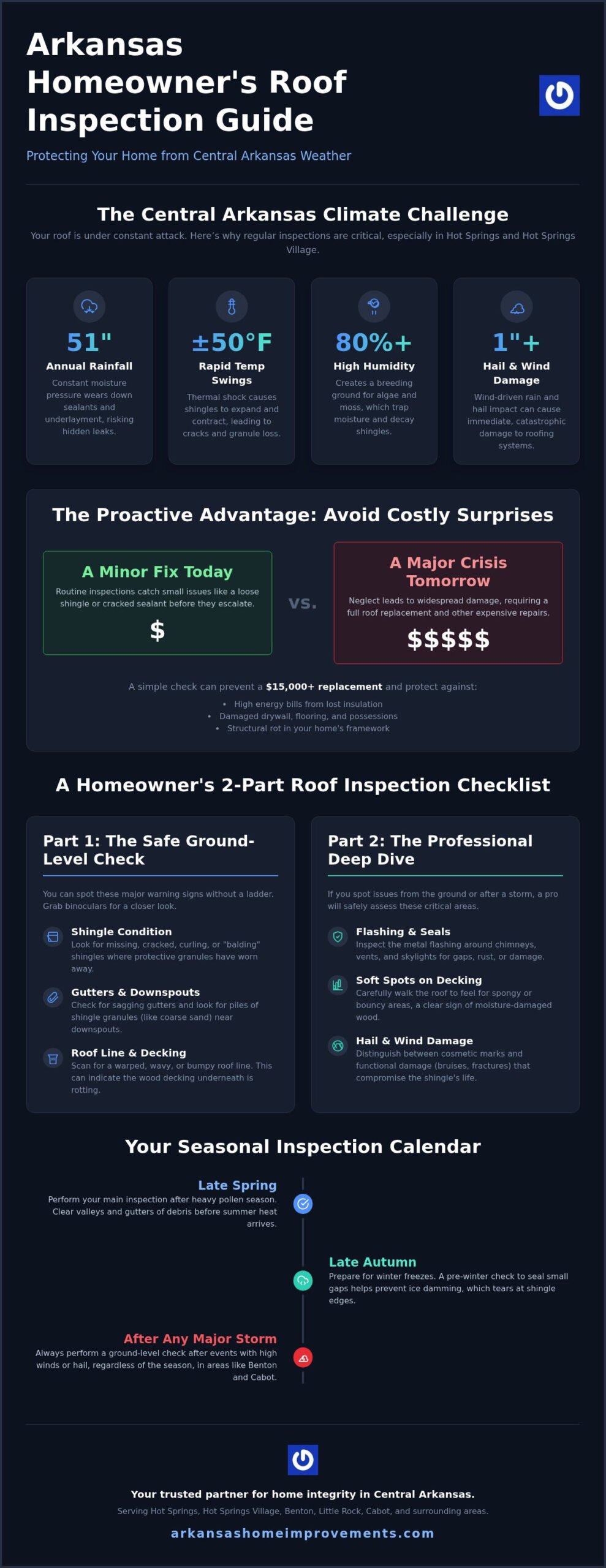
- Learn why the 51 inch annual rainfall in Hot Springs and Hot Springs Village makes regular checks essential for your home’s safety.
- Use our roof inspection checklist Arkansas homeowners can follow to spot missing shingles or granule loss from the ground without needing a ladder.
- Understand the professional steps for identifying soft spots and flashing issues that often lead to hidden water damage.
- Distinguish between cosmetic and functional hail damage after severe weather events in Benton or Cabot to streamline your insurance claims.
- Discover how maintaining your gutters and siding protects your roof’s integrity and prevents costly repairs down the road.
Why Central Arkansas Weather Demands a Regular Roof Inspection
Central Arkansas presents a unique challenge for residential roofing. With an average annual rainfall near 51 inches, your roof’s sealants and underlayment are under constant pressure. In areas like Hot Springs Village, where homes often sit on ridges or near the lakes, wind-driven rain can force moisture under shingles that might otherwise appear intact. This moisture cycle, combined with the high humidity of our region, creates a breeding ground for algae and moss. These organisms trap moisture against the shingle surface, which accelerates the breakdown of protective granules and weakens the structural integrity of your home.
To better understand how these weather factors influence your home’s protection, watch this helpful video:
Our climate is also known for rapid temperature swings. A hot July afternoon in Little Rock followed by a sudden thunderstorm causes shingles to expand and contract quickly. This thermal shock eventually loosens the bond between the shingles and the roof deck, leading to brittle materials and lost granules. Utilizing a consistent roof inspection checklist Arkansas residents can rely on helps identify these stresses before they turn into active leaks. Steve and our team at Arkansas Home Improvement have seen how these cycles impact homes over our 15 years of service, and catching these issues early is always the most reliable path.
Seasonal Timing for Hot Springs Homeowners
Timing your maintenance is just as important as the check itself. Late spring, once the heavy pine pollen has settled in Hot Springs, is the ideal window for your primary inspection. This allows you to clear debris from valleys and gutters that holds moisture against the roof before the summer heat hits. You should also prepare for the autumn storm surge that frequently affects Benton and Cabot. A quick pre-winter check ensures that small gaps are sealed, preventing the destructive cycle of ice damming during our occasional freezes that can tear apart shingle edges.
The Long-Term Cost of Neglect
A routine inspection is a simple proactive step that can prevent a $15,000 full replacement. Beyond just stopping leaks, a healthy roof is vital for energy efficiency during sweltering Arkansas summers. Gaps in your roof’s integrity allow conditioned air to escape into the attic, which forces your cooling system to work harder and drives up utility bills. Most importantly, staying ahead of maintenance protects your interior remodeling investments. Whether you’ve recently updated a bathroom or installed new flooring, a single undetected leak from a compromised roof can ruin those high-value projects in a single afternoon.
The Ground-Level Roof Inspection Checklist: What You Can See Safely
Safety comes first during any home maintenance task. You don’t need a ladder to perform an effective initial assessment of your roof’s health. By walking your property line in Hot Springs or Hot Springs Village, you can spot major warning signs that indicate it’s time for professional help. Start by looking for shingles that are missing, cracked, or appear “balding.” This balding occurs when the protective mineral granules wear away, exposing the dark asphalt underneath. These granules often end up as “sand” in your gutter downspouts. If you see piles of this material after a heavy rain, your roof is losing its primary defense against UV rays and impact.
A primary item on any roof inspection checklist Arkansas homeowners use is the alignment of the roof itself. Scan for warped or wavy roof lines from different angles in your yard. A roof that looks “bumpy” or uneven often suggests that the wood decking underneath has absorbed moisture and is beginning to rot or delaminate. Don’t overlook your home’s perimeter during this walk. Sagging gutters or fascia boards that appear to be pulling away from the house are clear indicators of water mismanagement. When gutters fail, water often backs up under the roof’s edge, causing the very damage you’re trying to avoid.
Ground-Level Visual Cues
Grab a pair of binoculars to get a better look at the ridge caps and high peaks. These are the areas most susceptible to wind lift during Central Arkansas storms. Look closely at the shingles for dark, circular spots that look like “bruising.” After a hail event in Hot Springs, these spots represent where the shingle’s matting has been fractured. You should also check the drip edge, which is the metal flashing along the eaves. If you see rust or a widening gap between the metal and the roof, water can easily find its way into your soffits and siding.
Interior Red Flags
Your attic often tells the story that the exterior hides. On a bright day, head into your attic and turn off the lights. If you see “daylight” peeking through the roof boards, you have an active entry point for water. Check the insulation and rafters for dark water stains or white, powdery mineral deposits. On your top-floor ceilings, look for peeling paint or yellowish rings. These are signs of slow leaks that haven’t quite broken through yet. If you notice a sudden musty odor in the upper levels of your home, moisture is likely trapped within the system. If these signs are present, it’s wise to consult with a local professional who can verify the extent of the damage before it spreads.
What a Professional Roof Inspection Includes: The Deep Dive Checklist
A professional evaluation goes much deeper than a simple visual scan from the lawn. While homeowners can spot obvious problems, a technician like Steve from Arkansas Home Improvement physically walks the surface to identify “soft spots.” These spongy areas are early indicators that the wood decking has been compromised by moisture, even if the shingles above look fine. Following a professional roof inspection checklist Arkansas homeowners can trust is the only way to catch these hidden issues. We also test the flexibility of pipe boots and the adhesion of sealant beads. These small rubber and silicone components are often the first to fail under the intense Hot Springs sun, leading to leaks that are difficult to find until the damage is extensive.
The Technical Exterior Assessment
A professional evaluation looks closely at the mechanics of the installation. We check the “nail pattern” to ensure shingles are fastened according to Arkansas wind load codes. This is vital for homes in Hot Springs Village that face high-wind exposure on ridges. Our team also inspects valley liners for corrosion or debris buildup. Since valleys channel the most water during our 51-inch annual rainfall, any blockage can cause water to back up under the shingles. We also examine chimney mortar and caps, as masonry cracks are a frequent source of “roof leaks” that actually originate in the chimney structure itself.
The Attic and Structural Review
The health of your roof depends heavily on what happens underneath it. We enter the attic to assess the balance between intake and exhaust ventilation. If your attic can’t “breathe,” heat builds up and literally bakes your shingles from the inside out. During this review, we look for rusted nails in the roof deck. Rust is a primary indicator of excessive humidity that hasn’t been properly vented. We also search for signs of black mold or mildew on the underside of the decking. Finally, we verify that all kitchen and bathroom fans are exhausted directly to the exterior. Many older homes in Benton or Little Rock mistakenly vent these fans into the attic, which introduces massive amounts of moisture. At Arkansas Home Improvement, we use this comprehensive approach to ensure your home remains a dry, safe sanctuary for years to come.
Post-Storm Inspection Checklist: Identifying Hail and Wind Damage
After a severe weather event in Benton or Cabot, the clock starts ticking on your home’s recovery. Many insurance providers recommend a “30-day rule” for reporting storm damage to ensure the claim is clearly tied to a specific weather date. This makes an immediate roof inspection checklist Arkansas homeowners can execute a vital part of property management. While you might see obvious debris, the most dangerous issues are often hidden from plain sight. “Functional” hail damage actually fractures the shingle’s internal fiberglass matting. This is far more serious than “cosmetic” scuffs because it compromises the roof’s ability to shed water, leading to leaks that may not appear for months.
Hidden hail damage is particularly deceptive in Central Arkansas. On July 2, 2026, many Hot Springs residents experienced one-inch hail that seemed minor at first. However, even small stones can bruise the asphalt layer. Once this bruise exists, the sun’s UV rays accelerate the breakdown of the shingle, eventually creating a hole. If you’ve experienced a storm, it’s essential to act quickly. You can schedule a professional storm damage assessment with Steve and our team to ensure your insurance claim is documented correctly before the window for filing closes.
Spotting Wind Uplift
High winds in Hot Springs Village often create “creased” shingles. This happens when a shingle is lifted by a gust, folded back, and then settles back into place. The adhesive seal is broken, but from the ground, the roof may look perfectly fine. Look closely for pine needles or small leaves trapped under the edges of your shingles; this is a clear sign the shingles were lifted during the storm. For homeowners with metal roofing, check for loose fasteners or panels that seem to “flutter” or vibrate more than usual. These are indicators that the wind has compromised the attachment points.
The Hail Damage Checklist
Your roof isn’t the only thing that tells the story of a storm. Check your AC unit’s cooling fins or your metal mailbox for fresh dents. These softer metals act as the “canary in the coal mine” for your roof’s condition. On the roof itself, look for circular “fractures” where granules have been knocked away. On your fence or siding, look for “splatter marks.” These are clean spots where hail has knocked off years of oxidation or dirt. The size and frequency of these marks can help professionals determine the severity of the impact your shingles sustained during the event.
Beyond the Checklist: Maintaining Your Arkansas Home’s Integrity
A high-quality roof is your home’s first line of defense, but it doesn’t work in isolation. To truly protect your property in Hot Springs or Hot Springs Village, you must look at the entire exterior envelope. Even the most thorough roof inspection checklist Arkansas homeowners use will fall short if the gutters are overflowing or the siding is pulling away from the wall. These systems work together to channel water safely away from your foundation and structural timbers. When one component fails, the others are soon to follow, leading to expensive repairs that could have been avoided with a holistic approach.
The Role of Gutters and Siding
Clogged gutters are a primary cause of roof edge failure. When water pools in a gutter instead of flowing through the downspout, it undergoes a process called “wicking.” This is where moisture is pulled upward into the wooden fascia boards and the edge of the roof deck. Ensuring your gutter installation is clear and correctly pitched is vital for long-term drainage. This is especially important for the large, multi-gabled homes in Hot Springs Village where complex rooflines create more opportunities for water to trap. Similarly, your vinyl siding protects the structural transition points. Where the roof meets a vertical wall, the flashing must be tucked securely behind the siding. If your siding is warped or loose, wind-driven rain can bypass these defenses and cause hidden rot inside your walls.
Choosing a Reliable Local Partner
The technical details of a project matter, but so does the person standing behind the work. Local weather patterns in Central Arkansas are unique. Consequently, roofing installation in Central Arkansas requires a deep understanding of our specific humidity levels and storm frequency. Steve and the team at Arkansas Home Improvement bring over 15 years of local history to every project. We don’t just look at shingles; we look for long-term reliability. You can request a professional assessment to verify that your home is ready for the next decade of Arkansas weather, whether you are in Little Rock, Benton, or Hot Springs.
Developing a 5-year maintenance plan is the final step in protecting your investment. This plan should include an annual ground-level check using your roof inspection checklist Arkansas, professional gutter cleaning every spring and fall, and a deep-dive professional inspection every three years. By staying proactive, you avoid the stress of emergency repairs. You ensure your home remains a stable, beautiful sanctuary for your family for years to come.
Secure Your Home for the Next Central Arkansas Storm Season
Taking care of your roof is about more than just stopping leaks; it’s about protecting your family’s sanctuary. By using this roof inspection checklist Arkansas homeowners can stay ahead of the 51 inches of annual rain and frequent hail events that define our climate. Whether you’re scanning for missing shingles in Hot Springs Village or checking your attic in Benton, early detection prevents a full replacement. Your roof, gutters, and siding must work together as a single system to keep your interior dry and safe.
You don’t have to manage these risks alone. With over 15 years of experience serving Central Arkansas, Steve and our team bring a steady, expert hand to every project. We specialize in navigating the complexities of storm damage and insurance claims, ensuring you receive the reliable service you deserve. Our deep roots as local Hot Springs and Benton specialists mean we understand exactly what your home faces year after year. Schedule your professional roof assessment with Steve today and gain the confidence that your property is prepared for whatever the weather brings next. Your peace of mind is our highest priority.
Frequently Asked Questions
How often should I have my roof inspected in Arkansas?
You should have your roof inspected at least once a year, preferably in the late spring after the pine pollen settles in Hot Springs. Using a professional roof inspection checklist Arkansas homeowners trust ensures you catch small issues like cracked sealants before they turn into leaks during our 51-inch annual rainfall. We also recommend a check after any severe weather event involving hail or high winds.
What is the most common roof damage found in Hot Springs Village?
Wind uplift is the most frequent issue we see in Hot Springs Village due to homes being situated on ridges and near lakes. High gusts can lift shingle edges, breaking the adhesive seal and allowing wind-driven rain to enter. We also frequently find hail bruising from the 138 verified hail days recorded near Hot Springs between 2014 and 2026. These impacts fracture the shingle matting and lead to premature failure.
Can I do my own roof inspection without a ladder?
You can perform a safe ground-level check by following a roof inspection checklist Arkansas homeowners can use with just a pair of binoculars. Look for missing shingles, rusted drip edges, or sagging gutters from your yard. You should also check your attic for daylight or water stains on the rafters. While this doesn’t replace a professional’s deep-dive assessment, it’s a great way to spot immediate red flags without the risk of climbing a ladder.
Does a roof inspection cost money in Central Arkansas?
Professional assessments vary, but many local experts provide initial evaluations at no cost to the homeowner. While some specialized structural inspections or official certifications for real estate transactions may involve a fee, a standard storm damage check is often provided to help you determine if a claim is necessary. We recommend checking with a local expert like Steve to understand their specific process for evaluating your Hot Springs home’s current condition.
How do I know if hail damage is serious enough for a claim?
Hail damage warrants a claim when the impact fractures the fiberglass matting or removes enough granules to expose the asphalt layer. Cosmetic scuffs might not be enough, but functional damage will eventually lead to leaks. Look for dents on soft metals like your AC unit or mailbox in Hot Springs as indicators. If you see circular bruises on your shingles, it’s time to document the damage for your insurance provider within their required reporting window.
What happens if a roof inspection finds damage?
If damage is discovered, we will provide you with a clear explanation of the issues and a plan for restoration. This might involve simple shingle repairs, replacing pipe boots, or a full roofing installation if the damage is widespread. We prioritize honesty and reliability, ensuring you understand which repairs are urgent and which are part of a long-term maintenance plan. Our goal is to provide peace of mind before the next storm season hits Benton or Little Rock.
Will my insurance company pay for a roof inspection?
Insurance companies typically don’t pay for the inspection itself, but they cover the resulting repairs if storm damage is found. Most policies don’t cover the cost of a preventative inspection. However, if a professional identifies storm-related damage, the cost of the repair or replacement is usually covered under your homeowner’s insurance, minus your deductible. It’s often best to have a local expert perform an assessment first to verify that there is enough damage to justify opening a claim.
How long does a professional roof inspection take?
A comprehensive professional inspection usually takes between 30 and 60 minutes for a standard home in Hot Springs or Hot Springs Village. This includes time for the technician to walk the roof surface, inspect the flashing and valleys, and check the attic for ventilation balance and moisture signs. We also evaluate your gutter system and siding to ensure the entire exterior is working correctly. You’ll receive a summary of the findings immediately following the walk-through.