Imagine sitting in your Hot Springs Village living room during a typical April downpour, watching the rain lash against the glass and wondering if that small damp spot on the ceiling is about to become a major headache. It’s a common anxiety for many of us in Central Arkansas, where the weather can turn from blistering heat to severe storms in a matter of hours. You want to know if your home is truly protected or if you’re living under a ticking clock. One of the most frequent questions we hear is how long does a roof last in Arkansas, especially when homeowners are trying to budget for the future or lower their rising energy bills.
We understand that differing contractor quotes and technical jargon can make this process feel overwhelming. In this 2026 guide, you’ll discover exactly how long your roof will last in our unique climate and learn the local secrets to extending its lifespan. We’ll provide a clear timeline for replacement, show you how to spot early signs of damage, and help you gain confidence in choosing materials that stand up to the Hot Springs sun. Whether you’re in the heart of Hot Springs or the surrounding areas, this professional breakdown ensures your home remains a reliable sanctuary for years to come.
Key Takeaways
- Understand the “Arkansas Factor” and how the intense UV exposure and humidity in Hot Springs can cause standard roofing materials to age faster than manufacturer estimates.
- Compare the long-term value of asphalt shingles versus metal roofing to discover exactly how long does a roof last in Arkansas when facing our specific climate.
- Learn proactive maintenance steps specifically designed for the wooded environments of Hot Springs Village to prevent moisture damage and extend your roof’s life.
- Discover why professional installation is the single most important factor in ensuring a 30-year shingle actually survives three decades of Central Arkansas storm seasons.
- Identify the early warning signs of shingle “baking” and granule loss so you can address minor issues before they turn into expensive interior leaks.
Average Lifespan of Roofing Materials in Central Arkansas
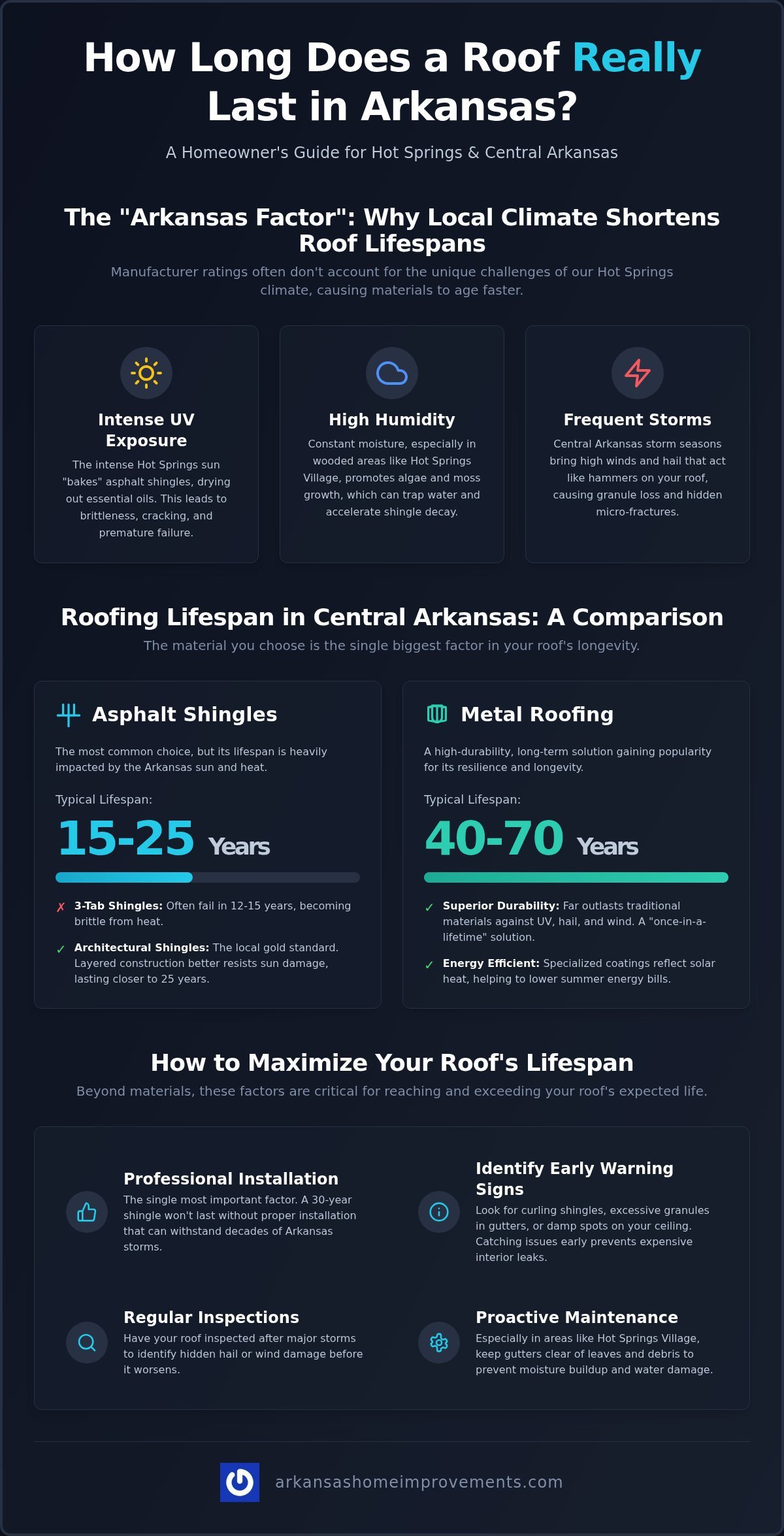
In Central Arkansas, your roof’s lifespan is a direct reflection of how well it can handle our intense seasonal shifts. When homeowners ask how long does a roof last in Arkansas, the answer usually falls between 15 and 50 years depending on the material you choose. It’s vital to understand that a manufacturer’s warranty is a legal document, while the service life is the actual time the roof stays leak-free on your home. Most warranties cover material defects, but they don’t always account for the wear and tear of a humid Southern climate.
Local microclimates play a huge role in this timeline. For instance, a home nestled in the heavily wooded terrain of Hot Springs Village might face more humidity and moss growth than a house in an open field in Little Rock. These environmental factors often mean your roof won’t reach its full theoretical age without professional installation and regular care. Our experience across the region shows that the way a roof interacts with its specific surroundings dictates when you’ll eventually need a replacement.
To better understand how material choices and contractor selection impact your roof’s future, watch this helpful video:
Asphalt Shingles: 15 to 25 Years
The most common choice for homeowners remains the Asphalt shingle. However, not all shingles are created equal. Basic 3-tab shingles often struggle in the Central Arkansas heat, usually showing signs of failure within 12 to 15 years as the high temperatures make them brittle. We consider architectural shingles the local gold standard because their layered construction resists the baking effect of the Hot Springs sun much more effectively. If you want maximum protection, look for Class 4 impact-resistant ratings. These shingles are specifically designed to withstand the hail and high winds common during our spring storm seasons, often pushing the service life toward that 25-year mark.
Metal Roofing: 40 to 70 Years
For those seeking a once-in-a-lifetime solution, metal roofing is rapidly gaining popularity in Hot Springs and throughout Central Arkansas. These systems typically last between 40 and 70 years, far outlasting traditional materials. The difference often comes down to the panel type. Standing seam systems, which hide the fasteners under the metal, generally offer the longest life because they have fewer points where water can penetrate. Screw-down panels are a common alternative but require more maintenance over time. To combat the intense Arkansas UV rays, these roofs use specialized cooling coatings that reflect heat. This helps lower your energy bills while preserving the integrity of the metal for decades. You can learn more about our high-durability options at willisandsonroofing.com.
The Arkansas Factor: Why Local Weather Dictates Roof Expiration
While a shingle might be rated for three decades by a manufacturer, the reality of how long does a roof last in Arkansas is often dictated by what we call the “Arkansas Factor.” This is the brutal combination of high UV radiation, heavy humidity, and rapid temperature shifts that characterizes our region. In Hot Springs, the summer sun can be particularly punishing. It creates a “baking” effect that dries out the essential oils in asphalt shingles. As these oils evaporate, shingles become brittle and lose their protective granules. Once those granules wash away into your gutters, the shingle’s core is left defenseless against the elements.
Spring storms in Benton and Little Rock add another layer of stress. Hail stones, even small ones, act like hammers on a weakened roof. These impacts are life-shortening events that can void warranties and cause micro-fractures in the roofing mat. If you’ve recently weathered a major storm, having a professional roof inspection can help you identify these hidden issues before they lead to interior water damage. Catching these problems early is often the difference between a simple repair and a premature replacement.
Thermal Expansion and Contraction
It isn’t just the heat; it’s the change. Arkansas often sees 40-degree temperature swings in a single 24-hour period. This causes the roof structure to expand and contract rapidly. This constant movement puts immense pressure on roof joints. We often find that metal flashing around chimneys and valleys fails long before the shingles do because of this movement. Proper attic ventilation is your best defense. It helps balance the temperature between your attic and the outdoors, mitigating the physical stress on your roof’s structure and preserving the integrity of your seals.
Humidity and Algae Growth
Hot Springs Village homeowners deal with a specific challenge: the dense, beautiful tree canopy. While the shade is nice, it keeps humidity levels high and prevents north-facing roof slopes from drying out. This creates a breeding ground for Gloeocapsa Magma, the bacteria that causes black streaks. Moss can also take root, trapping moisture directly against the roof deck. When considering how long does a roof last in Arkansas, we must look at how these biological factors accelerate aging. This humidity-driven algae growth isn’t just an aesthetic issue; it’s a structural one that degrades the shingle’s integrity and can lead to premature wood rot in the decking below.
Shingles vs. Metal: A Long-Term Longevity Comparison
Choosing between asphalt and metal is more than just a style preference; it’s a strategic financial decision for your home. When calculating how long does a roof last in Arkansas, the material choice is the single biggest variable in your long-term budget. Standard asphalt shingles are popular because they’re affordable initially, but they demand much more attention in our specific climate. In the intense Hot Springs sun, shingles require regular checks for granule loss and brittle edges. Metal roofing offers a “set and forget” alternative. While the upfront cost is higher, you avoid the cycle of replacement every two decades. For a deeper dive into these options, see our Metal Roofing Arkansas: The Complete Homeowner’s Guide.
The math is simple. If a high-quality asphalt roof lasts 20 years in Central Arkansas, a homeowner might pay for three full replacements in the time it takes for one metal roof to reach its expiration. This total cost of ownership makes metal the logical choice for those planning to stay in their homes for the long haul. Beyond the lifespan, metal requires significantly less maintenance. You won’t be dealing with the algae growth or the shingle “baking” issues we discussed earlier, ensuring your home stays protected with minimal intervention.
Wind and Hail Performance
Hot Springs Village is famous for its beautiful, tall pines, but those trees can create dangerous wind tunnels during summer thunderstorms. These sudden gusts often lead to shingle blow-offs. This happens when the wind catches the edge of a shingle and peels it back, exposing the deck to rain. Modern asphalt shingles have a sealant strip designed to “heal” and rebond after installation, but this bond can weaken as the roof ages in the Arkansas humidity. Metal roofing stands as the “storm-proof” choice for these areas. Its large, interlocking panels are mechanically fastened, making them nearly impossible for Arkansas winds to lift or displace.
Energy Efficiency and Roof Health
Your roof’s health is directly tied to your attic’s temperature. In Benton and surrounding areas, summer attic temperatures can soar, effectively cooking shingles from the underside. This trapped heat accelerates the breakdown of the asphalt core. “Cool roofs,” which are often made of metal or high-reflectivity shingles, prevent this internal damage by reflecting solar radiation away from the structure. This doesn’t just protect the roof; it also lowers your monthly costs. Just as how new windows reduce energy bills, a reflective roof keeps your AC from overworking. By keeping the attic cooler, you ensure the roofing material stays within its intended operating temperature, maximizing every year of its service life.
5 Steps to Maximize Your Roof’s Life in Hot Springs
Proactive care is the secret to getting the most out of your home investment. In our humid Central Arkansas climate, neglecting small issues almost always leads to catastrophic failures. When asking how long does a roof last in Arkansas, you must consider that local experts view maintenance as a form of insurance. Waiting for a ceiling stain to appear is the most expensive way to manage your home. By the time you see a leak, the damage has likely already spread to your decking and insulation. Gutter health also plays a critical role in this process. When gutters clog, water backs up under the roof’s edge, leading to fascia rot and shingle delamination. Keeping these channels clear ensures that water moves away from your home’s foundation and roofline quickly.
The Annual Arkansas Maintenance Checklist
- Step 1: Clearing debris. In Hot Springs Village, the heavy leaf fall from our beautiful pine and oak trees can trap moisture in your roof valleys. This creates a “sponge effect” that rots shingles from the bottom up.
- Step 2: Inspecting seals. Every 24 months, you should have a professional check the flashing around vents and chimneys. The intense Arkansas sun makes these seals brittle, causing them to crack and leak long before the shingles themselves fail.
- Step 3: Professional soft washing. If you see black streaks on your roof, it is time for a cleaning. Avoid pressure washers, which strip away protective granules. A gentle chemical soft wash removes life-shortening algae without damaging the roof’s structure. This process can add three to five years to the usable life of an asphalt roof in the humid Hot Springs environment.
Post-Storm Protocol for Benton Homeowners
Benton homeowners know that spring storms are a part of life. After a major hail event, your first move should be checking your gutters. If you see a heavy accumulation of granules that look like coarse sand, your shingles have lost their primary UV protection. You should also head into your attic with a flashlight after high winds. Look for “daylight” peeking through the boards or dark water stains on the rafters. These are early warning signs that your roof’s defense has been breached. Understanding how long does a roof last in Arkansas helps you plan for these inevitable repairs before they become emergencies. If you notice these issues, it is helpful to review our guide on 5 Signs Your Roof Needs Replacement to determine your next steps.
To ensure your home stays protected through the next storm cycle, contact us for a professional roof assessment today.
Professional Installation: The Foundation of Longevity
The highest quality materials in the world cannot compensate for poor workmanship. When homeowners investigate how long does a roof last in Arkansas, they often overlook the technical precision required during the installation phase. A premium architectural shingle rated for 30 years can easily fail in under a decade if it’s nailed incorrectly. High-nailing, where the fastener is placed above the common bond area, is a frequent mistake that leads to shingles sliding out or blowing off during our intense summer thunderstorms. We view professional installation as the primary factor in reaching a roof’s full potential, ensuring that every shingle is secured to withstand the specific wind loads of our region.
Hot Springs Village presents unique challenges for roofing crews. The steep, multi-faceted rooflines common in the Village, combined with the densely wooded terrain, require a higher level of craftsmanship and safety protocols. We take extra care to protect your landscaping and ensure every fastener is driven to the exact depth required by the manufacturer. This precision is what allows us to maintain our reputation for reliability across Central Arkansas. Our deep experience with Hot Springs weather patterns means we don’t just install a roof; we build a defense system tailored to your home’s specific environment.
The Role of Underlayment and Ventilation
A roof is a complete system, not just a layer of shingles. For the humid Central Arkansas environment, synthetic underlayment is an absolute necessity. Unlike traditional felt paper, synthetic materials don’t absorb moisture or wrinkle; they provide a much flatter and more durable secondary water barrier. Proper ventilation is equally critical to your home’s health. Ridge vents work in tandem with soffit vents to create a continuous flow of air. This reduces the “attic bake” effect that can literally cook your shingles from the inside out, causing them to become brittle and fail prematurely. For more details on our specific process, read our guide on Professional Roofing Installation in Central Arkansas.
Choosing a Local Expert You Can Trust
After a major storm, “storm chasers” often flood the Hot Springs area with promises of quick fixes. These out-of-state companies rarely understand the long-term impact of our local climate and are often long gone when a warranty issue arises. Choosing a local contractor who lives and works in Central Arkansas ensures accountability and peace of mind. We understand the specific weather patterns of the Ouachita Mountains and the humidity levels of the Arkansas River Valley. When you want to be certain about how long does a roof last in Arkansas, you need a partner with 15 plus years of local warranty fulfillment. To secure your home’s future, Schedule a Professional Roof Longevity Inspection with a team that values your long-term satisfaction.
Secure Your Home’s Future with a Durable Roof
Understanding how long does a roof last in Arkansas gives you the power to make informed decisions for your family’s safety and your budget. We’ve explored how the intense heat in Hot Springs and the wooded humidity of Hot Springs Village can accelerate wear. Whether you choose the long-term reliability of metal roofing or the classic protection of architectural shingles, the quality of your installation remains the foundation of your home’s defense. Your roof is more than just a cover; it’s a complex system that requires professional precision to survive our local climate.
Arkansas Home Improvement brings 15 plus years of experience and A plus rated craftsmanship to every project. Our specialized Hot Springs and Hot Springs Village expertise ensures that your home is prepared for every storm season. Don’t wait for the next spring downpour to test your home’s integrity. You deserve the peace of mind that comes with a job well done by a steady, experienced hand.
Get a Free Roof Longevity Assessment from Arkansas Home Improvement and start your journey toward a more secure and energy-efficient home. We’re here to help you protect what matters most with reliability you can trust.
Frequently Asked Questions
Is 20 years old too old for a roof in Arkansas?
Yes, for a standard asphalt shingle roof, 20 years is often the point where it reaches its functional limit. Our local heat and humidity cause shingles to lose their flexibility and protective granules over two decades. If your Hot Springs home has a roof of this age, it is likely becoming brittle and more susceptible to leaks during our heavy spring storm cycles.
Does a metal roof last longer than shingles in Hot Springs Village?
Metal roofing significantly outlasts asphalt shingles, especially in the unique environment of Hot Springs Village. While a high quality shingle roof may last 20 to 25 years, a metal roof is designed to protect your home for 40 to 70 years. This longevity is particularly valuable in the Village, where heavy tree cover can trap moisture that would otherwise degrade organic shingle materials much faster.
How often should I have my roof inspected in Central Arkansas?
You should schedule a professional inspection at least once a year and following any major hail event in the Little Rock or Benton areas. Annual checks allow us to identify small issues like cracked vent seals or minor wind displacement before they turn into expensive interior damage. Regular inspections are the most effective way to extend the service life of your existing roofing system.
Will my insurance pay for a roof that is 15 years old?
Insurance coverage for a 15-year-old roof depends entirely on whether the damage was caused by a specific covered event, such as a windstorm or hail. Most policies will not pay for a replacement due to general wear, tear, or age. It is important to review your policy to see if you have Replacement Cost Value or Actual Cash Value coverage, as this determines how much of the cost is covered after a decade and a half of use.
What are the first signs of a roof failing in Arkansas?
The most common early warning signs include heavy granule accumulation in your gutters and curling or “clawing” shingle edges. In the Hot Springs sun, shingles that have lost their protective oils will begin to look dry and may even crack. If you notice dark streaks or moss growth on your roof, these are signs that moisture is being trapped against the surface, which can lead to structural decay if not addressed quickly.
Can high humidity in Arkansas actually rot my roof?
Yes, high humidity levels create the perfect environment for algae and moss to thrive, which can lead to wood rot in your roof deck. These organic growths hold moisture against the shingles and the underlying wood for extended periods. In humid areas like Hot Springs Village, this constant moisture can eventually bypass the shingles and cause the plywood decking to soften and fail prematurely.
Do architectural shingles really last 30 years in Little Rock?
While many architectural shingles carry a 30-year manufacturer rating, they rarely reach that age in the Little Rock climate without perfect maintenance. When considering how long does a roof last in Arkansas, most homeowners should realistically expect 22 to 25 years of service from high-end shingles. The intense UV exposure and rapid temperature shifts in Central Arkansas typically age materials faster than the laboratory settings used for warranty ratings.
How much does a new roof add to home value in Hot Springs?
A new roof provides a significant boost to home value by increasing curb appeal and providing essential peace of mind to potential buyers. In the Hot Springs real estate market, a documented roof replacement is often a major selling point that can lead to a faster sale at a higher price point. Buyers are particularly attracted to metal roofing or high-durability shingles because they know they won’t face a major repair expense for many years to come.