Would you pay a little more today if it meant your roof survived the next Central Arkansas hailstorm while your neighbors’ roofs were being replaced? In places like Hot Springs and Hot Springs Village, the sound of ice hitting the shingles is enough to make any homeowner worry about their insurance premiums. You’ve likely heard the jargon about class 3 vs class 4 shingles, but deciding which one is right for your home feels like a gamble when you’re staring at rising costs and complex UL ratings.
We understand that your home is your most significant investment. Our goal is to provide the clarity you need to make a confident decision for your family. This guide simplifies the choice by showing you exactly how the right impact-resistant shingle protects your property and your wallet. It’s about more than just aesthetics; it’s about building a house that can withstand the unpredictable Arkansas weather.
You’ll discover the critical differences between these two ratings and how they perform under pressure. We also explain how the Strengthen Arkansas Homes Act now mandates insurance discounts of 20% to 35% for certain resilient roofing standards. By the end, you’ll know how to secure a roof that offers long-term peace of mind and lower annual costs.
Key Takeaways
- Learn how the UL 2218 “steel ball test” determines if a shingle can survive a direct hit from simulated hail.
- Compare the performance of class 3 vs class 4 shingles to see which rating provides the protection your specific neighborhood needs.
- Explore why homes in Hot Springs and Hot Springs Village face unique weather challenges that make impact-resistant materials a strategic investment.
- Discover how the Strengthen Arkansas Homes Act can lead to insurance premium discounts of 20% to 35% for certified roofing systems.
- Use our “Stay vs. Sell” framework to decide if the upfront cost of a Class 4 upgrade is the right financial move for your future.
What are Class 3 and Class 4 Shingles? Understanding UL 2218 Ratings
Homeowners in Central Arkansas often hear about impact resistance during storm season. The UL 2218 national standard for impact resistance is the primary benchmark used to measure how well roofing materials handle the force of falling objects, like hail. This rating system wasn’t created by accident. It was developed by the insurance industry to help identify products that could reduce costly damage claims after severe weather events. By categorizing shingles into classes, insurers and contractors can provide a clear expectation of how a roof will perform when the sky turns dark.
The fundamental difference in class 3 vs class 4 shingles lies in the level of force they can absorb without failing. While standard shingles might shatter or tear under the pressure of a hailstorm in Hot Springs, rated shingles are engineered to remain intact. This durability provides a critical layer of defense for your property. Choosing a rated product means you are investing in a material that has been physically tested to withstand the specific types of impact common in our region.
To better understand this concept, watch this helpful video:
The UL 2218 Testing Process Explained
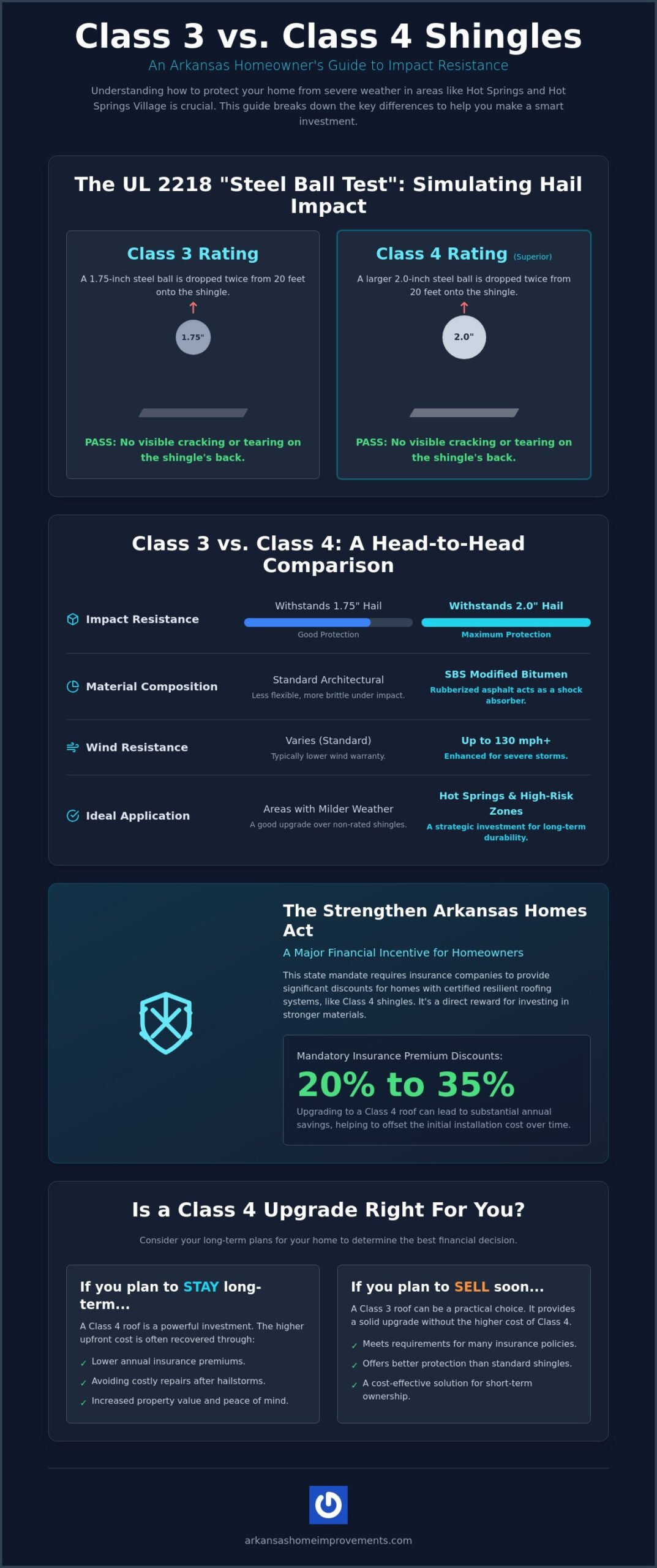
The UL 2218 test is the benchmark for roofing impact resistance. During this lab procedure, technicians drop steel balls onto a shingle sample to simulate the impact of hail. For a Class 3 rating, a 1.75 inch steel ball is dropped from a height of 20 feet. To achieve the superior Class 4 rating, a 2 inch steel ball is dropped from the same height. To pass the test, the shingle must show no signs of visible cracking or tearing on its back surface after two consecutive hits in the same spot. This rigorous standard ensures that the shingle remains waterproof even after a significant strike.
Material Science: What Makes a Shingle Impact-Resistant?
Standard architectural shingles are designed for general weather protection, but impact-resistant shingles utilize advanced materials to handle extreme stress. Many Class 4 options incorporate SBS (Styrene-Butadiene-Styrene) modified bitumen. This is essentially a rubberized asphalt that gives the shingle more flexibility. Instead of being brittle, the material acts like a shock absorber. This flexibility, combined with reinforced fiberglass mats, prevents the shingle from fracturing when hail strikes your home in Hot Springs Village or Benton. It’s a significant upgrade from basic shingles that often lose their protective granules or crack during the first major storm of the season.
Class 3 vs. Class 4 Shingles: A Side-by-Side Comparison
Choosing between class 3 vs class 4 shingles often comes down to how much risk you’re willing to accept. Class 3 shingles are tested against 1.75 inch hail, while Class 4 shingles must withstand 2 inch impacts. This quarter inch difference might seem small. However, the force of a 2 inch hailstone is significantly higher than its smaller counterpart. The Insurance Institute for Business & Home Safety (IBHS) provides a comprehensive impact-resistance test that goes beyond standard lab drops. Their research shows that Class 4 materials maintain their structural integrity far better during the intense storms we see in Central Arkansas.
Performance Under Pressure
Class 3 is a solid choice for areas with milder weather. It’s an upgrade over standard shingles. But for homes in Hot Springs and Hot Springs Village, Class 4 is often the smarter move. These shingles are built for high velocity impact. They often come with wind ratings up to 130 mph or higher. This level of protection is vital during the extreme storm seasons that frequently cross our region. If you want to ensure your home stays dry through the next big one, looking into a roofing installation with high rated materials is a great place to start.
Visual Appeal and Curb Appeal
High rated shingles don’t just work harder; they often look better. Class 4 shingles are typically thicker and more robust than standard options. This extra material gives your roof a premium, high definition look that can significantly boost your home’s curb appeal. In communities like Hot Springs Village, where property values are a priority, this visual upgrade can be a major selling point. You can choose from a wide range of color palettes that complement the local landscape. These shingles also tend to hold their color and texture longer because they resist the granule loss caused by smaller hail and heavy rain.
The durability of Class 4 shingles directly impacts their lifespan. Because they resist cracking and tearing, they’re less likely to suffer the “silent damage” that leads to leaks years later. Most manufacturers offer enhanced warranties for these products. This coverage often includes better protection against wind uplift and hail impact. It’s a layer of security that standard shingles simply can’t match. For a homeowner in Arkansas, this means fewer repairs and a roof that actually lasts its intended 30 to 50 years.
The Arkansas Factor: Why Ratings Matter in Hot Springs and Beyond
Arkansas sits in a high-risk zone often called the ‘Hail Alley’ of the South. While states like Colorado often get the national headlines, Central Arkansas faces frequent, violent storms that bring large hail and high winds. For homeowners in Hot Springs and Hot Springs Village, the choice between class 3 vs class 4 shingles is a matter of long-term survival for their property. Historical storm data shows that our region experiences significant hail events multiple times per year. These aren’t just small ice pellets; they are stones large enough to puncture standard roofing materials instantly.
In our 15 years of local operation, we’ve seen how quickly a standard roof can fail during a spring storm. National chains might suggest a one-size-fits-all solution for every state. However, a local expert understands that the topography around the Ouachita Mountains can funnel storms directly into residential areas. This geographic factor makes impact resistance a necessity rather than a luxury for anyone living in the path of these recurring weather patterns.
Storm Frequency in Hot Springs and Hot Springs Village
The Hot Springs National Park area is particularly susceptible to sudden weather shifts. Recent hail events have caused widespread damage across the city, leaving many residents with leaking roofs and rising insurance premiums. Hot Springs Village homes are even more vulnerable. The sprawling, wooded geography of the Village means that a single storm cell can impact thousands of homes with varying intensity. If you are currently dealing with the aftermath of a storm, viewing examples of Hail Damage Roof Replacement in Hot Springs can help you understand what a resilient restoration looks like for your specific neighborhood.
The Role of Humidity and Temperature Swings
Arkansas weather isn’t just about the storms; it’s about the intense conditions that follow. The combination of high summer heat and thick humidity creates a brutal environment for asphalt shingles. Standard shingles can become brittle over time due to constant thermal expansion and contraction. This is where SBS-modified shingles shine. These materials are engineered to stay flexible, even when temperatures swing 40 degrees in a single day. This flexibility prevents granule loss, which is the leading cause of premature roof aging in Little Rock and Benton. Ensuring your roof is handled by a local roofing company is the best way to guarantee that the installation accounts for these specific Southern climate challenges.
Financial Analysis: Cost vs. Insurance Savings in Arkansas
The decision between class 3 vs class 4 shingles often starts with the bottom line. It’s true that high-rated impact-resistant materials come with a higher initial price tag. Nationally, Class 4 shingles typically cost between 10% and 25% more than their Class 3 counterparts. However, viewing this strictly as an expense overlooks the strategic financial protection it provides for your property. In a state where a single spring afternoon can bring baseball-sized hail to Hot Springs or Hot Springs Village, this upfront premium acts as a shield for your bank account.
The most immediate financial benefit is what we call the “Deductible Hedge.” Most Arkansas homeowners carry a wind and hail deductible ranging from $1,000 to $5,000 or more. If a Class 4 roof survives a storm that would have destroyed a standard roof, you’ve effectively saved the entire cost of that deductible in a single day. When you calculate the return on investment over ten years, the savings from avoided repairs and lower insurance costs often far outweigh the initial upgrade price.
Navigating Arkansas Insurance Incentives
Major insurance providers in Arkansas, such as State Farm and Allstate, recognize the reduced risk associated with impact-resistant materials. Under the “Strengthen Arkansas Homes Act” (Act 427), insurance companies are actually mandated to provide premium discounts for homes that meet specific resilient construction standards. Class 4 shingles can reduce premiums by up to 20-35% in some Arkansas zip codes when they are part of a certified installation. To secure these savings, your insurance agent will require a “Certificate of Installation” from your contractor to verify the materials used. If you’re ready to start saving, you can get a professional quote for your Arkansas home today.
Long-Term Value and Resale
Beyond monthly savings, an impact-resistant roof is a powerful asset in the Little Rock and Hot Springs real estate markets. Prospective buyers are increasingly savvy about the costs of homeownership in “Hail Alley.” A home featuring a Class 4 roof offers them immediate peace of mind and lower future carrying costs. This makes your property much more attractive than a neighboring house with a standard roof that might need replacement after the next big storm. Investing in Professional Roofing Installation in Central Arkansas ensures that your roof is not only high-quality but also backed by the professional standards that local appraisers and buyers value. By choosing a durable system now, you’re reducing the likelihood of expensive “emergency” repairs during the height of storm season, which keeps more money in your pocket over the long haul.
Making the Choice: Is Class 4 Right for Your Arkansas Home?
Deciding on a roof replacement involves more than just picking a shingle color. You have to look at your future plans for the property. We suggest using the ‘Stay vs. Sell’ framework to guide your investment. If you plan to call your current house your ‘forever home,’ especially in areas like Hot Springs and Hot Springs Village, the long-term math heavily favors the higher rating. The choice between class 3 vs class 4 shingles becomes much clearer when you view it as a decades-long financial strategy rather than a one-time expense.
Your neighborhood’s specific storm history should also influence your decision. While Benton might see different wind patterns than Cabot, the entire Central Arkansas corridor remains a high-risk area for hail. Assessing these local patterns helps determine if you need the maximum protection available. Regardless of your choice, budgeting for a replacement should involve looking at value tiers and potential financing that aligns with your household’s financial goals. The right roof doesn’t just protect your ceiling; it protects your equity.
When to Choose Class 3
Class 3 shingles are a solid middle-ground for rental properties or short-term holdings. They’re best for homeowners on a strict budget who still want better-than-standard protection against the elements. If your home is in an area with a lower historical frequency of major hail, Class 3 provides a reliable balance of cost and performance. It’s a significant upgrade over standard shingles that will still appeal to future buyers without the full premium cost of a Class 4 system.
When Class 4 is the Only Logical Choice
For ‘forever homes’ in Hot Springs and Hot Springs Village, Class 4 is the gold standard. It’s the best option for homeowners wanting the maximum insurance premium reduction mandated by state law. At Arkansas Home Improvement, we recommend Class 4 for maximum peace of mind. Our team has spent over 15 years watching these roofs survive storms that leave standard shingles in pieces. When you’re ready to take the next step, getting a professional inspection and quote is the best way to see how these ratings apply to your specific roofline.
The final step is ensuring your installation is handled by a team that understands the importance of local expertise. A properly installed Class 4 system is a transformation for your home’s exterior and its long-term durability. By choosing the right material now, you’re ensuring that the next time the sirens go off in Central Arkansas, you can sit back with confidence knowing your family and your investment are well-protected.
Protecting Your Arkansas Home for the Long Haul
Your roof is the first line of defense against the unpredictable weather in Central Arkansas. Choosing between class 3 vs class 4 shingles is about more than just immediate costs; it’s about investing in long-term security and financial peace of mind. By prioritizing impact-resistant materials, you can secure significant insurance discounts and avoid the stress of recurring storm repairs in communities like Hot Springs and Hot Springs Village.
Arkansas Home Improvement has been a steady hand for local homeowners for over 15 years. Steve and our team bring a deep understanding of Southern storm patterns and expert hail damage assessment to every project. As a locally owned and operated business, we prioritize the durability of your home and the consistency of our reputation. We’re committed to helping you make the most informed decision for your family’s safety and your property’s equity.
Take the guesswork out of your next roofing project and ensure your home is ready for whatever the sky brings. Get a Professional Roofing Estimate in Hot Springs or Little Rock today. We look forward to helping you build a roof that lasts.
Frequently Asked Questions
Do Class 4 shingles look different than standard architectural shingles?
Class 4 shingles often feature a more robust, high-definition appearance than standard architectural options. Because they’re manufactured with extra material and SBS-modified bitumen, they have a thicker profile that many homeowners in Hot Springs Village prefer for its premium look. While they don’t look out of place, they do provide a noticeable boost in curb appeal that suggests quality and durability to any prospective buyer or neighbor.
How much more do Class 4 shingles cost compared to Class 3 in Arkansas?
You can generally expect a price premium of 10% to 25% when comparing class 3 vs class 4 shingles in the Arkansas market. This cost difference covers the advanced engineering and tougher materials needed to survive the UL 2218 steel ball test. While the initial investment is higher, the long-term savings from reduced repair needs and insurance discounts often make up for the gap within a few years of ownership.
Will my insurance company require a specific brand of impact-resistant shingle?
Most insurance providers in Arkansas don’t mandate a specific manufacturer, but they do require proof of the UL 2218 Class 4 rating. Whether you choose a major national brand or a specialized regional product, the key is the official certification. You’ll need to provide your agent with a Certificate of Installation from your contractor to unlock the premium discounts mandated by the Strengthen Arkansas Homes Act.
Is a Class 4 roof completely hail-proof?
No roofing material is entirely hail-proof, but Class 4 shingles are the most resilient asphalt option available. They’re designed to withstand impacts from 2-inch hailstones without cracking or tearing. While a massive, record-breaking storm in Hot Springs might still cause some granule loss or aesthetic wear, a Class 4 roof is far less likely to suffer the structural failure that leads to interior leaks.
How do I know if my current roof has Class 3 or Class 4 shingles?
Identifying your current shingle rating can be difficult without the original paperwork. You can check your home’s closing documents or the specific contract from your last roofing project. If those aren’t available, a professional inspection is the most reliable method. A local expert can often identify the specific shingle series and determine if it meets Class 3 or Class 4 impact resistance standards.
Do impact-resistant shingles also help with high winds in Arkansas?
Impact-resistant shingles are excellent for high-wind protection in Central Arkansas. The same SBS-modified bitumen that makes them flexible also creates a stronger bond between the shingles. Many Class 4 products carry wind ratings of up to 130 mph. This added strength is vital for homes in open areas of Hot Springs Village where wind gusts can be particularly punishing during spring storm cells.
Can I get a discount on my Arkansas home insurance with Class 3 shingles?
Some insurance companies offer modest discounts for Class 3 shingles, but the most substantial savings are reserved for Class 4 ratings. Under current Arkansas regulations, the mandatory premium reductions of 20% to 35% are specifically tied to the higher durability standards. It’s always best to call your specific agent to see how their current policy tiers reward different levels of impact resistance for your property.
Are Class 4 shingles worth it if I plan to sell my home in 5 years?
Investing in Class 4 shingles is a smart move even if you plan to sell within five years. An impact-resistant roof is a major selling point in the Little Rock and Hot Springs real estate markets. Buyers appreciate the lower future insurance costs and the reduced risk of a failed home inspection after a hailstorm. It often helps a home sell faster and for a better price because the new owner inherits the protection.